If you have noticed a soft spot in your yard, a cracked slab, or a contractor mentioned “grouting” without explaining which kind, you are not alone. Many Florida homeowners hear the word used as if it means one single fix, when it actually covers several distinct processes, each suited to different soil and void conditions.
Sandy fill soils, limestone bedrock, and heavy rainfall combine across Florida to create the exact voids that grouting is designed to address. Matching each situation to the right method, rather than treating grouting as a one-size-fits-all answer, is what separates a repair that lasts from one that needs redoing.
Which Grouting Method Fits Each Type of Void?
The right method depends mostly on the void size and how loose the surrounding soil has become. Compaction grouting suits larger voids and loose sandy soil, while polyurethane and permeation grouting handle smaller gaps and finer soil particles. Florida properties often need a combination, since sandy fill soils rarely fail the same way twice on one lot.
Grouting is not a single product injected the same way everywhere. It is a category of ground improvement techniques, and the choice between compaction grouting, permeation grouting, polyurethane grouting, and cementitious slurry grouting changes the outcome, the cost, and how much disruption your property experiences.
Compaction Grouting for Larger Voids and Loose Soil
Compaction grouting uses a thick, low-mobility grout pumped under pressure to physically push soil outward instead of soaking into it. This forms dense grout columns that increase bearing capacity, making it suitable for larger voids or soil that has already lost significant density from sinkhole activity or erosion.
Because the grout displaces rather than flows through pores, deep compaction grouting works well beneath existing structures where excavation would be disruptive. Grout columns form in stages as crews raise the injection pipe, letting them target specific weak zones without treating the entire lot.
Permeation Grouting for Gaps Between Soil Particles
Permeation grouting fills the small spaces between soil grains without disturbing the soil’s natural structure. Low-viscosity chemical grout or cement grout seeps into sandy or silty ground, binding particles together and increasing shear strength, which fits Florida’s granular fill soils well.
This method works best when the goal is to strengthen soil in place rather than displace it, and it is often used for groundwater control in areas with high water tables.
Polyurethane Injection for Shallow Voids Beneath Slabs
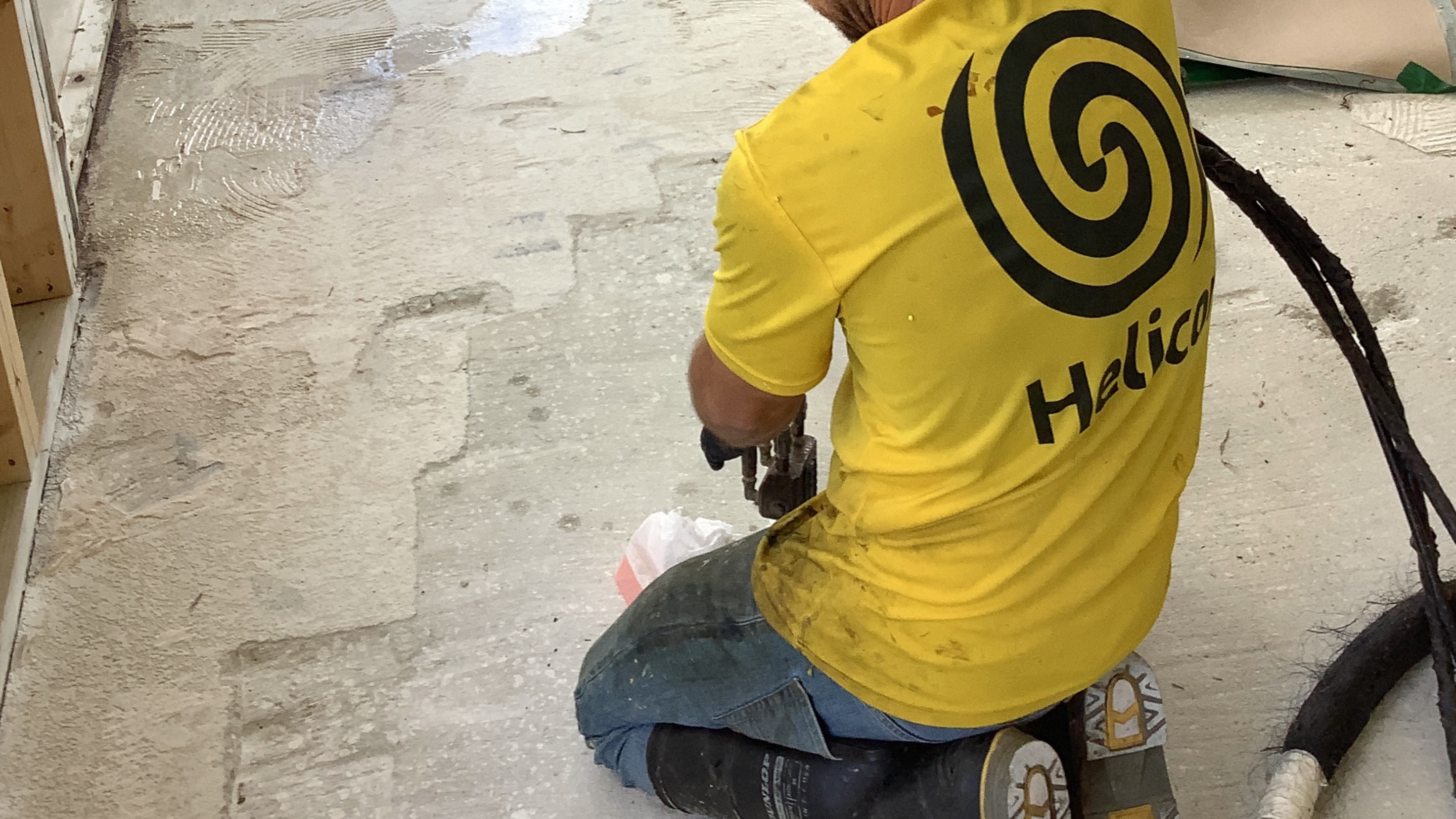
Polyurethane grouting fills shallow gaps under concrete slabs quickly, since the urethane grout expands on contact and cures within minutes. This makes it a common choice for sinking driveways, patios, and garage floors where the void sits close to the surface.
Because polyurethane injection uses small holes and cures fast, it causes minimal disruption compared with methods that require larger equipment. Many Florida contractors pair polyurethane grout with other stabilization work when a slab needs both lifting and soil reinforcement.
Cementitious Slurry for Open Cavities
Cement-based slurry grouting fills open cavities and fractured rock by flowing into gaps that other grouts cannot reach. This high-mobility grout, sometimes called slurry grouting, works well in granular soil or rock voids where a flowable material needs to fill an irregular space completely.
Slurry grouting also supports underpinning work and helps control groundwater seepage around underground structures. Choosing among these four approaches is really about matching the method to your soil, and that depends on factors specific to your property’s ground conditions.
What Determines the Right Method for a Florida Property?
The right method depends on soil type, void size, water conditions, and how much disruption your property can tolerate. No two Florida lots behave identically, even within the same neighborhood, because sandy fill depth and limestone proximity vary block by block.
How Do Soil Type and Void Size Affect the Choice?
Soil type and void size set the first boundary on which grouting method will work. Sandy, unstable soil with low bearing capacity often calls for compaction grouting to rebuild strength, while finer, more cohesive soils respond better to permeation grouting.
- Small, shallow voids under slabs: polyurethane grouting, fast curing, minimal disruption
- Larger voids from soil loss or sinkhole activity: compaction grouting, densifies surrounding soil
- Fine-grained or silty soils: permeation or chemical grouting, penetrates without fracturing
- Open cavities in fractured rock or gravel: cementitious slurry grouting, fills irregular spaces
Matching void size to method matters because using a high-mobility grout in a confined space can waste material, while using a low-mobility grout where permeation is needed may not reach the target zone at all.
When Do Water and Sinkhole Conditions Change the Plan?
Water and karst geology change the entire approach, since Florida sits atop limestone bedrock prone to dissolving and forming subsurface cavities over time. Fluctuating seasonal groundwater levels can wash soil into these cavities, expanding voids that started small.
When sinkhole activity is confirmed, remediation plans typically lean on compaction grouting to rebuild bearing capacity across a wider footprint, since surface-level fixes will not address deep cavity formation.
Properties near tidal zones face an added variable: saltwater intrusion and tidal fluctuation can accelerate groundwater infiltration, which is one reason coastal Florida properties often need engineered assessments before pumping any grout.
How Do Disruption and Budget Shape the Options?
Disruption tolerance and budget often narrow the final decision once you account for soil and water factors. Polyurethane grouting generally requires the smallest access points and the shortest project timeline, which appeals to homeowners who need a driveway or patio usable again quickly.
Compaction grouting and slurry grouting involve more equipment and longer injection schedules, reflecting their role in addressing larger or deeper problems. A property-specific evaluation is the only reliable way to weigh these trade-offs, since a method that fits a neighbor’s lot may not fit yours. That evaluation happens once an engineer starts the injection process.
What Happens Before and During Grout Injection?
Grout injection starts with locating the void and ends with verifying the soil actually improved. Every step between those two points follows an engineered sequence designed to protect the structure above.
How Engineers Locate Voids and Set Repair Goals
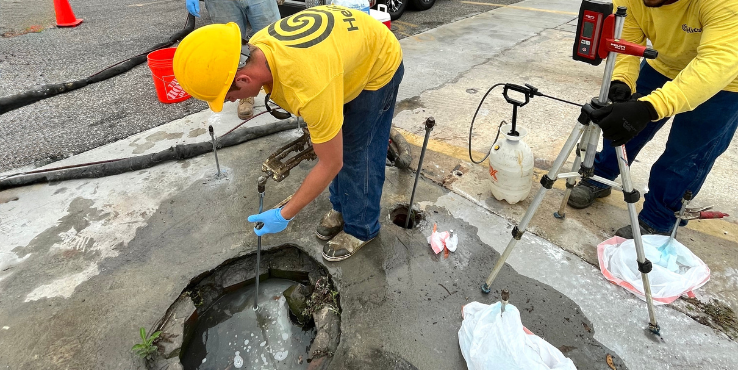
Engineers locate subsurface voids using site history, visual inspection, and testing methods that reveal what is happening underground. This assessment sets the injection layout and determines which grout type and pressure will achieve the ground stabilization goal without over-pressurizing nearby soil.
The inspection also considers structural support needs above the void, since a garage floor and a load-bearing foundation wall require different treatment volumes. This planning phase is where the choice between compaction grouting, permeation grouting, or polyurethane grouting actually gets finalized for your specific property.
How Crews Inject, Monitor, and Check the Work
Crews inject grout through small-diameter pipes or probes, monitoring pressure and volume continuously to prevent soil fracturing or unwanted ground movement. Injection typically proceeds in controlled stages, working from deeper zones upward so each stage forms against properly confined soil.
Field teams track how much grout each zone accepts and adjust the pattern if soil density varies across the site, which is common in Florida where sandy fill depth changes across a single lot. After injection, verification steps such as settlement monitoring confirm the ground improvement met its target, giving the property owner a documented result rather than a guess.
- Locate the void using site inspection and subsurface testing
- Design an injection pattern based on soil type and depth
- Inject grout in controlled stages, monitoring pressure throughout
- Verify results with post-injection monitoring or testing
This process restores soil stability in most cases, but grouting is not always the final step when structural damage has already occurred above the void.
When Is Grouting Not Enough?
Grouting is not enough when a slab has already cracked into multiple sections or when a foundation needs direct structural support rather than soil improvement. Filling the void beneath a structure solves the soil problem, but it does not repair concrete that has broken or shifted out of level.
Grouting vs. Slab Lifting
Grouting stabilizes soil, while slab lifting repositions concrete that has already settled. Polyurethane injection can serve both purposes at once on shallow slabs, since the expanding foam fills the void and lifts the concrete in the same process.
Mudjacking, an older slab-lifting method using cement-based slurry, also raises concrete but adds more weight to the soil beneath it. For heavily cracked or fractured slabs, grouting the void underneath may still leave a concrete surface too damaged to hold its new position, which is a separate structural question from soil stability.
Grouting Alongside Foundation Underpinning
Foundation underpinning becomes necessary when settlement has affected the structure’s footing, not just the soil around it. Helical piers or other deep foundation systems transfer building loads to more stable soil layers, working alongside grouting rather than replacing it.
In many Florida sinkhole repair projects, compaction grouting rebuilds the soil while underpinning systems provide direct structural support to the foundation itself. Recognizing which category your property falls into (soil improvement alone or soil improvement plus structural support) is a decision best made after a proper inspection.
Choose an Engineered Plan for the Ground Beneath Your Home
The safest path forward is an engineered assessment that matches a grouting method to your soil, not a guess based on what worked next door. Florida’s mix of sandy fill soils, limestone bedrock, and seasonal groundwater shifts means two homes on the same street can need completely different repairs.
Foundation settlement rarely announces itself clearly at first. A hairline crack or a slightly uneven floor can point to a small, shallow void or a much larger soil stability issue beneath the surface, and only a site-specific evaluation tells you which one you are facing.
Residential projects benefit most when you choose the grouting method after soil testing and void mapping, not before.
Frequently Asked Questions
What are the main grouting methods for soil voids in Florida?
The main methods are compaction grouting, permeation grouting, polyurethane injection, and cementitious slurry grouting. Each addresses a different soil condition, from loose sandy fill to fine-grained soils to open cavities in rock.
Can grout injection stabilize soil beneath my foundation?
Yes, grout injection is designed to fill voids and increase soil density beneath foundations without major excavation. The specific method depends on how loose the soil is and how deep the void sits below the footing.
How do I know whether a void needs compaction grout or polyurethane?
Void size and depth are the main factors. Compaction grout suits larger, deeper voids in loose soil, while polyurethane fits shallow gaps directly beneath a slab, and a site inspection confirms which applies to your property.
Will filling a soil void lift my settled concrete?
Some grouting methods, particularly polyurethane injection, can lift a settled slab by filling the void underneath. Other methods, like permeation or compaction grouting, focus on stabilizing soil and may not raise the concrete on their own.
Do I need an engineer to choose a grouting method?
Yes, an engineered assessment is the reliable way to match a grouting method to your soil type, void size, and structural needs. Florida’s varied soil conditions mean the same visible crack can point to very different underlying problems from one property to the next.
You do not have to guess which grouting method your property needs. A free inspection from Helicon pinpoints the exact soil and void conditions beneath your home and lays out the right fix for your budget and timeline.