- Helicon
- 9
- Orlando Airport Road Soil Stabilization: Structural Polyurethane Reinforces Weak Ground Beneath a Commercial Roadway
Orlando Airport Road Soil Stabilization: Structural Polyurethane Reinforces Weak Ground Beneath a Commercial Roadway
Orlando, FL
Market: Commercial
Solution: Soil Stabilization
Services: Two-Part Structural Polyurethane Injections
The Project
This project took place on a road near the Orlando Airport that was part of the airport property.
Unlike a private driveway or small residential slab, an airport-area road plays an important role in keeping people, vehicles, equipment, or services moving through an active commercial environment.
When ground beneath a roadway becomes weak or unstable, the concern is not limited to how the surface looks.
The condition beneath the pavement can influence:
- Roadway performance
- Surface settlement
- Uneven areas
- Continued maintenance requirements
- Vehicle access
- Future repair costs
Helicon’s role on this project was to improve the support conditions below the roadway through targeted soil stabilization.
Rather than approaching the project as a cosmetic paving repair, the work focused on the supporting ground beneath the road.
That distinction is critical.
A roadway can be resurfaced, patched, or repaved, but if the support beneath it remains weak, the same movement can eventually affect the repaired surface.
By addressing the underlying support condition first, Helicon helped create a more dependable base for the roadway above.
Why Soil Stabilization Matters Beneath Roadways
Roads depend heavily on the materials supporting them.
The pavement that drivers see is only the top portion of a larger system.
Beneath that surface are layers of supporting material that distribute traffic loads and help maintain a consistent roadway elevation.
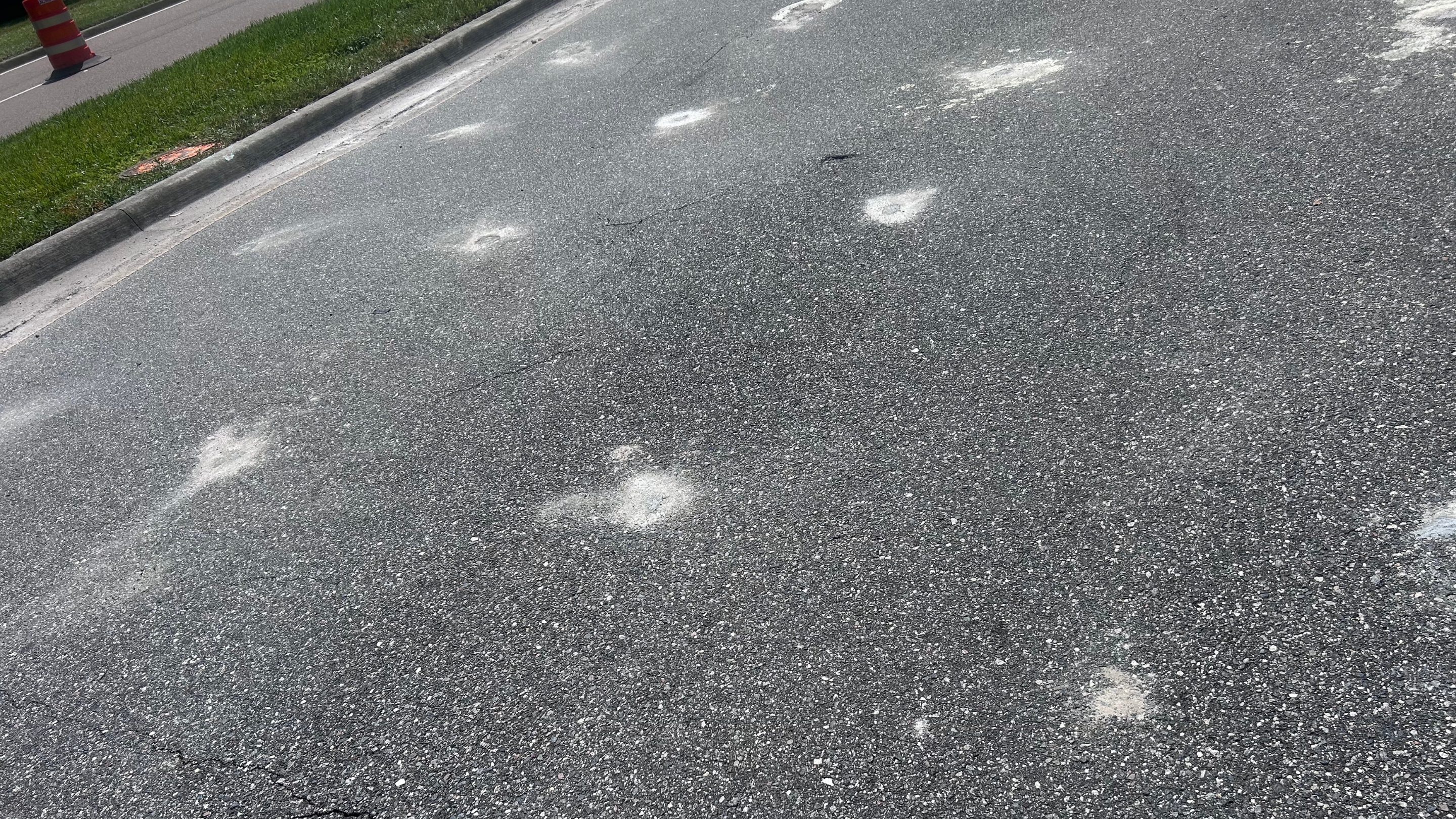
If those supporting layers contain weak zones, voids, or areas that do not bear consistently, sections of pavement can begin reacting differently under traffic.
Potential symptoms may include:
- Localized roadway settlement
- Depressions
- Surface cracking
- Uneven driving surfaces
- Repeated repairs in the same location
- Areas that continue to move after resurfacing
What is documented is that the ground beneath the road required stabilization.
That made structural polyurethane soil stabilization an appropriate part of the repair plan.
Why Structural Polyurethane Was Selected
Helicon used two-part structural polyurethane injections for the project.
Structural polyurethane can be installed below grade through strategically located injection points. Once the two components react, the material expands within the treatment zone.
The purpose of this process is to improve the condition of weak or unsupported areas beneath the surface.
For a roadway project like this, structural polyurethane offers several practical advantages.
Targeted Treatment
Instead of removing a broad section of roadway solely to reach the supporting ground, injection points can provide access to designated areas below the surface.
Limited Surface Disruption
The process focuses on subsurface support rather than requiring the entire roadway structure to be dismantled.
Controlled Installation
Polyurethane can be placed in planned quantities across multiple treatment points, giving the production team a way to distribute material throughout the specified repair zone.
Structural Support
The treatment is intended to strengthen and improve support within the areas receiving material.
Those benefits made the system well suited to this Orlando commercial roadway project.
The Challenge
Closing an Active Roadway
The primary project challenge was not the polyurethane itself. It was maintaining a safe and controlled work area while the stabilization took place.
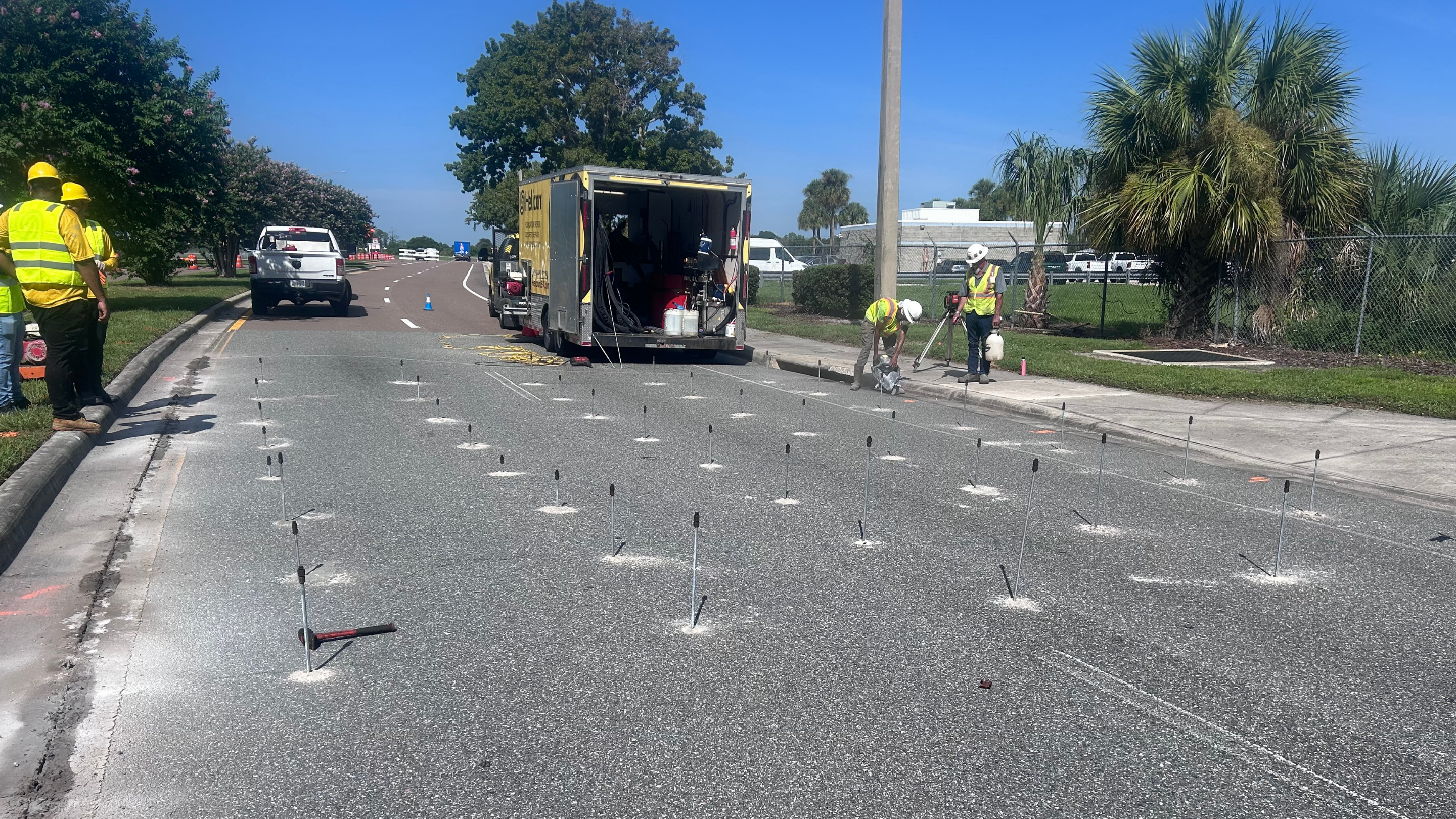
The roadway needed to be closed during the road stabilization work. That closure interrupted the traffic that would normally be operating through the area. In an airport environment, even a temporary road closure can create logistical pressure.
A roadway may serve employees, vendors, contractors, service vehicles, passengers, or other airport-related traffic. What is clear is that the closure stopped the normal traffic flow through the project area.
That meant Helicon had to execute the soil stabilization efficiently while the road was unavailable.
Why Traffic Control Changes a Commercial Stabilization Project
A commercial soil stabilization project is different from a private residential repair because downtime can affect more than one property owner.
Every additional period that a commercial road remains closed may create operational inconvenience.
That places importance on:
- Clear sequencing
- Efficient material installation
- Crew coordination
- Maintaining a defined treatment area
- Completing the repair without unnecessary delay
The project therefore had to balance two priorities: 1) Complete the structural polyurethane installation correctly and 2) Restore normal roadway use as efficiently as the project conditions allowed.
The Solution
Structural Polyurethane Injection Points
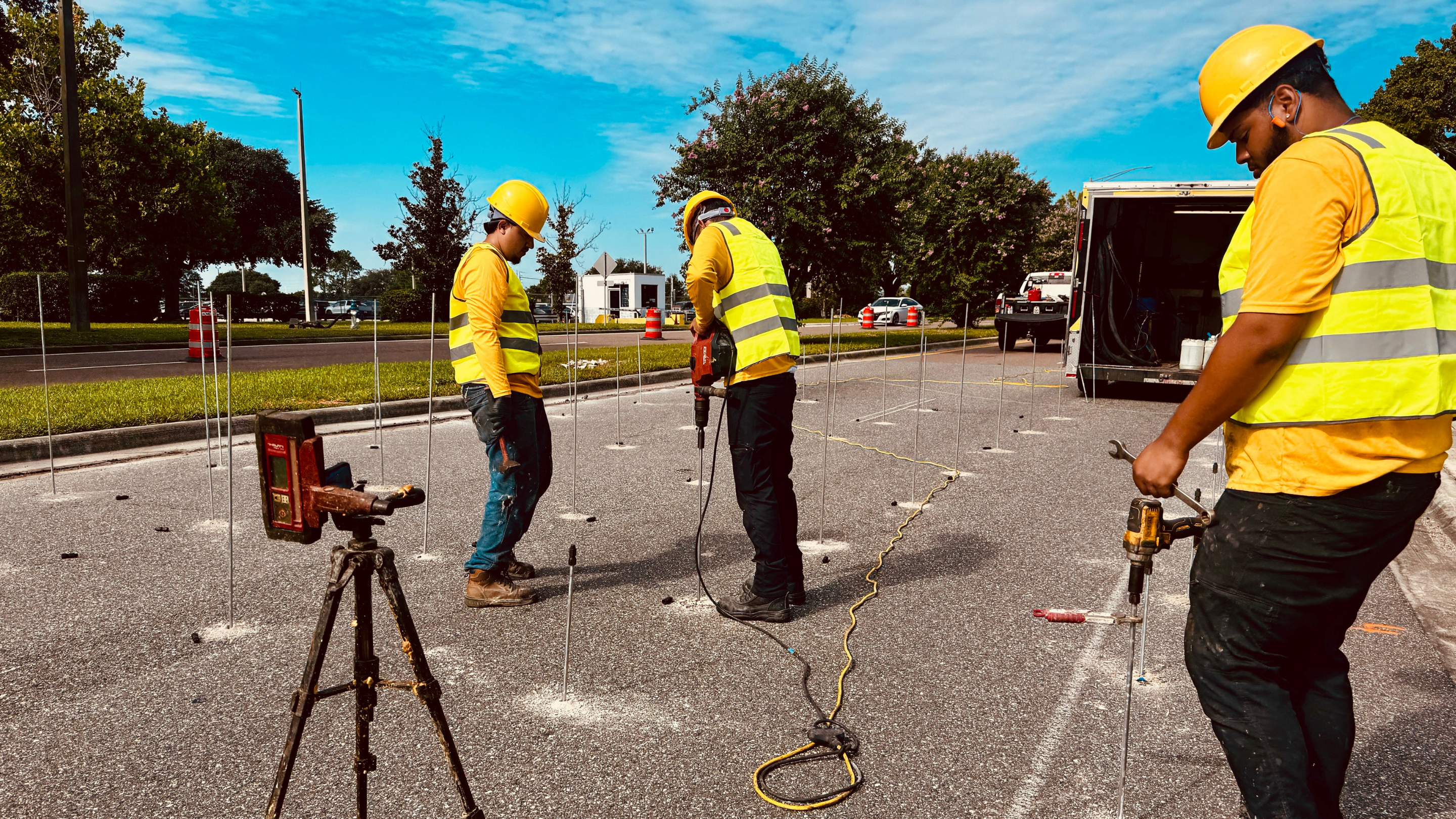
Helicon performed the repair using 50 injection points. These points were used to introduce two-part structural polyurethane into the designated treatment areas beneath the roadway.
The point layout allowed the repair to address multiple locations rather than depending on one isolated injection. In total, Helicon installed approximately 1,000 pounds of structural polyurethane material. That is a substantial quantity of material and reflects the scale of the treatment area.
The repair was designed to improve support in the weaker ground beneath the road and provide a more stable base for the roadway system above.
What the Structural Polyurethane Was Intended to Accomplish
The polyurethane injections served several important purposes.
Improve Weak Ground Conditions
The primary goal was to increase support within the treated areas beneath the roadway.
Address Subsurface Voids or Weak Zones
Where accessible spaces or weaker areas existed within the treatment zone, the expanding structural polyurethane could help improve continuity and support.
Reduce Settlement Risk
By strengthening the designated subsurface areas, the project reduced the risk associated with leaving weak ground untreated.
Support the Roadway Above
Ultimately, the ground treatment was performed so the roadway above could rely on improved underlying support.
The project should not be described as a guarantee that settlement can never occur again.
Roadways remain exposed to traffic loads, weather, drainage conditions, and future changes in the surrounding environment. However, the structural polyurethane program materially improved the support condition within the treated locations.
Why Soil Stabilization Can Be More Strategic Than Surface Repair Alone
When roadway movement develops, the first instinct can be to focus on the pavement surface. A contractor may patch cracking, fill a low area, or place a new asphalt or concrete layer. Those methods can be appropriate when the pavement itself is the only problem.
But when the underlying support is weak, surface repairs alone may not address the true source of the movement. That is why soil stabilization can become an important part of commercial roadway repair.
The repair sequence should address the support problem before relying on cosmetic or surface-level improvements.
A simplified approach is:
- Identify the roadway distress.
- Evaluate the supporting ground.
- Determine whether weak or unsupported areas are present.
- Stabilize the designated subsurface zones.
- Complete any necessary surface repair afterward.
This Orlando project focused on that critical subsurface phase.
Results and Benefits
The completed Orlando project included:
- 50 structural polyurethane injection points
- Approximately 1,000 pounds of two-part structural polyurethane
- Treatment beneath an airport-property roadway
- Targeted improvement of weak subsurface support zones
- A coordinated road closure during the stabilization process
The principal benefits included:
- Improved support beneath the treated roadway areas
- Structural treatment below the pavement surface
- Reduced reliance on surface-only correction
- A targeted alternative to more extensive excavation-based repair
- Improved ground conditions in the designated treatment areas
The repair addressed the road from the ground up. That is the key difference between surface maintenance and true soil stabilization.
Why This Project Matters for Commercial Property Owners
Weak ground beneath a road, parking lot, loading area, or commercial slab can eventually become an operational issue. Surface repairs may improve appearance, but they do not necessarily correct weak support below grade.
Property owners and facility managers should consider professional evaluation when they notice:
- Recurring pavement settlement
- Depressions in roads or parking areas
- Cracking that returns after repair
- Uneven concrete or asphalt
- Voids beneath slabs
- Areas where pavement repeatedly loses support
A professional evaluation can help determine whether soil stabilization, structural polyurethane injection, concrete repair, or another method may be appropriate.
About Helicon
Helicon helps Florida property owners, contractors, facility managers, and commercial clients address weak ground, foundation settlement, sinking concrete, seawall erosion, and other support-related concerns.
Our team develops repair solutions based on the property, observed conditions, project requirements, and structural objectives—with a focus on correcting problems where they often begin: beneath the surface.
If a roadway, parking lot, commercial slab, or other paved area is experiencing settlement because of weak subsurface conditions, Helicon can help evaluate the underlying support.
Helicon provides soil stabilization, structural polyurethane injections, concrete stabilization, concrete lifting, foundation repair, sinkhole repair, and related structural solutions throughout Orlando, Central Florida, and communities across the state.
Call 844-HELICON to schedule an inspection and learn whether structural polyurethane soil stabilization may be appropriate for your project.
FREE INSPECTION REQUEST