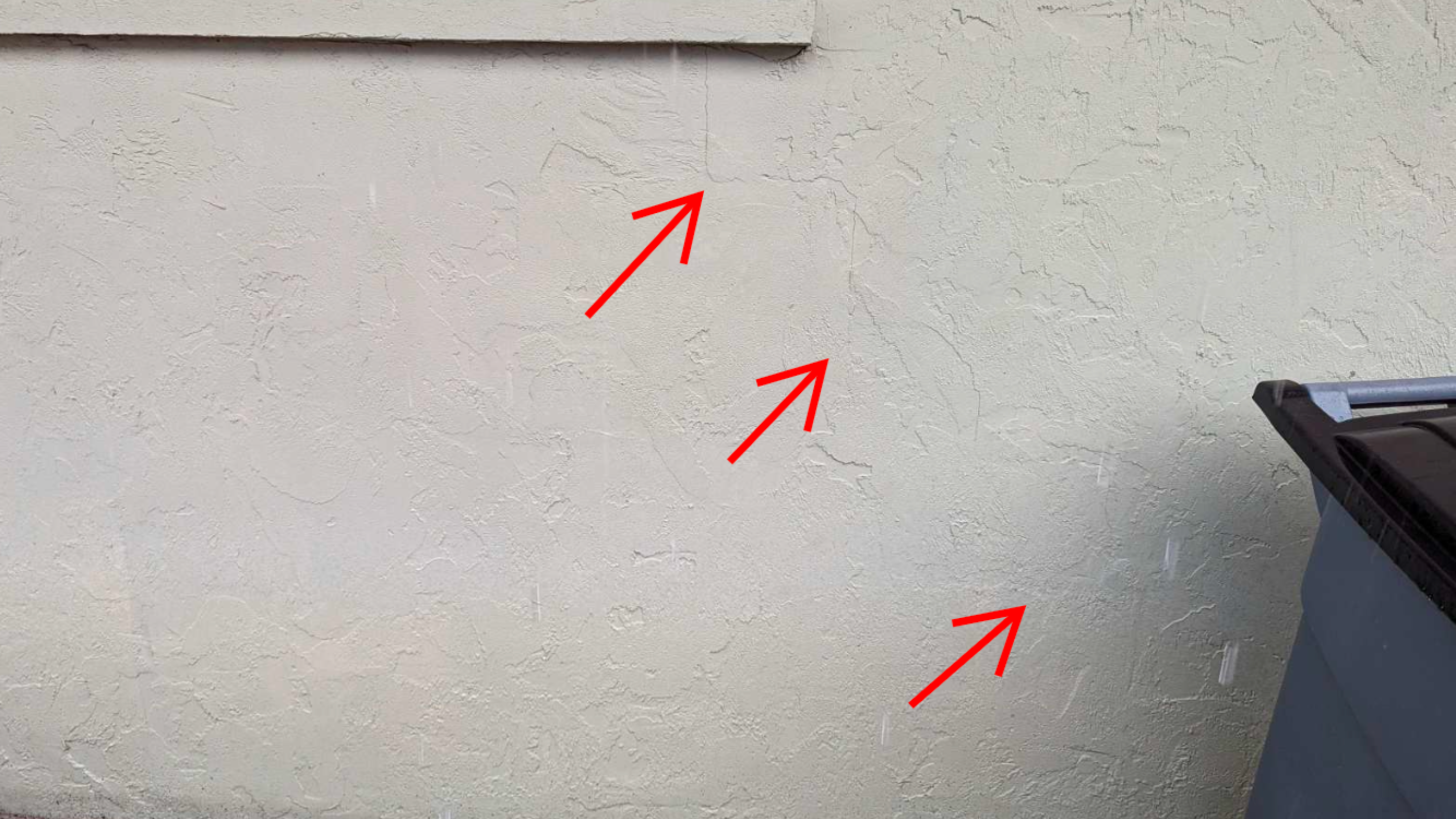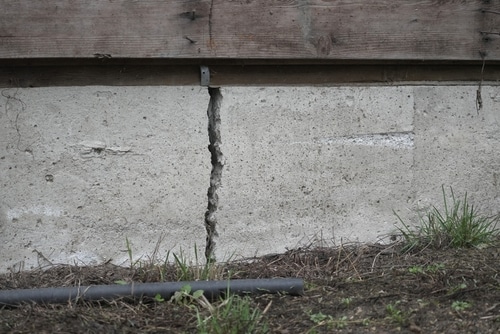
In Florida, where sandy soils sit above a water table that rises fast during rainy season, drainage foundation problems usually begin exactly like that, quietly, before anyone connects the puddle to the crack that shows up two years later.
Florida ground behaves differently than soil in most other states. It drains quickly in some spots and holds water stubbornly in others, especially where clay pockets or poorly compacted fill sit beneath a slab. Flat terrain, a high water table, and heavy seasonal storms turn ordinary drainage neglect into foundation trouble faster here than almost anywhere else.
This guide covers how water pooling near a foundation becomes slab cracking, what a drainage system actually does underground, and which warning signs mean the problem has moved past a simple fix.
Why Excess Water Can Undermine a Florida Home
If the ground around your home stays soggy for days after a storm, the soil beneath your footing is doing the same thing out of sight. It swells, saturates, and pushes against the structure above. That pressure builds slowly, which is why so many homeowners miss the early stage entirely.
A mix of sand, silt, and scattered clay layers means water moves unevenly beneath a slab, filling voids in one section while draining freely in another. That inconsistency is the part generic drainage advice tends to miss.
From Saturated Soil to Slab Movement
Groundwater rising toward the surface creates hydrostatic pressure, a steady push against foundation walls and the footing below. When the water table climbs after weeks of rain, that pressure increases, and the native soil around the footer loses some of its ability to bear weight evenly.
Backfill compacts differently than the undisturbed soil beside it, creating weak zones where infiltration collects. Over time, that uneven support is what cracks a slab floor. The concrete itself isn’t failing; the ground beneath it is moving. Recovering that lost support is a soil stabilization problem rather than a concrete one.
Why Florida Sites Hold and Move Water Differently
Most Florida homes are slab-on-grade rather than basement construction, so water problems appear as pooling, seepage, and cracking rather than a flooded basement. The mechanics underneath are the same, but the symptoms look different enough that homeowners often misread them.
Surface sand drains fast while denser layers below trap water underneath. When that moisture stays against a slab edge, it also becomes an air quality issue, since trapped dampness invites mold and mildew in attached garages and enclosed patios.
Drainage Measures That Keep Water Away From the Structure
Standing water along a driveway or a soggy strip of lawn beside the house is usually the first visible clue that surface drainage isn’t working. A Florida downpour can drop more rain in an hour than some regions see in a week, which overwhelms yards that were never graded correctly in the first place.
Three layers keep water moving away from a structure instead of soaking into it. Skipping one means the other two work harder than they should.
Surface Controls: Grading, Gutters, and Downspouts
Grading is the first line of defense. Yards should slope away from the house so surface water has somewhere to go besides straight down against the foundation. The residential code benchmark is a drop of at least 6 inches across the first 10 feet, with swales or drains permitted where lot lines or slopes make that impossible.
Gutters and downspouts matter just as much. Clogged or short downspouts release water within a few feet of the structure, which is often enough to saturate backfill and start the whole cycle. Dense plantings set too close to the wall compound it by trapping moisture against the exterior.
Subsurface Controls: Perimeter and Footing Drains
When surface controls aren’t enough, subsurface drainage takes over. A perimeter drain, also called a footing drain, sits alongside the footing and intercepts water before it reaches the foundation wall.
French drains work on the same principle, using buried perforated pipe surrounded by gravel to carry water toward a safe discharge point. These are especially useful on flat lots where gravity alone can’t move water away fast enough.
Waterproofing and Drainage Layers
Waterproofing coatings and drainage mats form the final barrier at the wall itself. A drainage mat channels water down toward the footing drain instead of letting it soak into the wall material.
Worth knowing what the code does and doesn’t require here. Section R405 of the International Residential Code governs subsurface foundation drainage, but it applies to foundations enclosing habitable space below grade, and it exempts sites on well-drained sand and gravel soils.
Since most Florida homes have no below-grade space, subsurface drainage here is usually a site-specific decision rather than a code mandate. That is exactly why so many older properties have nothing beyond a graded yard and a downspout.
How a Below-Grade Collection System Works
Watching water disappear into the yard after a storm feels reassuring, but where it goes matters more than the fact that it left. In sinkhole-prone parts of the state, water that pools in the wrong spot for too long can accelerate soil erosion around an older foundation, which is where a drainage issue and sinkhole repair start to overlap.
A properly engineered system moves water with intention rather than luck. A sump basket set inside the foundation can collect groundwater rising under a slab along with water routed in from perimeter drains through sleeves in the footing, which is what separates an engineered system from a trench full of gravel.
Pipe, Stone, and Fabric Components
A typical system uses perforated PVC pipe wrapped in crushed stone or washed gravel, which admits water while keeping larger soil particles out. Geotextile fabric wraps the stone bed to prevent clogging over time, the most common failure point in cheap installs.
Each material is chosen for a specific job rather than for convenience, which is what separates a system that lasts decades from one that silts up in five years.
Choosing a Safe Discharge Route
Collected water has to go somewhere useful. The realistic options are a daylight discharge point downhill from the house, a connection to an approved storm sewer, or a dry well set well away from the structure. The wrong route just relocates the problem a few feet instead of solving it.
When a Sump Pump Replaces Gravity Drainage
Flat Florida lots don’t always give gravity enough slope to work with. In those cases, a sump pit and pump take over, actively moving collected water out to a discharge point instead of waiting for a grade that isn’t there.
Warning Signs That Call for More Than Routine Drainage Work
A crack that reappears after every heavy rain, or a floor that feels slightly uneven near an exterior wall, tells a different story than a one-time puddle. Telling routine water intrusion apart from structural movement is what separates a small fix from a large one.
What You Can Observe After a Storm
Walk the perimeter a few hours after the rain stops and look for water still sitting against the foundation. Fresh cracks in slab floors, doors that stick only during wet months, and a musty smell near exterior walls all point to surface drainage that isn’t moving water fast enough.
Mark the ends of any crack with a pencil and date it. Whether it moves over the next few weeks is the single most useful piece of information you can bring to an inspection.
When Slab Support or Structural Repair May Be Needed
If cracks widen, doors stop closing altogether, or a section of floor visibly slopes, the soil beneath the footing has likely lost its ability to support the structure evenly. At that point, foundation repair becomes the realistic next step, and another round of surface drainage work on its own won’t recover the support that was already lost.
Frequently Asked Questions
How can I tell if poor drainage is putting my foundation at risk?
Look for water sitting near the slab hours after rain stops, along with new or widening cracks in the slab or nearby walls. Doors and windows that stick only during rainy months are another common clue that soil movement is underway.
How deep should a foundation drain be installed?
Footing drains generally sit at or below the top of the footing, or below the bottom of the slab, so water is intercepted before it reaches the base of the wall. Exact depth depends on soil type and water table height, which is why a site assessment beats a general rule.
Do all homes need a foundation drainage system?
No. Well-drained sandy sites often function on grading and gutters alone, which is why the residential code exempts certain soil classifications from subsurface drainage requirements. Homes on flat lots, in high water table areas, or with a history of pooling are the ones that benefit most.
How do you fix water pooling near the foundation after heavy rain?
Start with grading, aiming for roughly 6 inches of fall across the first 10 feet from the house, then confirm that downspouts discharge several feet out rather than at the wall. If pooling persists after both, subsurface drainage such as a French drain is the next step.
What materials hold up best in Florida’s sandy soil?
Perforated pipe in washed gravel or crushed stone, wrapped in geotextile fabric, handles sandy conditions well because sand drains quickly once water reaches the collection layer. The fabric is the critical part locally, since fine sand and silt are exactly what clog an unwrapped pipe.
When is a sump pump necessary instead of gravity drainage?
When the lot is too flat to give collected water a downhill route, or when a high water table means groundwater rises under the slab rather than arriving from the surface. Both are common in Florida, and both defeat a gravity-only system.
How long does a properly installed drainage system last?
Decades, when the pipe is wrapped and the discharge route stays clear. Systems fail early for predictable reasons: no filter fabric, a discharge point that was never downhill to begin with, or a sump pump with no maintenance and no backup power.
Is drainage work cheaper than foundation repair?
Almost always, and the gap widens the longer a problem sits. Grading and downspout corrections are modest projects. Restoring lost soil support under a settled footing is a structural job, which is the practical argument for addressing drainage while the symptoms are still cosmetic.
When a Small Drainage Fix Beats a Big Foundation Repair
A slab crack or a soggy patch of yard rarely means disaster is coming. It does mean the ground beneath your home is telling you something, and Florida’s flat terrain and storm patterns make that message more common here than in most states.
Helicon has spent more than twenty years on Florida’s sandy soils and high water tables, earning a 4.9-star reputation from homeowners who wanted a clear answer about their property. Since 2004, that work has meant engineering drainage systems and structural repairs for conditions generic solutions tend to miss.
Whether the answer turns out to be better grading, a French drain, or a closer look at the slab itself, an on-site assessment is the only way to know. Request your free inspection today.