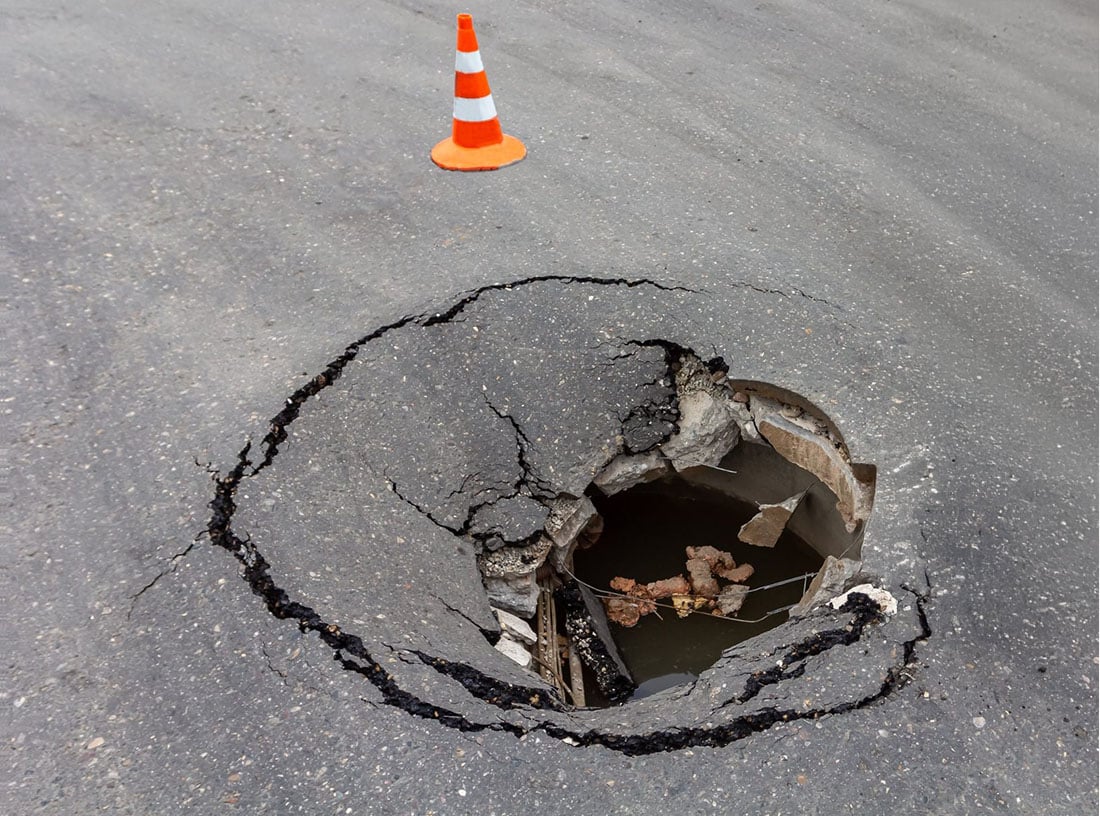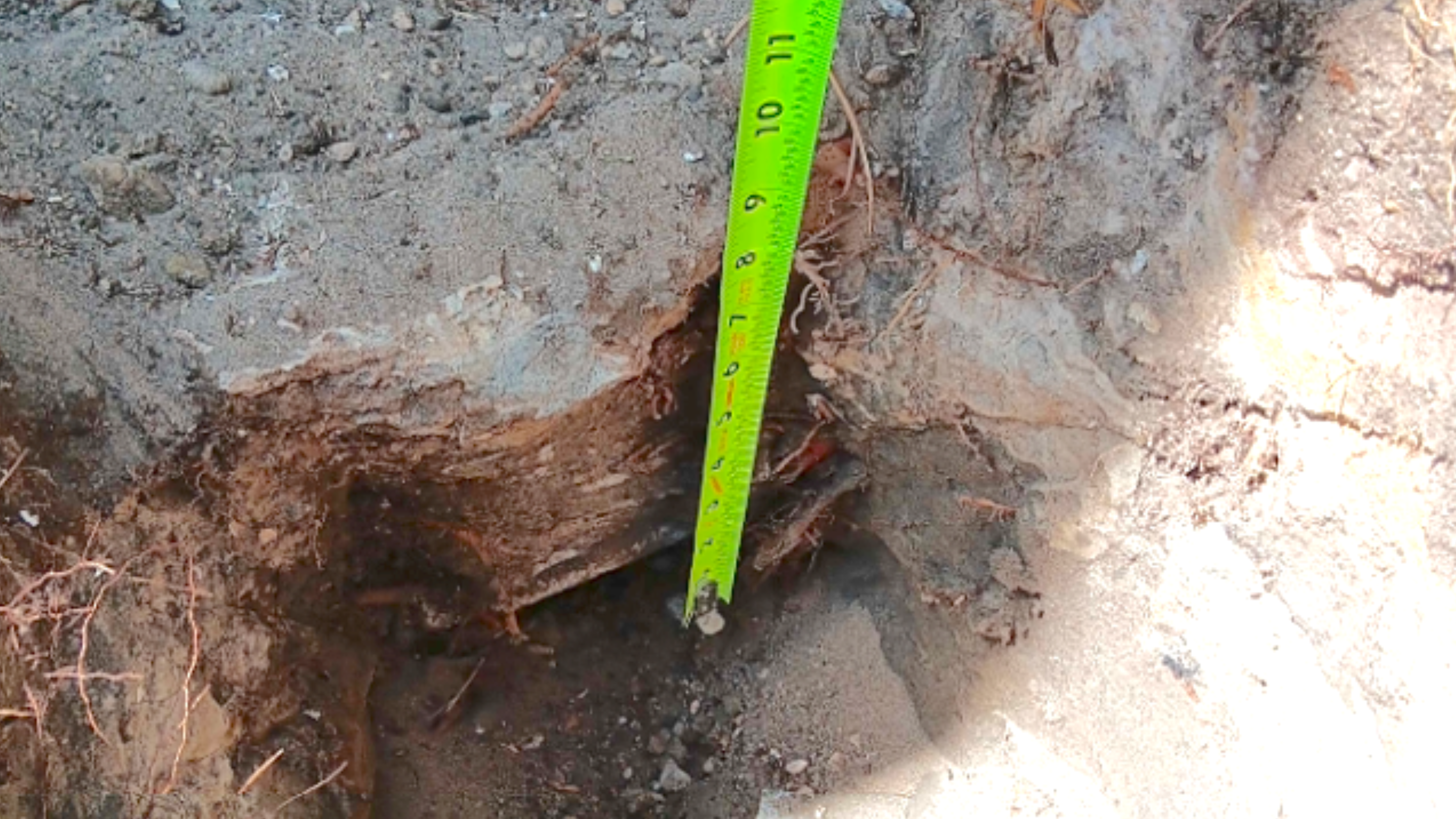
A commercial warehouse floor does not have to fail completely to become a serious business problem.
In many Florida facilities, slab settlement starts quietly. A low spot appears near stored inventory. A forklift begins hitting the same uneven section every day. Hairline cracking spreads. A loading path starts to feel rougher than usual. Water begins collecting where the slab has dropped. Then the issue grows from an inconvenience into a safety risk, an operations problem, and a financial decision that can no longer wait.
For commercial property owners and facility leaders, the danger is rarely limited to the concrete itself. When an interior slab settles, the entire operation can feel it. Forklift routes have become less efficient. Stored materials may shift slightly out of level. Employees notice trip hazards. Maintenance teams start spending time on recurring patches that never truly solve the problem. In many cases, the visible floor problem is just the final symptom of a deeper soil support issue underneath the slab.
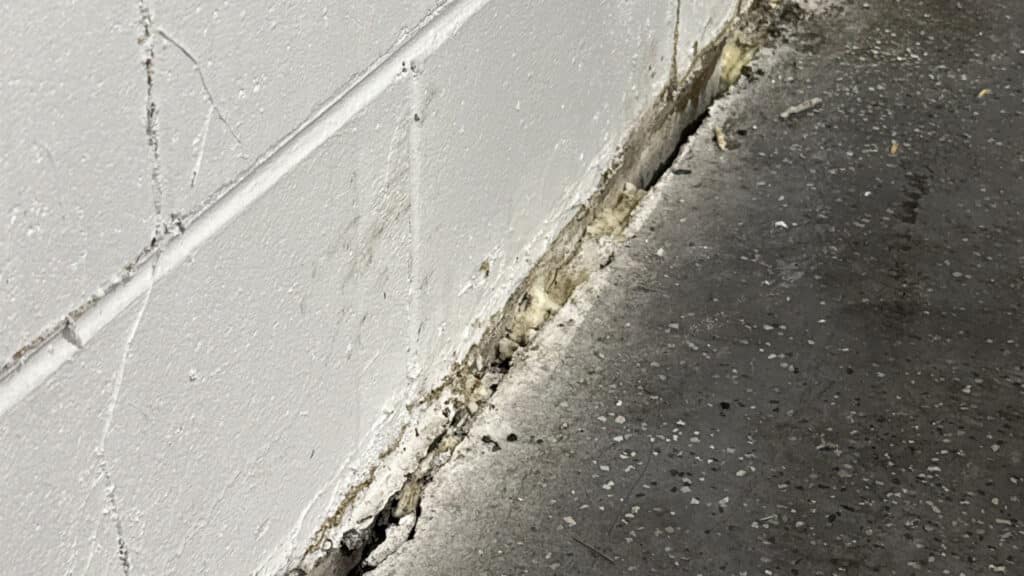
That was the situation at a marble and granite warehouse in Tampa, Florida, where weak subgrade soils were no longer supporting the weight of heavy stone inventory and machinery. The result was exactly what commercial property owners want to avoid: uneven interior slabs, visible depressions, and growing concern about safety and productivity.
For business owners, facility managers, and commercial property teams, this case points to a bigger lesson. When warehouse slabs begin to settle, the right repair strategy is not just about lifting concrete. It is about restoring stability fast, reducing downtime, and protecting the long-term performance of the building.
The Real Cost of a Settling Warehouse Floor
Most commercial concrete floor problems do not begin at the surface. They begin below it.
That distinction matters because it changes how the repair should be approached. If the soils beneath the slab have weakened, compressed, or washed out, replacing the surface alone may not address the real cause. A warehouse can end up paying for demolition, replacement, and disruption, only to still face settlement concerns later if underlying conditions remain unresolved.
When underlying soils lose strength, shift, compress, or wash out, the slab above can begin to settle. In a warehouse environment, that movement creates more than an appearance issue. It can affect:
- Forklift travel and operator safety
- Rack and storage performance
- Load distribution across interior slabs
- Trip hazards for employees and visitors
- Equipment movement and workflow efficiency
- Liability exposure and maintenance costs
In this warehouse, geotechnical testing identified weak subgrade soils beneath the slab. That finding mattered because the floor was not just supporting foot traffic. It was supporting concentrated commercial loads in an active facility.
That is a very different environment from a residential slab or light-duty surface. Warehouses regularly carry heavy inventory, wheeled traffic, storage systems, and daily operational stress. Even a moderate amount of movement can create outsized problems when the floor is part of a fast-moving commercial workflow. What looks like a small settlement issue on paper can translate into larger risk in the real world.
For that reason, a cosmetic patch or surface-only repair would not solve the problem. The floor needed underlying support to be restored.
Why Tear-Out and Replacement Was Not the Right Fit
For many commercial properties, full slab removal sounds like the obvious answer. In reality, it is often the most disruptive option.
Demolition inside an active commercial building is rarely simple. It can trigger noise, dust, access limitations, equipment relocation, scheduling conflicts, disposal costs, and cure-time delays before the repaired area can return to service. For a warehouse, distribution center, or manufacturing environment, that kind of downtime does not stay isolated to one square section of slab. It often affects labor planning, shipping efficiency, and overall operational continuity.
In this project, traditional tear-out and replacement was expected to take about a full week and cost nearly five times more than an alternative stabilization approach. For an operating warehouse, that level of disruption can ripple through staffing, shipping, storage, and customer commitments.
That is why commercial concrete lifting has become such an important solution for Florida warehouses, manufacturing facilities, distribution centers, retail spaces, airports, municipal properties, and institutional buildings. When the right site conditions exist, a structural injection approach can stabilize the slab and restore elevation without the cost, mess, and downtime of demolition.
It also gives commercial owners something they value just as much as structural performance: speed with control. Instead of committing to a full replacement schedule, they can often address the underlying support issue more surgically, with better continuity for the people and processes that depend on the building every day.
Helicon’s Tampa Warehouse Floor Repair Strategy
After a detailed site assessment, Helicon recommended a two-part polyurethane injection approach designed to address both slab settlement and weak support conditions beneath the floor.
This method was selected because it could:
- Reach the problem zone beneath the slab
- Fill voids and improve support conditions
- Lift settled concrete with precision
- Avoid full slab demolition
- Minimize disruption to warehouse operations
For commercial environments, that combination matters. A successful repair is not only about engineering performance. It is also about whether the work can be completed while the business keeps moving.
How Polyurethane Injections Work for Commercial Slabs
Polyurethane injections is a minimally invasive repair method used to stabilize weak support zones and lift settled concrete.
In simple terms, the repair targets what is happening below the slab rather than only what is visible above it. When support is compromised by weak soils or voids, the injected material can move into those problem areas, expand, and help reestablish support conditions beneath the floor.
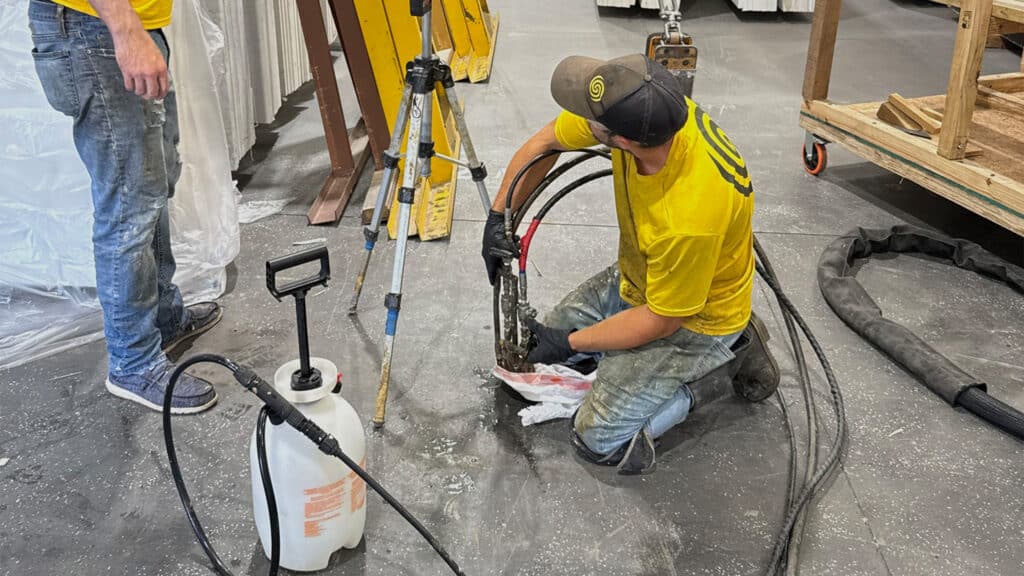
Small injection points are drilled through the slab. A two-part polyurethane material is then injected beneath the concrete. As the material expands, it fills voids, compacts loose soils, and applies controlled upward pressure that can raise the slab back toward proper position.
At this Tampa warehouse, Helicon used 247 pounds of two-part polyurethane grout to stabilize the slab and restore performance. Because the material expands quickly and can be placed with precision, the team was able to work efficiently without the major demolition typically associated with slab replacement.
That precision is especially important inside commercial buildings where slabs are thicker, loads are heavier, and shutdown windows are limited.
For owners and facility managers, another major advantage is predictability. A method that can be installed with targeted access points and monitored in real time is often easier to coordinate than broad demolition. That makes it easier to plan inventory, equipment, staff movement, and production schedules.
Results: Stabilized in Under One Day
The repair was completed in under one day.
That timeline is one of the strongest indicators of why this method is so valuable in commercial environments. Time is not just a convenience factor. It directly affects labor, scheduling, tenant experience, productivity, and revenue continuity. A faster repair method can reduce indirect costs that never show up on a simple demolition estimate.
That speed delivered a major business advantage. Instead of losing a week or more to tear-out, cure time, cleanup, and replacement logistics, the facility was able to restore a level, stable, and safer floor with little to no interruption to ongoing operations.
By the end of the project, the warehouse floor was:
- Level and stable for heavy traffic
- Reinforced against future settlement
- Restored without the disruption of full slab replacement
For the owner, that meant lower repair cost, less downtime, and a long-term stabilization solution better aligned with the demands of a commercial facility.
Why Polyurethane Concrete Lifting Makes Sense for Florida Commercial Properties
Florida commercial properties face a unique mix of challenges: variable soils, high moisture, settlement-prone conditions, and the constant pressure to keep facilities operating.
That is why polyurethane concrete lifting and soil stabilization are often strong solutions for commercial sites in Tampa, St. Petersburg, Clearwater, Lakeland, Orlando, Sarasota, Fort Myers, and Naples.
Compared with traditional replacement, polyurethane injection can offer:
1. Faster project completion
Many projects can be completed in hours instead of days or weeks.
2. Less disruption to operations
There is no large-scale demolition, no major tear-out, and often far less impact on workflow.
3. Precision lifting
The material can be placed strategically to target problem areas beneath settled slabs.
4. Long-term support improvement
By filling voids and improving support conditions, the repair addresses the cause of settlement—not just the visible symptom.
5. Better cost efficiency
For many commercial owners, avoiding replacement means avoiding major labor, disposal, and business interruption costs.
6. Cleaner execution inside occupied facilities
Because the process is targeted and less invasive, it can be a better fit for occupied or actively used commercial interiors.
7. Compatibility with demanding environments
Warehouses, showrooms, industrial buildings, transportation facilities, and municipal structures often need a repair approach that is fast, controlled, and durable under real operating conditions.
In Florida, that value becomes even more important. Commercial owners often deal with variable soils, moisture-related challenges, and settlement conditions that can affect everything from interior slabs to loading areas and structural support zones. A repair method that addresses support conditions while reducing interruption is often the smarter operational decision.
Signs Your Commercial Concrete Floor May Need Attention
Commercial slab issues are often caught late because teams get used to working around them. What begins as a nuisance can become normalized until a larger safety concern, equipment problem, or project cost forces action.
That is why early evaluation matters. Spotting movement early may create more repair options and help prevent a smaller support issue from turning into a more expensive operational problem.
If you own or manage a warehouse, industrial facility, distribution center, showroom, or other commercial building, watch for these warning signs:
- Interior slabs that feel uneven under equipment traffic
- Low areas or depressions in the floor
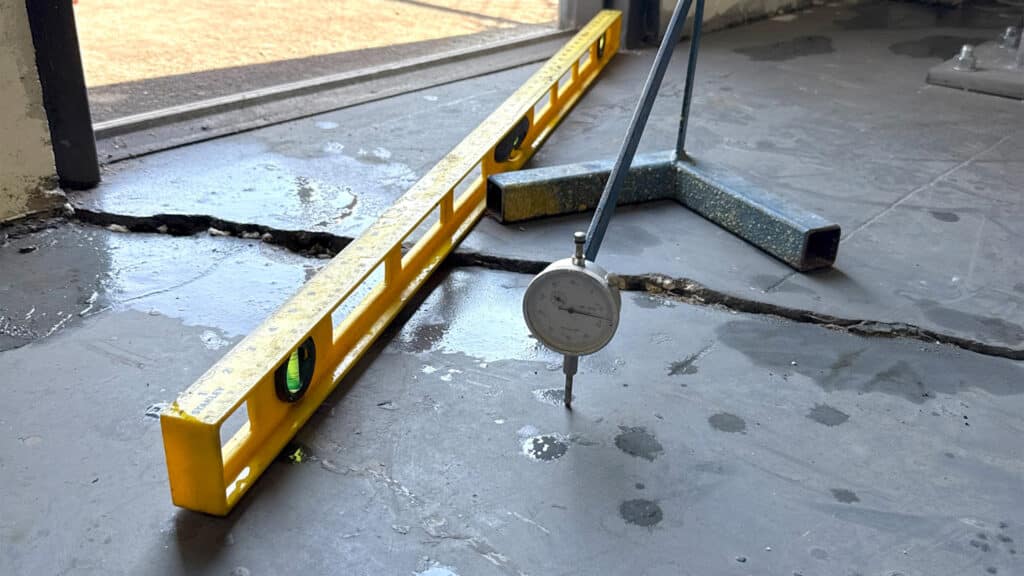
- Cracking that continues to spread
- Separation at joints or transitions
- Water pooling where the slab has dropped
- Repeated patching that does not last
- Doors, frames, or equipment clearances changing near settled areas
The earlier these issues are evaluated, the more options you typically have.
Why Commercial Property Owners Across Florida Call Helicon
Helicon works throughout Florida with engineered solutions for commercial foundation repair, soil stabilization, structural polyurethane injection, concrete lifting, and sinkhole-related settlement concerns. The company serves major commercial markets across Tampa Bay, Orlando, and Southwest Florida, helping commercial property owners solve structural problems while minimizing disruption.
That regional experience matters because Florida conditions are not one-size-fits-all. Soil behavior, moisture conditions, property use, structural demands, and risk tolerance can vary from one site to the next. Commercial owners need a repair partner that can evaluate the cause of movement, identify the right stabilization method, and execute the level of coordination of active facilities required.
For commercial clients, that matters. You need more than a contractor who can lift a slab. You need a team that understands soil behavior, load demands, jobsite logistics, and how to execute in active environments.
Whether the property is in St. Petersburg, Clearwater, Lakeland, Sarasota, Orlando, Fort Myers, Naples, or elsewhere in Helicon’s Florida service area, the goal is the same: restore support, reduce risk, and keep the property performing.
For commercial audiences, trust is built through outcomes. They want to know whether a repair strategy will protect uptime, improve safety, reduce long-term risk, and make financial sense compared with more disruptive alternatives. This project speaks directly to those priorities.
Call 844-Helicon today for a free inspection or fill out the form on our site.