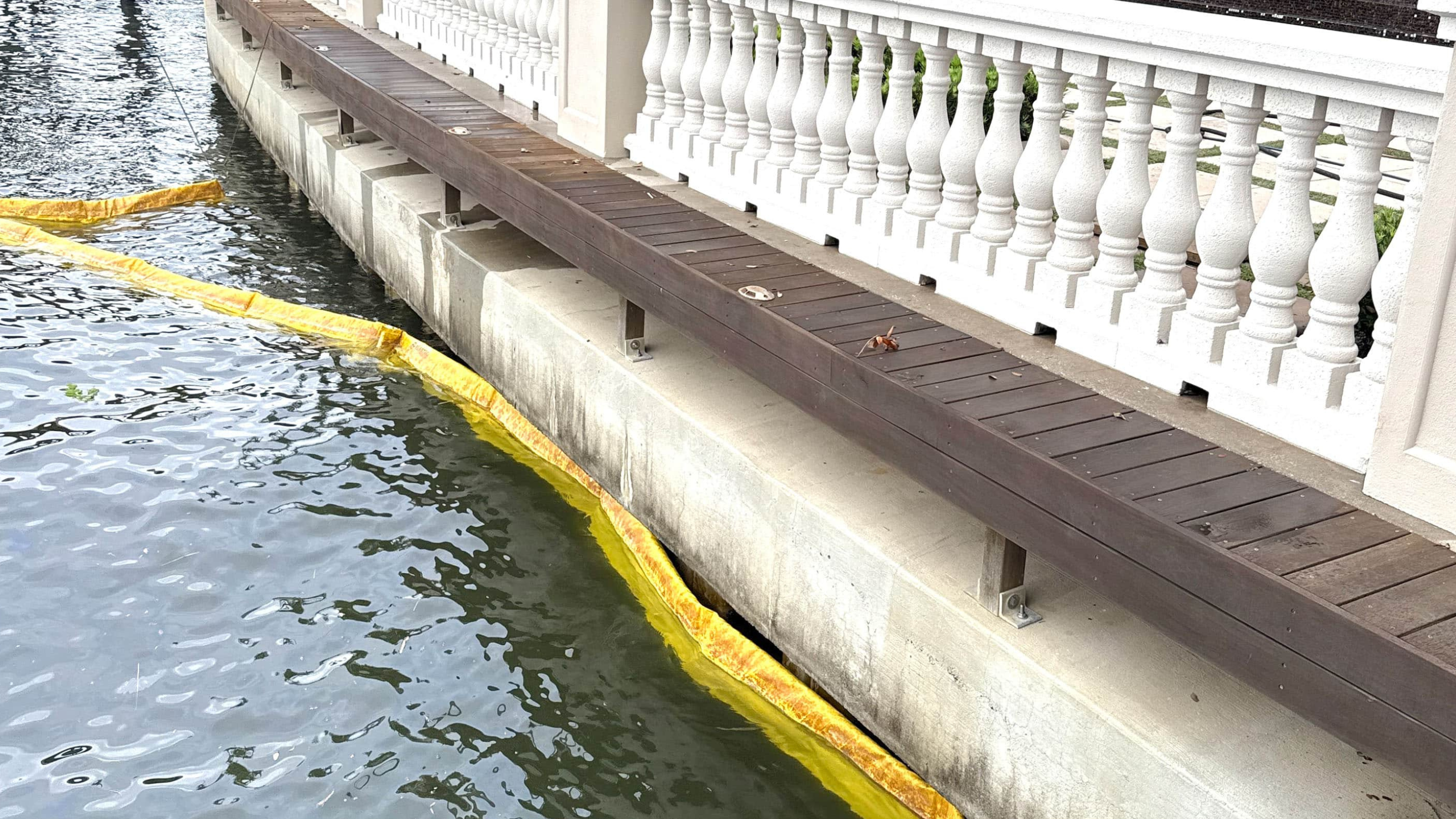
Holes in a seawall can turn into bigger problems fast. Water pushes through, soil washes out, and the wall can lose support. Learning how to repair holes in a seawall early helps protect your shoreline and yard.
At Helicon, we see how small openings can lead to soil loss, sinkholes, and costly structural repairs. The good news is that many small holes can be handled with the right prep, patch, and seal.
In this guide, you’ll learn what causes holes, how to check the damage, and which repair materials fit concrete, vinyl, or steel walls. You’ll also get simple maintenance tips to help your repairs last longer.
What Is Seawall Damage?
Holes in seawalls usually show up because of water pressure, soil erosion, and material breakdown. Knowing the causes and warning signs helps you keep your waterfront property safe.
Common Causes of Holes
Water pressure is usually the main culprit when holes appear in seawalls. When water builds up behind your seawall, it pushes relentlessly, looking for any weak spot to escape. Hydrostatic pressure happens when water can’t drain from the soil behind your seawall.
All that trapped water puts stress on the structure until it finally finds a way out. Heavy rains and high tides just add to the pressure.
Soil erosion works hand in hand with water pressure to worsen the situation. As water flows through tiny cracks or joints, it carries soil away, gradually hollowing out the area behind the wall. That empty space grows over time.
Waves battering your seawall day after day don’t help either. Every impact stresses the materials and joints, and after years of this, cracks turn into holes.
Types of Seawall Materials
Concrete seawalls are everywhere. They’re tough and last a long time, but cracks can spread and create holes. Saltwater can break down concrete, leaving behind weak spots.
Steel sheet pile seawalls use interlocking metal sheets. Holes usually pop up at seams or where rust has eaten through. Saltwater speeds up the rusting process.
Vinyl seawalls don’t rust, but they can crack from impacts or wild temperature swings. Once vinyl cracks, water finds its way through and starts washing away soil.
Wood seawalls are rare these days, but still show up on older properties. Wood rots after years of water exposure, and those soft spots eventually become holes.
Signs of Structural Issues
Visible cracks are your first red flag. Even small ones let water through and can get worse in no time. Check your seawall for new cracks or ones that have grown.
Soil depressions behind your seawall mean water’s already washing soil away. You might spot dips, sinkholes, or settling in your yard near the wall.
Leaning or tilting sections show that soil loss has left voids behind the wall. If enough soil washes out, your seawall loses support and starts to shift.
Rust stains on concrete or visible corrosion on metal seawalls mean the material is breaking down. These are often the spots where holes form. Water seeping through the wall during high tide is another sign you need to act quickly.
Preparing for Seawall Repair
Before you get started, gather your tools, take safety seriously, and check the damage up close.
Safety Precautions
Safety comes first. Wear gear like safety glasses, sturdy gloves, and boots with a good grip. The ground around seawalls can be slick or unstable.
Check the weather—don’t work during high tide, storms, or if heavy rain’s on the way. Water levels can rise fast and catch you off guard.
Let someone know you’ll be working on the seawall, and keep your phone handy just in case. If the damage looks bad or the wall feels unstable, don’t risk it and call a pro.
Watch out for sharp edges on broken concrete or metal. Test the ground before putting your weight on it. Some spots near the hole could give way.
Required Tools and Supplies
You’ll need the right stuff to fix seawall holes. For inspection, bring a flashlight, measuring tape, camera, and notepad. For repairs, you’ll want:
- Epoxy or polyurethane injection materials for cracks and small holes
- Concrete mix for bigger fixes
- Trowels and mixing tools
- Wire brush for cleaning
- Bucket and water for mixing and cleanup
A drill, safety rope, or ladder might help if you can’t reach the damage easily.
Inspecting the Damage
Walk along your seawall and look for every hole, crack, or weak spot. Snap photos from different angles.
Jot down the location, size, and depth of each problem you find. Use a measuring tape to get the exact size—this helps you buy the right amount of material.
Check for water leaking through holes or soil washing out behind the wall. Look for signs that things are getting worse, like fresh cracks, wet spots, or loose pieces.
Tap the concrete around holes to see if it sounds hollow or feels soft. Document everything. Your notes and photos will help you plan your repair work or share details with an expert if you need advice.
Repairing Holes in Concrete Seawalls
Fixing holes in concrete seawalls comes down to three steps: prepping the spot, filling it with the right stuff, and making sure the repair holds up.
Cleaning and Prepping the Area
Start by scrubbing the hole with a wire brush. Remove loose concrete, debris, salt, and any marine growth. If you have a pressure washer, use it to blast away stubborn grime. The cleaner the surface, the better the patch will stick.
Check the edges for weak or crumbling concrete. Knock out any bad sections with a chisel or hammer until you reach solid concrete. You want a clean, stable edge for your patch to grab onto.
Let the area dry out before you use any repair materials. Water in the hole can mess up the repair and cause it to fail.
Applying Concrete Patch
Pick a marine-grade concrete patch or hydraulic cement that’s made for underwater or saltwater use. These products are designed for the tough conditions seawalls face.
Mix your patch material according to the instructions. It should be thick enough to stay put but workable enough to press into the hole.
If the hole’s deeper than two inches, fill it in layers. Pack each layer in tightly to get rid of air pockets. Use a trowel to press the material firmly against every surface. Fill the hole a bit above the surface to allow for settling as it cures.
Finishing and Sealing
Smooth the patch with your trowel so it matches the rest of the seawall. You’ll want to work quickly before it sets.
Let the patch cure as directed—usually 24 to 48 hours, though it varies with temperature and humidity.
Once it’s cured, coat the area with a waterproof sealant. This keeps saltwater out and helps prevent future damage. Make sure you use a sealant made for marine concrete.
Repairing Holes in Vinyl and Steel Seawalls
Vinyl and steel seawalls need different repair strategies. Vinyl panels usually need patches or panel replacement, while steel often needs welding and rust treatment.
Techniques for Vinyl Panels
Small holes in vinyl can be patched with marine-grade vinyl patches and adhesive. Clean the area thoroughly and remove dirt or algae before sticking the patch on. The patch should cover at least two inches beyond the hole on every side.
For bigger holes, replacing the panel is usually the way to go. Vinyl panels use a tongue-and-groove or interlocking system. You’ll need to carefully disconnect the damaged panel from its neighbors.
When you install a new panel, make sure it matches your existing ones exactly. Vinyl expands and contracts with temperature, so leave small gaps as recommended. Mixing materials or skipping the gaps can cause warping or separation.
Fixing Steel Plate Holes
Steel seawall holes usually come from rust or impact. Start by removing all rust around the hole with a wire brush or grinder. If you don’t remove all the rust, it’ll keep spreading under your patch.
For small holes (under two inches), use marine epoxy or steel-filled compounds. Bigger holes need a metal patch welded into place. Cut a patch slightly larger than the hole and have a qualified pro weld it in.
After welding or patching, cover the area with rust-inhibiting primer and marine-grade paint. This protects against future corrosion.
Keep an eye on these spots and inspect repairs every six months since steel is so vulnerable to saltwater.
Choosing Compatible Repair Materials
Material compatibility really matters for lasting repairs. Using the wrong stuff can make your fix fail way too soon.
For vinyl seawalls, use:
- Marine-grade vinyl adhesive
- UV-resistant vinyl patches
- Flexible sealants made for vinyl
For steel seawalls, you’ll want:
- Rust converter or naval jelly
- Marine epoxy (for small repairs)
- Steel welding rods that match your wall’s grade
- Zinc-rich primer and marine paint
Check your seawall manufacturer’s specs before buying anything. Some warranties require certain products or pro installation. Temperature counts too, as most adhesives and sealants need it to be above 50°F to cure properly.
Maintaining and Protecting Your Seawall
A seawall that gets regular care will last longer and need fewer repairs. Catching small problems early saves you a lot of time and money later.
Regular Inspection Tips
Check your seawall at least twice a year—spring and fall work well. Walk the whole length and look for cracks, gaps, or worn-down concrete.
Pay extra attention to the waterline area. That’s where waves hit hardest, and water levels change. Even tiny holes can coincide with soil loss behind the wall.
Check the ground behind your seawall, too. If you see sinkholes or settling, water might be sneaking through.
Use a flashlight to check dark corners and underwater spots during low tide. Take photos every time you inspect. It helps you spot changes and see if things are getting worse.
Preventing Future Holes
Keep weep holes clear of debris and sediment. These little drainage holes need to stay open to relieve water pressure behind the wall.
Remove plants growing on or near your seawall. Roots can create cracks and openings, so trim back anything that could cause trouble.
Apply a waterproof sealant every few years. This protects concrete or steel from saltwater and slows down rust and erosion. Always clean the surface first.
If you spot small cracks, fill them right away with marine-grade epoxy or concrete patch before they get worse.
When to Consult a Professional
If you find holes bigger than a softball or cracks wider than a quarter inch, it’s time to call a pro. These issues need expert tools and know-how.
If you notice significant soil loss behind the wall or big voids under the structure, don’t try to fix it yourself. Pressure grouting and other advanced fixes are best left to contractors.
If your seawall is leaning, bulging, or looks like it might fail, get an expert in right away. Don’t wait—these problems can lead to a total collapse if you ignore them.
Protect Your Seawall Before Damage Spreads
Small holes in a seawall can quickly lead to soil loss, sinking ground, and structural stress. Knowing how to repair holes in a seawall early helps stop water intrusion and prevents repairs from growing larger and more expensive.
Helicon helps homeowners address seawall issues before they threaten the property’s stability. Timely repairs and routine inspections make a real difference in how long a seawall lasts.
If you’ve spotted holes, cracks, or soil loss, don’t wait. Schedule a professional seawall inspection or request a repair estimate to protect your shoreline and your investment.
Frequently Asked Questions
What causes holes to form in a seawall?
Holes usually form because of water pressure and soil erosion behind the wall. When water cannot drain properly, it forces its way through weak spots and carries soil with it.
Over time, small cracks or seams can widen into visible holes, especially after heavy rain, high tides, or storms.
Can I repair small seawall holes myself?
Yes, many small holes can be handled as a DIY project if the wall is otherwise stable. Cleaning the area, using the right marine-grade materials, and sealing the repair properly are key steps. Larger holes or signs of soil loss behind the wall should be evaluated by a professional.
What materials work best for patching seawall holes?
For concrete seawalls, hydraulic cement or marine-grade concrete patch products work well. Vinyl walls usually need vinyl patches or panel replacement, while steel walls often require epoxy or welded patches. Always choose materials rated for marine and saltwater exposure to avoid premature failure.
How do I know if a hole is a serious structural issue?
If the hole is larger than a softball, leaking water, or paired with sinking soil behind the wall, it may indicate deeper problems. Leaning sections or widening cracks are also warning signs. These issues often mean soil has washed out behind the seawall and needs professional repair methods.
How long do seawall repairs usually last?
A properly done repair can last 10 to 20 years, depending on materials, water conditions, and ongoing maintenance. Harsh wave action or poor drainage can shorten that lifespan. Regular inspections and early touch-ups help extend the life of any repair.
How often should I inspect my seawall?
Most seawalls should be inspected at least twice a year, typically in spring and fall. Inspections after major storms are also important. Catching small holes early makes repairs easier, faster, and far less expensive.
When should I call a professional instead of doing it myself?
If you notice large holes, active water flow through the wall, soil voids, or visible movement in the seawall, it’s time to call a professional. These issues usually require specialized tools and techniques.
Early professional input can prevent partial repairs from turning into full seawall replacement later on.