Living in a rainy climate means your driveway deals with constant moisture, shifting soil, and ongoing runoff that can gradually lead to uneven surfaces and sinking concrete. Preventing driveway settlement in rainy climates starts with understanding how water affects the soil beneath your driveway and how small drainage issues can become larger repair issues over time.
At Helicon, we help Florida homeowners identify the early signs of driveway settlement and understand how drainage, soil conditions, and weather patterns influence long-term surface stability. Clear inspections and practical repair planning can help you make informed decisions before minor issues become more disruptive.
This guide explains what causes driveway settlement, how to recognize early warning signs, and which drainage, installation, and maintenance strategies can help protect your driveway over the long term. With the right approach, you can improve stability, reduce water-related wear, and plan repairs with greater confidence.
Why Rain Causes Driveways To Settle
Rain does not just wet the surface of your driveway. It moves into the ground beneath it, and that is where the real damage begins. Repeated exposure to water weakens soil structure, shifts soil particles sideways, and creates invisible voids that cause slabs to sink.
How Water Weakens Support Beneath The Surface
The ground under your driveway acts like a sponge during heavy rain. When water saturates the soil, it loses much of its load-bearing strength. As noted in concrete settlement causes, poor drainage is one of the most direct causes of sinking concrete because water-saturated soil cannot support the same weight as dry or moderately moist soil can.
As water moves through the soil at speed, it carries fine particles with it. This process, called water erosion, hollows out the ground beneath the slab. Once those voids form, the concrete above them loses support and begins to settle.
The Role Of Soil Movement And Driveway Settlement
Not all soil behaves the same way when it gets wet. Clay-heavy soils expand as they absorb moisture and shrink as they dry out. That repeated swelling and shrinking shift the slab slightly with each cycle, and over time, those small movements add up to noticeable driveway settlement.
Sandy or poorly compacted soils create a different challenge. Water rushing through them washes particles away from the base, leaving gaps directly beneath the concrete or asphalt. As a result, subsurface soil instability is a major driver of long-term driveway movement.
Why Freeze-Thaw Cycles Make Wet-Climate Damage Worse
If you live in a rainy climate with cold winters, the water already in your soil poses another hazard. When that moisture freezes, it expands and pushes the ground upward. When it thaws, the ground settles again, but not always evenly.
Over several seasons, freeze-thaw cycles create an uneven base beneath your driveway. Each thaw leaves the soil looser, more prone to erosion, and less capable of supporting a heavy concrete or asphalt slab. Rainy climates that experience even moderate frost are at higher risk than warm, wet regions.
Early Warning Signs To Catch Before Repairs Grow
Catching driveway trouble early often means the difference between a simple repair and a full replacement. The signs are usually visible to a careful eye, especially right after heavy rain.
Pooling Water And Soft Spots After Heavy Rain
Standing water on your driveway after a storm is more than an inconvenience. It often means the surface has lost its slope, driveway drainage is failing, or a low spot has formed from soil settling beneath the slab. Walk your driveway within an hour after a heavy rain and note where puddles form.
Soft spots are harder to spot visually but easier to feel. If the surface flexes slightly when you step on it or when a vehicle rolls over it, the base underneath may no longer provide solid support. That flexibility usually means a void has formed beneath the slab.
Cracks, Gaps, And Uneven Areas In A Concrete Driveway
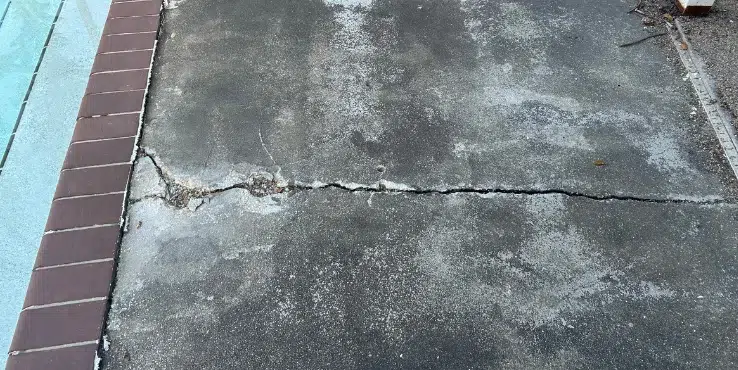
Surface cracks are common on older concrete, but certain crack patterns signal deeper issues. Cracks that run diagonally across a slab corner, or widen unevenly, often indicate that one side of the slab has dropped. Cracks wider than a hairline, combined with uneven sections, often indicate settlement rather than surface wear.
Gaps between sections of a concrete driveway, or between the driveway and the garage apron, are another warning sign. These gaps form because slabs move in different directions. Ignoring them allows water to enter the joint, accelerating erosion beneath the surface.
When A Sinking Driveway Becomes A Structural Concern
A small dip near the edge of your driveway may remain manageable for years. A sinking driveway that slopes toward your garage, your home’s foundation, or a basement window creates a more serious concern. Water flowing toward your house instead of away from it can contribute to foundation damage.
Watch for sections that have dropped more than an inch relative to the rest of the surface, or for cracking that extends across the full width of a slab. These patterns suggest the base has shifted significantly, and a professional evaluation may help before the next wet season arrives.
Drainage Fixes That Help Prevent Driveway Settlement In Rainy Climates
Good drainage forms the foundation of a long-lasting driveway in a wet climate. The goal is always to move water away from the slab and base material before it can soak in or build pressure beneath the surface.
When To Use A Channel Drain Or Driveway Drain
A channel drain, sometimes called a linear drain or driveway drain, runs across the width of the driveway, usually at the low point nearest the street or at the base of a sloped apron. It catches surface water before it can pool or flow beneath the slab.
Channel drains work best when your driveway slopes toward the garage, and you need to intercept runoff before it reaches the door. They also help at transitions between steep driveways and sidewalks, where fast-moving water may undercut the edge.
Proper grading paired with a channel drain remains one of the most reliable combinations for preventing washout on sloped residential driveways.
Where A Catch Basin Works Better Than Surface Regrading
A catch basin is a buried inlet box with a grate that collects water from low areas and routes it through underground piping to a safer discharge location. While a channel drain handles flow across a driveway, a catch basin manages water that gathers in depressions you cannot easily regrade.
If your yard sits lower than the driveway, or if a natural low spot consistently collects water, a catch basin often provides a cleaner solution than reshaping the entire grade.
How A French Drain Handles Subsurface Water
A French drain uses a perforated pipe buried in a gravel-filled trench to intercept water moving through the soil before it reaches the area beneath your driveway. It works especially well when groundwater or hillside runoff contributes to moisture problems beneath the slab.
Installing a French drain along the uphill edge of your driveway can dramatically reduce the amount of moisture reaching the base layer. For chronically wet properties, this upgrade often solves problems that surface drains alone cannot manage.
Using A Swale Or Culvert To Redirect Runoff
A swale is a shallow, vegetated channel graded to carry runoff away from your driveway and toward a safe outlet like a storm drain or a lower section of your property. Swales remain cost-effective and low-maintenance when you have enough yard space available.
A culvert carries water beneath a driveway when the driveway crosses a natural drainage path. Blocking that path forces water to flow around or beneath the slab, increasing the risk of erosion. Installing the correct culvert size helps preserve drainage flow and protect the driveway base.
Installation Choices That Prevent Future Sinking
The decisions made before installation have a major impact on long-term driveway stability. Proper base preparation and smart material choices help prevent costly repairs later.
Base Preparation And Compaction For Wet Conditions
Soil compaction during installation is one of the most important factors in preventing driveway settlement. Loose fill beneath a slab compresses under load and shifts under water pressure. A properly compacted subgrade topped with crushed stone or gravel distributes weight more evenly and improves stability.
In wet climates, the gravel base should often exceed the minimum thickness to improve drainage and structural support. Water that reaches the base needs somewhere to go, and coarse gravel allows it to drain laterally rather than build pressure beneath the slab.
Picking Materials That Handle Rain Better
Not every driveway material performs equally well in wet climates. Asphalt remains flexible and handles freeze-thaw stress better than rigid concrete, but it needs regular sealing to reduce water penetration. Concrete offers long-term durability but depends heavily on proper drainage and expansion joints.
Gravel driveways drain naturally and rarely experience severe settlement from water alone, though they require periodic regrading. Pavers also allow slight movement between units without cracking and can often be releveled without full replacement.
Why Permeable Pavers Can Reduce Water Pressure
Permeable pavers include porous joints that allow water to move through the surface into a prepared stone base below. This dramatically reduces runoff and limits water buildup around the driveway edges.
In rainy climates, permeable pavers also reduce hydrostatic pressure beneath the surface. Less pressure means less erosion, reduced soil migration, and improved long-term stability. Proper installation remains important for these systems to function correctly.
Smart Maintenance For Long, Rainy Seasons
Maintenance does more than improve curb appeal. In wet climates, it actively protects your driveway from erosion, water intrusion, and settlement.
Managing Downspouts, Edges, And Runoff Paths
One of the most overlooked sources of driveway damage is the downspout connected to your roof. During heavy rain, a single downspout can discharge hundreds of gallons of water near the driveway edge. Extend downspouts at least six feet away from paved surfaces or connect them to underground drainage lines.
Driveway edges are also vulnerable because the base becomes exposed there. Soil along the edge erodes faster than soil beneath the center of the slab, which causes cracking and chipping over time. Keeping compacted soil or sod tight against the edge helps stabilize the surrounding ground.
Sealing Cracks Before Water Reaches The Base
Water erosion accelerates once it finds a direct path into the base. A small crack can funnel water into the soil below, washing out fine particles during every storm. Filling cracks with the correct asphalt filler or concrete crack sealant closes that pathway before it expands.
Sealing the driveway surface every few years adds a protective barrier that slows water penetration. Addressing cracks early with sealing can help prevent larger repair projects later and remains one of the most valuable maintenance steps homeowners can take.
Seasonal Checks After Storms And Winter Weather
After major storms, inspect the full driveway for new cracks, low spots, and changes in water movement. Catching a new void or crack early often creates the easiest and most affordable repair opportunity.
After winter, inspect for frost heave damage. Freeze-thaw cycles may shift slabs or open joints that remained tight the previous season. Seasonal driveway care becomes especially important in cold, wet climates where spring inspections often reveal early signs of settlement.
Best Repair Options When Settlement Has Already Started
When part of your driveway has already dropped, identifying the cause matters just as much as repairing the surface. Repairing the slab without correcting drainage or base issues usually allows the same damage to return.
When Polyurethane Foam Lifting Makes Sense
Polyurethane foam lifting involves drilling small holes through the slab and injecting expanding foam beneath it. The foam fills voids and gently raises the concrete back into position. It works faster than replacement and creates less disruption in many situations.
Foam lifting works best when the slab remains structurally sound but has lost support beneath it. It is less appropriate when the concrete has severe cracking or when the drainage issue remains unresolved. The foam cures quickly and resists moisture, making it practical for wet climates where traditional fill materials may become less effective over time.
When Spot Repair Is Enough For Asphalt Surfaces
Not every sunken area on an asphalt driveway requires a major repair. Shallow depressions without cracking can sometimes be corrected by removing the affected section, recompacting the base, and applying fresh asphalt. Using asphalt filler around repaired sections also helps seal the surface and reduce future water intrusion.
Spot repairs work best when settlement remains isolated and the surrounding asphalt stays in good condition. If multiple sections show movement, a broader drainage and base evaluation often makes more sense.
When Drainage Upgrades Should Come Before Replacement
Replacing a sinking driveway without fixing the drainage issue that caused it often leads to the same problem repeating. A new slab placed over poorly draining soil will likely settle again over time.
Before major repair or replacement work begins, evaluate how water moves across the property. If water pools near the slab or consistently flows toward it, install the proper drainage solution first.
Whether that means a French drain along the uphill side, a channel drain at the base of the apron, or regrading the surrounding yard, proper water management helps repairs last longer. Drainage failures are usually traceable before a driveway fails completely, and addressing them early helps prevent repeat repairs.
A More Stable Driveway Starts With Better Water Management
Preventing driveway settlement in rainy climates comes down to managing water before it can weaken the soil beneath your driveway. Consistent drainage, proper installation practices, and routine maintenance all play a role in protecting the surface and supporting long-term property stability.
At Helicon, we help homeowners throughout Florida understand how moisture, soil movement, and drainage conditions affect driveways and surrounding structures. Our team focuses on clear evaluations, practical recommendations, and repair planning that support informed long-term decisions.
If you have noticed uneven concrete, standing water, or signs of driveway settlement, schedule an inspection to get a clear repair plan tailored to your property.
Frequently Asked Questions
How do rainy climates contribute to driveway settlement?
Rainy climates increase the amount of moisture that reaches the soil beneath your driveway. Over time, water weakens the soil, creates erosion, and reduces the support holding the slab in place. Poor drainage and repeated saturation often accelerate settlement issues.
What are the first signs of driveway settlement?
Early signs usually include pooling water, uneven sections, widening cracks, or gaps between slabs. You may also notice sections that feel soft or slightly flexible under pressure. Catching these changes early can help limit repair costs and prevent additional movement.
Can poor drainage cause a driveway to sink?
Yes, poor drainage is one of the most common causes of driveway settlement. Water that consistently pools near the slab or flows beneath it can wash away soil and create empty spaces below the surface. Proper drainage helps reduce erosion and supports long-term stability.
Are certain driveway materials better for rainy climates?
Some materials handle wet conditions better than others, depending on the property and drainage setup. Asphalt offers flexibility during freeze-thaw cycles, while permeable pavers help reduce runoff and hydrostatic pressure. Concrete performs well long-term when paired with proper drainage and base preparation.
How often should I inspect my driveway for settlement issues?
It is a good idea to inspect your driveway after major storms and at the end of each wet season. Look for new cracks, standing water, uneven sections, or signs of erosion near the edges. Regular inspections can help you identify smaller issues before they require larger repairs.
When should I consider professional driveway repair?
You should consider a professional evaluation if sections of the driveway continue sinking, water consistently drains toward your home, or cracks become wider and more uneven. A professional inspection can help identify whether the issue involves drainage, soil movement, or structural settlement beneath the slab.
Can driveway settlement return after repairs?
Driveway settlement can return if the underlying drainage or soil problem remains unresolved. Repairs tend to last longer when they address both the surface damage and the moisture conditions causing the movement beneath the driveway.