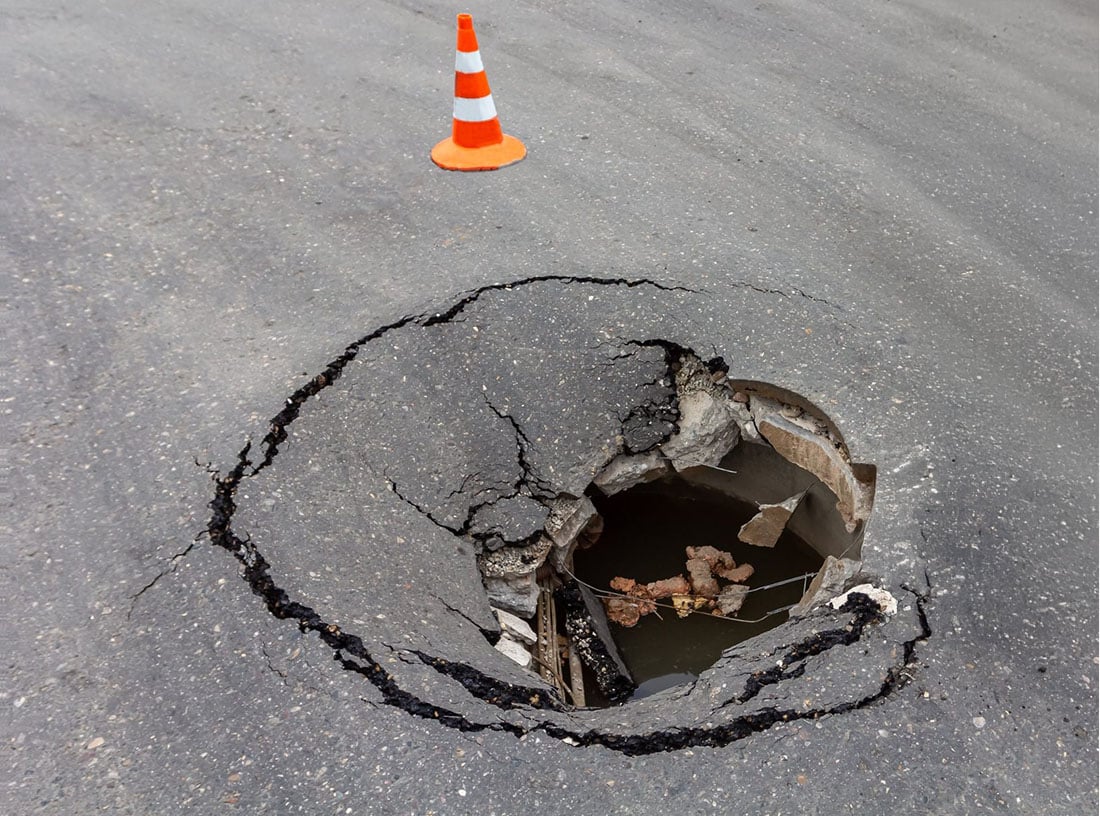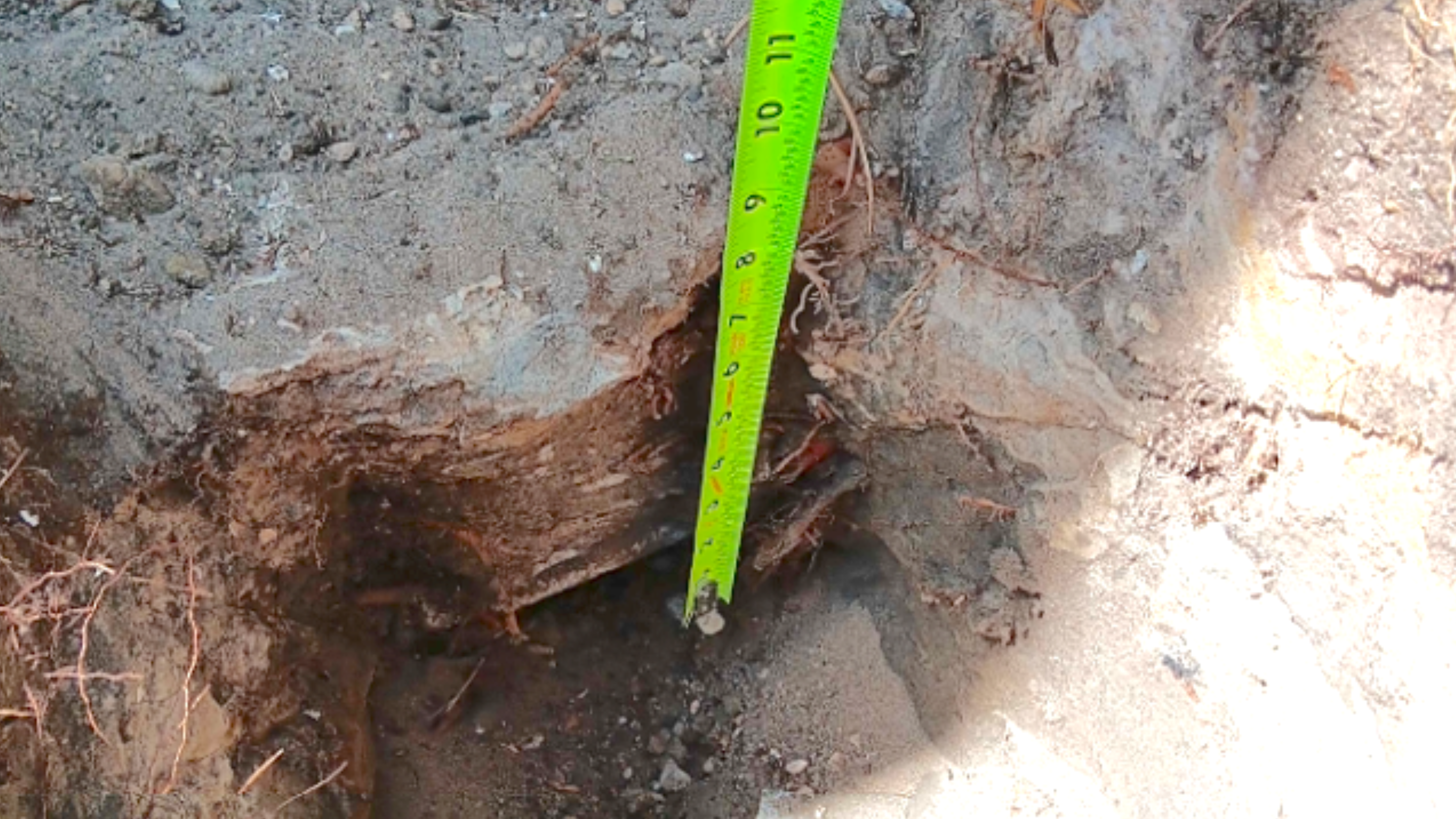
When people think about foundation repair, they often picture broad structural problems such as wall cracking, floor movement, or major settlement under a building.
But not every foundation problem starts under a full structure.
Sometimes the warning sign shows up in a smaller structural feature first: a settling entry column, a monument sign, a gate post, or a decorative pillar that has started to shift out of alignment. Because these elements are smaller than a building, it can be tempting to think the problem is mostly cosmetic. In reality, they often reveal the same kind of issue that affects larger foundations: lost support below the structure.
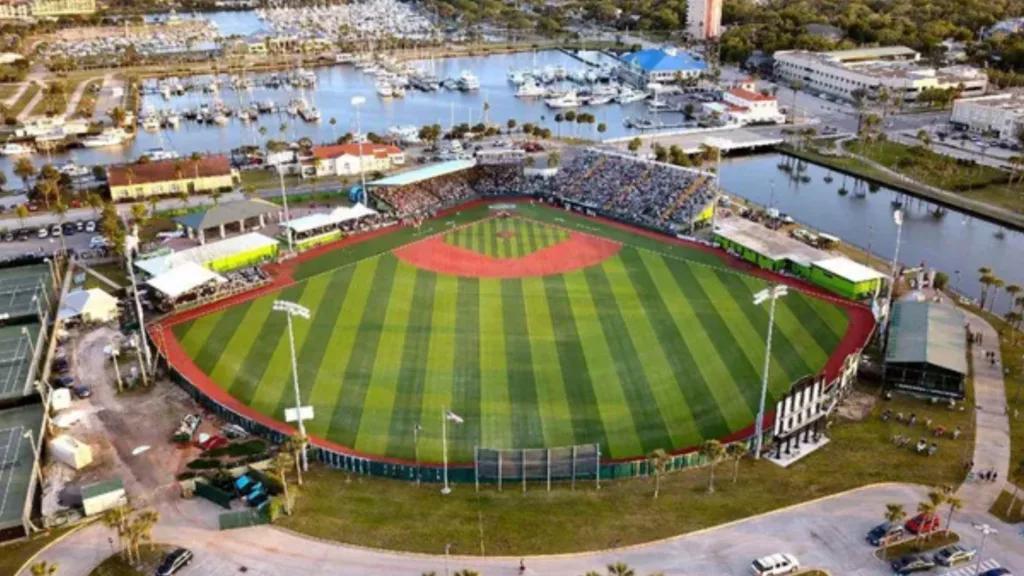
That is what made Helicon’s project at Jackie Robinson Ballpark in Daytona Beach so instructive. The repair focused on a decorative column outside the ballpark—one of the first things visitors see when entering the commemorative park. The column had started to settle, and the client recognized an important truth early: settlement rarely improves on its own. Once support is lost beneath a column or site feature, it often continues to lean, sink, or shift over time unless the foundation support is corrected.
Even though this job was at a civic landmark, the lesson applies directly to public-facing sites, commercial properties, institutional campuses, and other prominent locations across Daytona Beach, Ormond Beach, Port Orange, New Smyrna Beach, and throughout Volusia County. Decorative columns and entry features may not carry the same loads as a full building foundation, but they still concentrate weight into a relatively small footprint. And when the soils beneath that footprint weaken, the structure above can move surprisingly fast.
Why a Decorative Column Can Become a Serious Foundation Repair Issue
A decorative column may look simple, but structurally it behaves a lot like a concentrated foundation element.
The load it carries—whether from masonry, stone, concrete, architectural trim, or an attached gate or entry feature—is focused on a small base area. If the near-surface soils beneath that base loosen, compress, erode, or shift, the structure can begin to settle, tilt, or crack.
Columns, monuments, and architectural site features often continue to lean or sink once support is lost beneath them. It also notes that common symptoms can include leaning, separation at surrounding hardscape, cracking at the base, and progressive visual unevenness.
That same pattern can happen at residential properties too. A homeowner may first notice:
- a decorative column that looks slightly out of plumb
- a masonry entry feature that seems more uneven than it used to
- cracks forming at the base of a pillar or post
- separation where the structure meets nearby pavers, sidewalks, or hardscape
- a gate column or front entry feature that looks like it is drifting or sinking
These issues matter more than appearance. A visibly moving column or entry feature can create concerns about safety, future stability, and how well the property is being maintained. When a structural feature continues to lean or settle, the risk is not only visual. The longer the movement continues, the greater the chance of cracking, shifting, or loss of dependable support at the base.
That is why a settling column should be treated first as a structural stability issue. The cosmetic effect may be what homeowners notice first, but the more important question is whether the support below the feature is still reliable.
Why This Matters Across Volusia County
From a commercial and public-site perspective, the structural issue is only part of the story.
Features like decorative columns, entry pillars, monument signs, and other structural site elements often contribute a great deal to how a property or public space is experienced. They help frame entrances, reinforce identity, and signal care, investment, and permanence. But once one of those elements starts leaning or settling, the issue goes beyond first impressions.
A moving column can signal that the support beneath it is no longer dependable. If that movement continues, it may lead to worsening cracks, separation at the base, instability in attached elements, and a greater chance that the feature will require more extensive correction later.
For commercial owners, municipalities, institutions, and facility managers, that matters because highly visible site elements shape how visitors, tenants, customers, and stakeholders perceive the property. A settling column can raise questions about safety, maintenance standards, and whether other structural features are being monitored properly.
That is why this Daytona Beach project is useful across Volusia County, even though it was completed at a public site. It shows that targeted foundation repair is not only for buildings with broad settlement damage. It is also for smaller, high-visibility structural features that matter to safety, structural reliability, and the long-term condition of a site.
Local properties face complex coastal and inland soil conditions, which can affect structural stability over time. For homeowners in Daytona Beach, Ormond Beach, Port Orange, Holly Hill, and nearby areas, that makes early evaluation especially important when any visible site feature starts to move.
Why Helical Piers Were the Right Solution
Helicon selected galvanized steel helical piers for this repair because they are one of the most effective tools available for localized foundation support and underpinning.
Helical piers are engineered steel shafts with screw-like helical plates that are rotated into the ground until they reach deeper soils with sufficient load-bearing capacity. Their purpose is to transfer the weight of the structure away from weak surface soils and into stronger supporting layers below.
That made them a strong fit for this column repair for several reasons.
1. Precision in a small repair area
Because the column load was concentrated in a small footprint, the repair needed a deep support method that could be installed accurately. Helical piers are well suited for localized foundation correction where support has to be placed exactly where the load path needs it.
2. Good fit for existing structures
This was not new construction. It was an existing feature that had already begun to move. Underpinning is specifically used to reinforce an existing foundation by installing deep steel piers beneath the structure so weak upper soils can be bypassed. That is exactly what made helical piers valuable here.
3. Faster, less disruptive installation
For a public or residential site, speed and cleanliness matter. Helical piers can often be installed more efficiently than highly invasive alternatives because they do not require the same level of excavation, demolition, or cure time associated with some other approaches.
4. Galvanized steel durability
Helicon’s helical pier and foundation support pages note that galvanized steel piers provide additional corrosion resistance, which is especially important in Florida’s humid and storm-prone environment. That added durability supports long-term performance.
Why Galvanized Piers Matter in Florida’s Climate
Across Volusia County, foundation repair decisions are shaped by more than just today’s soil conditions. Florida’s humidity, heavy rain, salt-influenced coastal air, and recurring storm seasons all affect how materials perform over time.
That is one reason galvanized steel matters. The protective coating helps resist corrosion and supports longer-term durability in an environment where moisture exposure is a constant concern. For a structural repair, that added resilience matters because the goal is not just to stabilize the feature today. It is to provide dependable support for the years ahead.
In areas like Daytona Beach, Ormond Beach, Port Orange, New Smyrna Beach, and the surrounding Volusia County region, that kind of long-term durability is especially relevant. Owners and managers want a repair solution that accounts for real Florida conditions, not just ideal conditions on paper.
How the Repair Was Performed
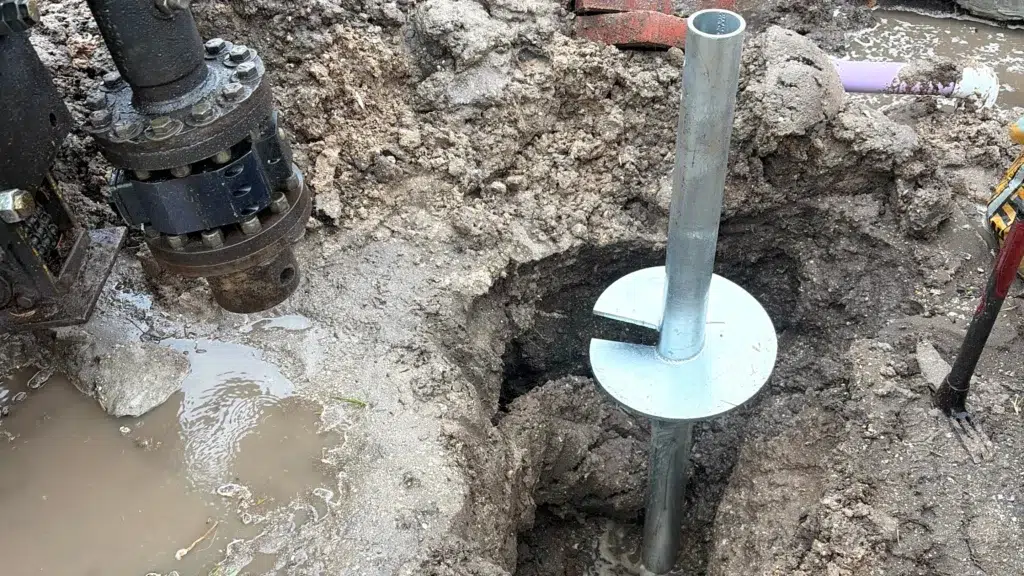
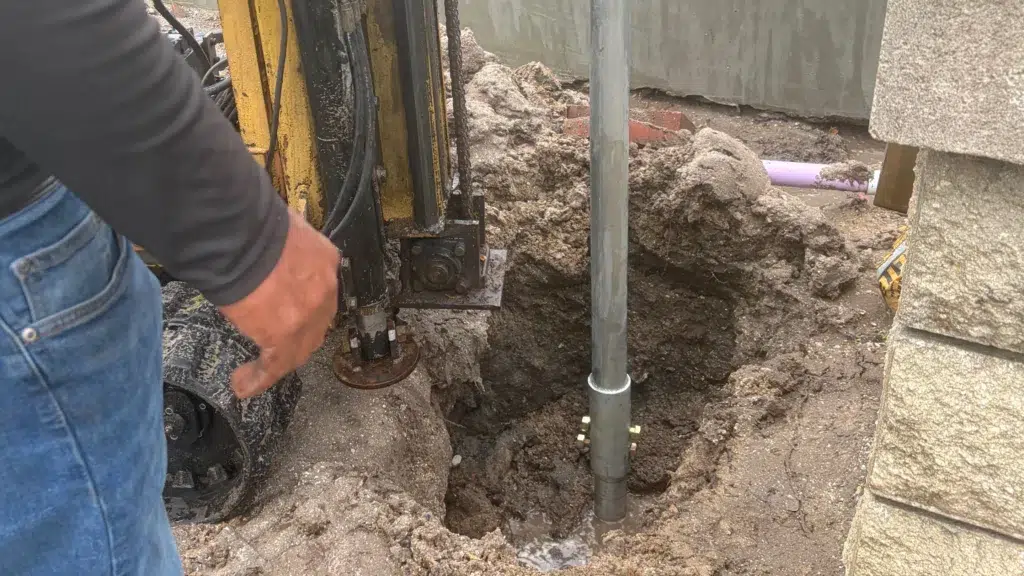
The solution was straightforward but structurally meaningful: two galvanized steel helical piers were installed beneath the settling column. Although the total pier count was small, the impact was significant because the repair addressed the actual cause of the movement—insufficient support beneath the column base.
The work followed the kind of sequence typical of helical pier foundation support.
Step 1: Evaluation and layout
The team first identified the most effective pier locations beneath or adjacent to the column support area. Because the structure had already moved, the goal was to place support where it could most effectively intercept the active load path.
Step 2: Helical pier installation
Using specialized equipment, each galvanized steel pier was rotated into the ground. As the helical plates advanced through the soil, the piers developed capacity in stronger bearing layers below the weak near-surface zone.
Step 3: Support transfer and stabilization
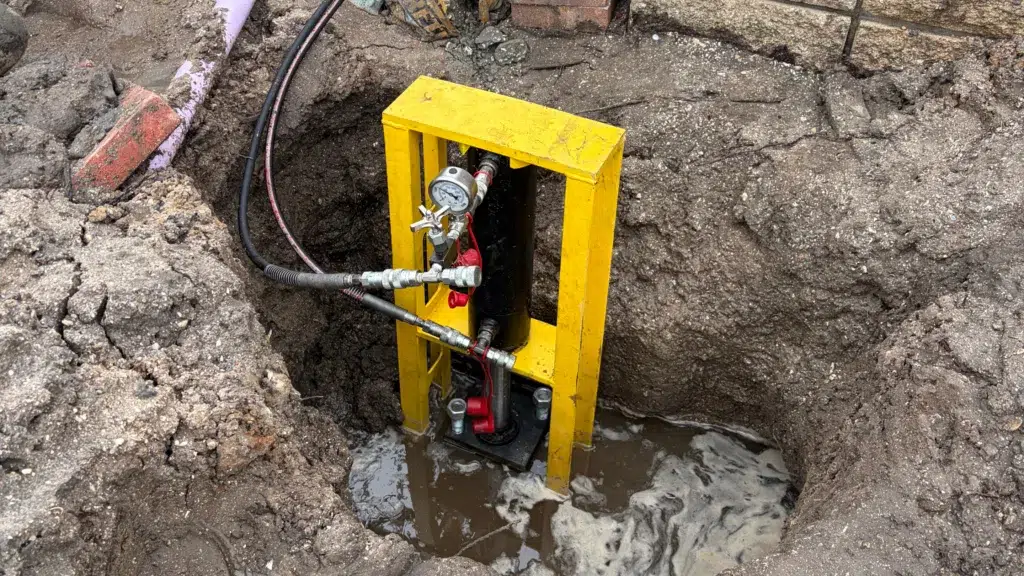
Once installed, the piers created a deeper support system for the column. This helped reduce the chance of further settlement and improved the column’s supported position.
Step 4: Completion despite the weather
Even with rain complicating the jobsite, Helicon completed the planned work the same day. For visible entry features—whether public or residential—that kind of efficient completion is a major benefit.
What This Project Shows About Targeted Foundation Repair
The most important lesson is simple: small structural features should not be ignored just because they are smaller than a building.
When a column starts moving, it is often telling you something important about the soils below it. Addressing that movement early is usually the safest way to prevent a localized support problem from turning into a bigger structural issue.
The Jackie Robinson Ballpark project shows how a relatively focused application of helical pier underpinning can preserve a prominent feature before the damage becomes worse.
From a commercial perspective, that reinforces an important point: you do not have to wait for a major failure before bringing in a structural repair solution. If a feature is already settling or leaning, the smartest move is often to stabilize it before the movement progresses, while the scope is still controlled and the disruption is still manageable.
Why Underpinning Is Not Just for Buildings
Many people assume underpinning is only used for large foundations or full buildings.
But Helicon’s underpinning guidance makes clear that the method is about reinforcing existing structures by bypassing weak soils and creating a more dependable load path below. That same principle applies to smaller structural features too.
That can include:
- decorative entrance columns
- gate posts and entry pillars
- monument signs
- masonry site features
- localized foundation areas with concentrated loads
- public-facing structural elements that need targeted support
- architectural features at civic, institutional, and commercial entrances
The Jackie Robinson Ballpark project shows how a relatively focused application of helical pier underpinning can preserve a prominent feature before the damage becomes worse.
That reinforces an important point: you do not have to wait for a major failure before bringing in a structural repair solution. If a feature is already settling or leaning, the smartest move is often to stabilize it before the movement progresses.
Repair vs. Rebuild: Why Early Action Matters
When a decorative column begins to sink or lean, clients sometimes assume the only option is to tear it out and rebuild it.
Sometimes rebuilding is necessary. But when the structure can still be preserved, targeted deep foundation support may be the smarter solution.
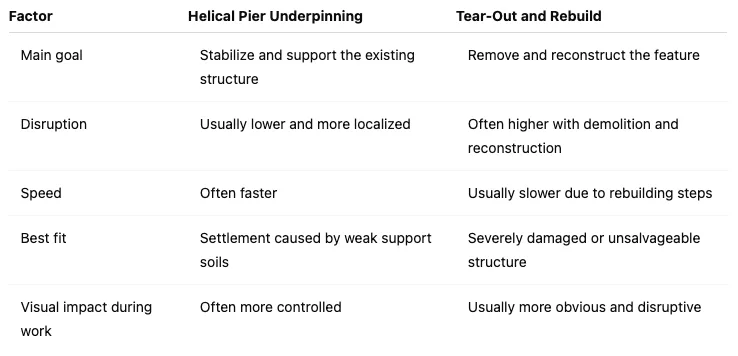
That often means less disruption to the site, less guesswork about how the rebuilt feature will look, and a better chance of preserving the original design while restoring dependable structural support. For commercial and public-facing properties, it can also mean less interruption to access, circulation, and the overall visitor experience.
Signs a Column or Entry Feature May Need Foundation Attention
Across Daytona Beach and nearby Volusia County communities, these are some of the warning signs worth watching for:
- a column or pillar that appears to lean or look out of plumb
- cracking at the base or pedestal
- separation where the feature meets pavers, sidewalks, or nearby hardscape
- visible unevenness that seems to be getting worse
- a front entry feature that no longer looks aligned with surrounding structures
These symptoms may begin subtly. But because these features sit on relatively small footprints, movement can become noticeable quickly once support is lost.
FAQ
Can a decorative column really need foundation repair?
Yes. Even though a column is smaller than a building, it still concentrates load into a small base area. If the soil beneath that area weakens or settles, the column can lean, crack, or shift.
Why are helical piers used for settling columns?
Helical piers create a deeper load path by transferring the weight of the structure away from weak surface soils and into stronger supporting layers below. That makes them a strong choice for localized underpinning.
Are helical piers only for big foundation repairs?
No. They are often used for full foundations, additions, localized settlement areas, and smaller but highly visible structural site features, including civic and commercial entrance elements.
Should a slightly leaning column or entry feature be evaluated?
Yes. Settlement usually does not correct itself, and small visual changes can become larger structural or safety concerns over time. For commercial and public-facing sites, early evaluation can also help avoid greater disruption and more visible deterioration later.
Final Takeaway
A settling decorative column is not just a cosmetic issue.
It is first and foremost a structural stability issue.
It is often a localized foundation problem, and the sooner it is addressed, the more likely the feature can be preserved without a bigger rebuild.
The Jackie Robinson Ballpark project in Daytona Beach shows how two galvanized steel helical piers were enough to stabilize a high-visibility column, improve its supported position, and create a deeper, more reliable bearing path. Across Daytona Beach, Ormond Beach, Port Orange, New Smyrna Beach, and throughout Volusia County, the bigger lesson is this: if a column or other structural site element starts to lean or sink, fixing the support below it early is often the smartest way to protect safety, long-term stability, site presentation, and the overall integrity of the property.
Call 844-Helicon today for a free inspection or fill out the form on our site.