A sunken patio or uneven sidewalk is more than a cosmetic annoyance.
For many homeowners, it affects two things immediately: how safe the home feels for the people they love, and how well the property presents over time. Uneven concrete can create real trip hazards for children, parents, grandparents, and guests. It can also make a backyard feel poorly maintained, even when the rest of the home is in excellent condition.
For many Florida homeowners, it starts as a small edge, a slight slope, or a section of concrete that looks just a little off. Over time, that small change can turn into a real trip hazard for children, guests, and especially older family members. It can also make a backyard feel neglected, harder to enjoy, and more expensive to maintain in the long run. For homeowners who care about curb appeal, backyard usability, and future resale, those small concrete changes can quietly chip away at perceived property value.
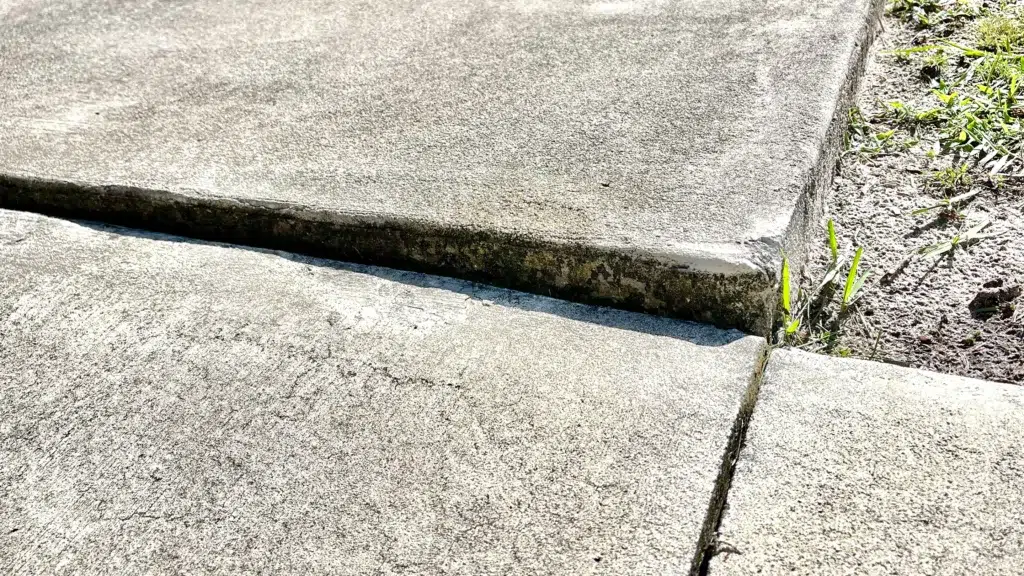
That was the problem at a home in St. Cloud, Florida, just outside the greater Orlando area, where multiple concrete slabs across the patio and sidewalk area had settled unevenly. The result was exactly what many homeowners worry about: irregular walking surfaces, visible height differences between slabs, and a backyard that no longer felt as safe or as welcoming as it should.
The homeowner did not want a quick cosmetic patch. Grinding edges or filling gaps might have made the surface look a little better for a while, but it would not have solved the real problem under the concrete. The cause was unstable soils below the slabs, and until that was addressed, the concrete would remain vulnerable to further movement.
For homeowners in St. Cloud, Orlando, Kissimmee, Lake Nona, and surrounding parts of Central Florida, this is a familiar kind of problem. Concrete does not usually sink without a reason. And in Florida, that reason is often in the ground below.
Why Concrete Settles Around Florida Homes
In the Orlando area, that question comes up often because many homes have patios, walkways, and sidewalks exposed to Florida rain cycles, heat, loose sands, and changing moisture conditions. When the soils under those slabs lose strength, the concrete above often reflects it.
Concrete patios, sidewalks, pool decks, and walkways are only as stable as the soils supporting them.
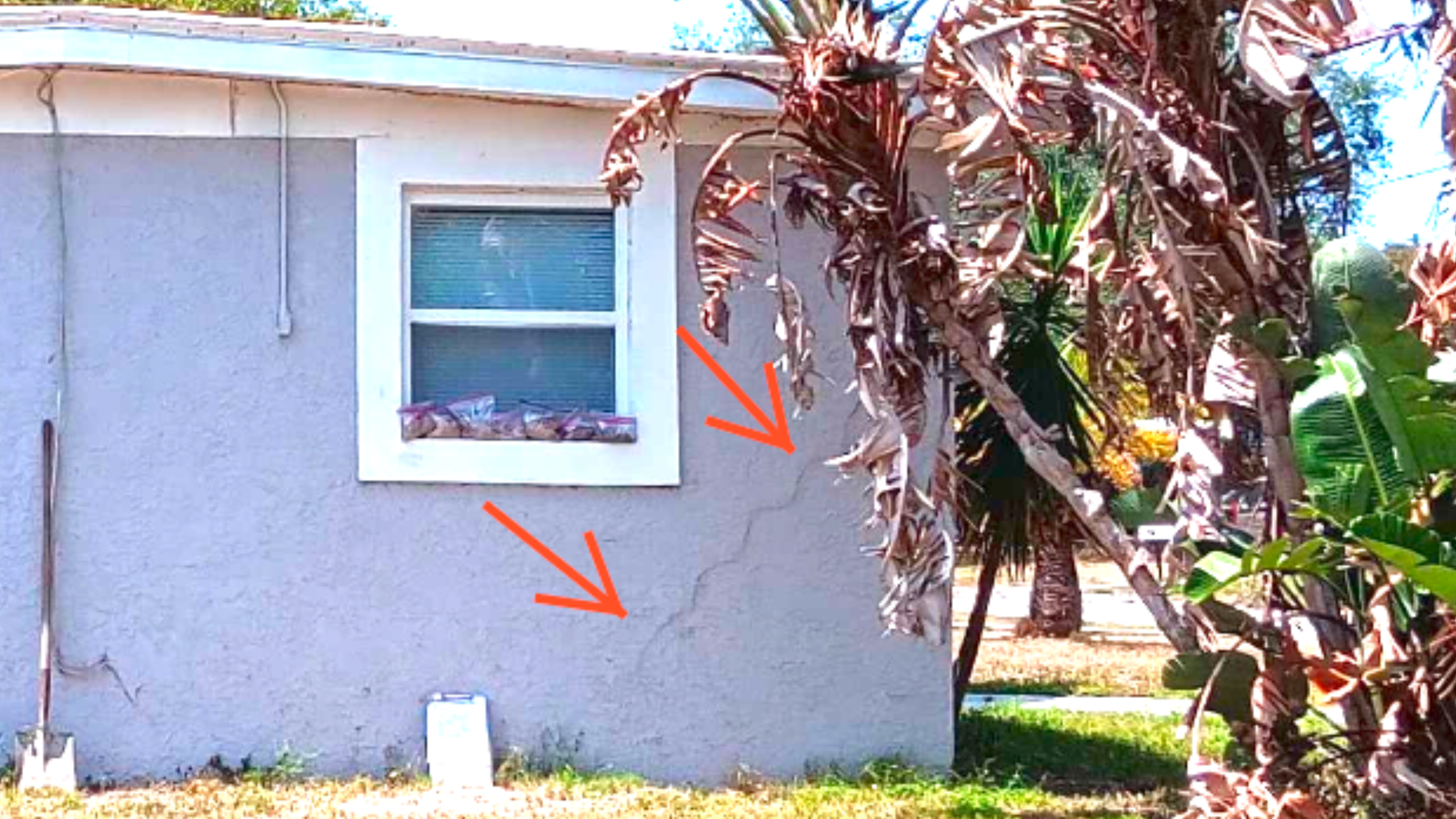
When those soils loosen, wash out, shrink, compress, or contain organics, the slab above can begin to settle. In some homes, the change happens slowly enough that homeowners barely notice it at first. In others, a few slabs may drop noticeably and create obvious safety issues.
Florida’s shifting soils, moisture changes, and voids beneath slabs are common causes of settlement. Structural polyurethane foam is a method used to lift, level, seal, and strengthen slabs and the soils beneath them in Florida’s environment.
That is especially relevant in Central Florida. St. Cloud, just southeast of Orlando, is part of a region where loose sands and organic soils can make exterior flatwork more vulnerable to settlement over time.
Why Cosmetic Repairs Usually Fall Short
When homeowners first see uneven concrete, they often look for the fastest and least disruptive option.
That makes sense. Many people wonder whether the issue can simply be patched, ground down, or covered over. In some cases, grinding can reduce a sharp edge. In others, patching may temporarily improve appearance. But if the slab settled because the soil below lost support, those cosmetic steps do not solve the cause.
That is why this St. Cloud homeowner looked for a permanent solution instead of a surface-only one. The goal was not just to make the patio and sidewalk look better. It was to lift the slabs, stabilize the soil, and reduce the chance of future settlement.
Concrete lifting works best when the goal is not only to re-level the slab but also to restore support beneath it, which is why foam injection is often preferred over surface-level fixes or full replacement in Florida conditions.
The Real Challenge: Multiple Uneven Slabs, Not Just One
This project was not a single sunken square of sidewalk.
The bigger challenge was the number of slabs involved. Multiple sections across the patio and sidewalk area had settled unevenly, which meant the repair needed to be carefully controlled. Lifting one section too much or too quickly can affect neighboring slabs. And when several affected areas are close together, achieving a uniform result requires precision.
One of the main challenges was the number of uneven slabs and the need to achieve a uniform lift without damaging the surrounding concrete. That is exactly where polyurethane injections become especially valuable. It allows for controlled adjustments instead of the more disruptive process of removing and replacing large concrete sections.
For homeowners, that matters because outdoor concrete rarely exists in isolation. A patio connects to sidewalks, entry points, backyard paths, and sometimes pool areas or hardscape features. A repair method that can work with precision helps protect the rest of the property while restoring safer walking surfaces.
That kind of precision is especially important when homeowners are trying to improve safety without creating a bigger construction project in the yard. Most families want a repair that solves the problem while keeping the property usable and attractive.
How Helicon Fixed the St. Cloud Patio and Sidewalk
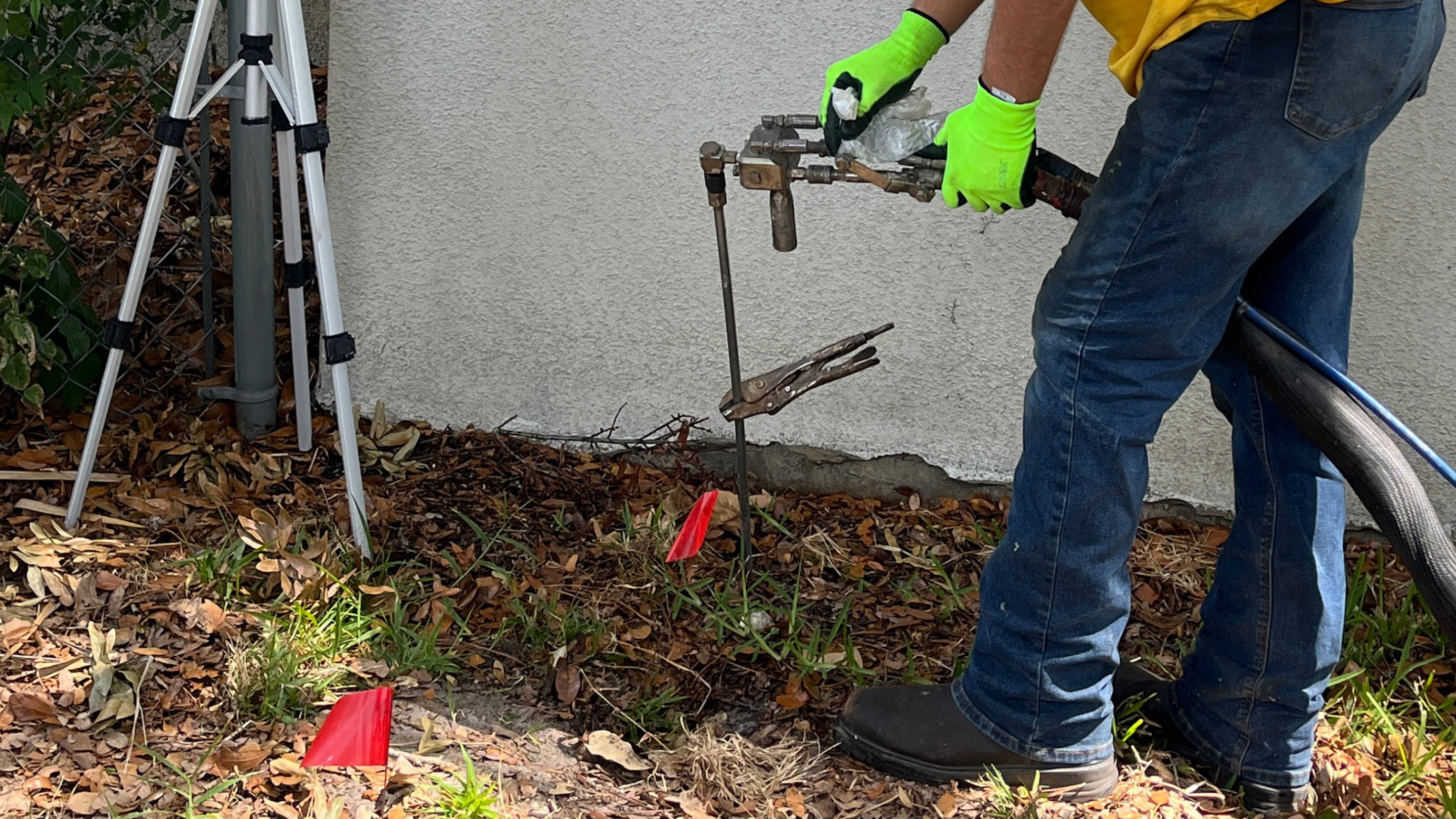
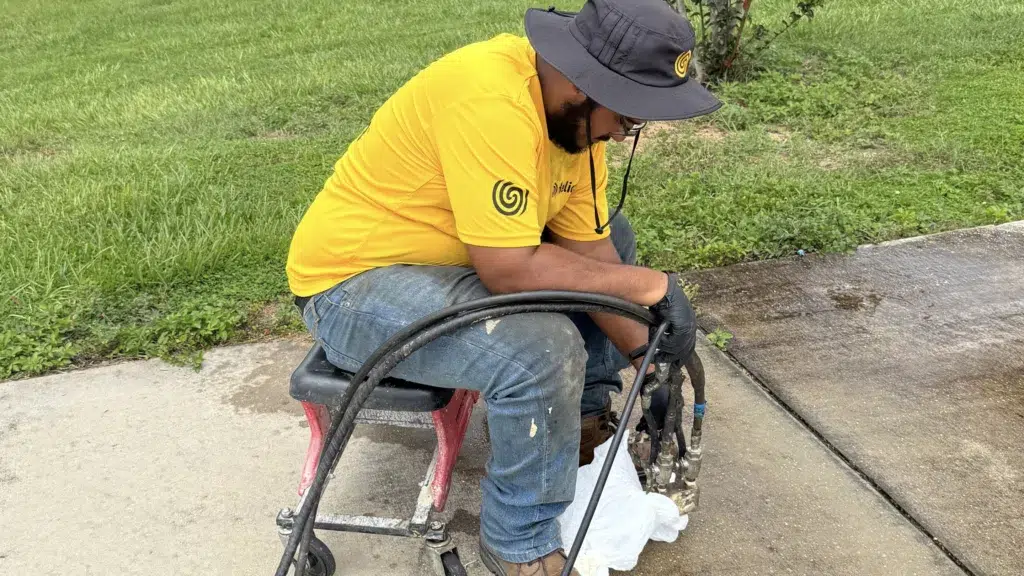
Helicon used a two-part polyurethane chemical grout approach designed to address both the concrete slabs themselves and the weak soils beneath them.
This layered approach matters because lifting the slab and stabilizing the support soils are related, but not identical, goals. If you only focus on surface position without addressing deeper voids or weak zones, the slab may remain vulnerable to continued movement.
Step 1: Slab injections to lift and re-level the concrete
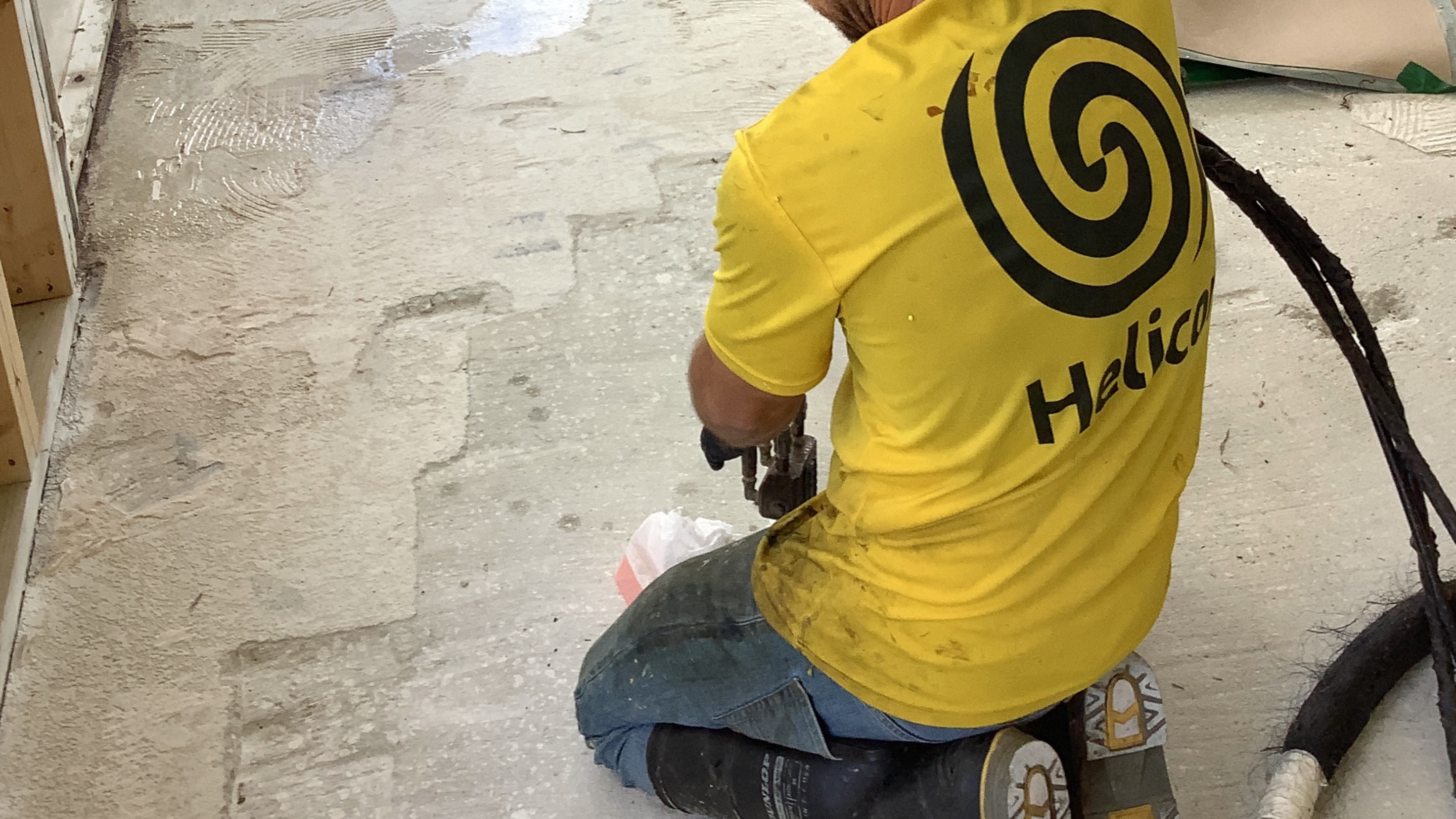
Helicon injected 165 pounds of two-part polyurethane chemical grout beneath the concrete slabs. As the material expanded, it helped lift settled sections back toward their original position, re-level the walking surfaces, and restore support beneath the slabs.
Step 2: Soil injections to address deeper instability
To handle deeper voids and weak soils, Helicon installed 17 soil injection points and used an additional 340 pounds of grout. The expanding resin moved into the surrounding soils and created a denser, more water-resistant support layer to help prevent continued settlement.
This is a major reason polyurethane repair can be so effective. It is not just about lifting from directly under the slab surface. It is also about improving the support conditions below.
Step 3: Final stabilization across the affected area
By combining slab injections and soil injections, Helicon stabilized the entire affected patio and sidewalk area. The result was a safer, more even walking surface with stronger support below the concrete. Every concrete section was lifted, stabilized, and secured, transforming the patio and sidewalks into safe, even walking paths while extending the life of the concrete.
Why Polyurethane Grout Makes Sense for Residential Concrete Repair
One of the biggest advantages of polyurethane grout is that it can solve a real support problem without the disruption of demolition.
Polyurethane grouting is a fast, clean, and minimally invasive method that can raise settled slabs and stabilize the ground beneath them. The material is lightweight, moisture-resistant, and easier to control precisely than heavier alternatives in many Florida slab-lifting applications.
For homeowners, that usually translates into a few key benefits:
- no need to tear out and replace otherwise salvageable concrete
- less disruption to patios, landscaping, and everyday routines
- faster turnaround compared with replacement-based repairs
- better support beneath the slab, not just a surface-level correction
- a repair method designed for the kinds of soils commonly found in Florida
Why This Matters for St. Cloud, Orlando, and Kissimmee Homeowners
This project may have happened in St. Cloud, but the problem is not unique to one backyard.
Across St. Cloud, Orlando, Kissimmee, and nearby Central Florida communities, many homeowners deal with the same pattern: outdoor concrete that settles because the soils below it are not as stable as they once seemed. It may begin with one walkway slab, one corner of a patio, or one low section near the house. If the support issue is left untreated, the problem often grows.
That growth affects more than appearance. Uneven concrete can become a trip hazard, make outdoor entertaining less comfortable, create concerns for older guests or children, and gradually reduce the overall impression of the property.
For Orlando-area homeowners thinking long-term, this matters on both a lifestyle and financial level. A safer patio or sidewalk helps a home feel more welcoming today. It also supports the kind of maintenance history and exterior condition that buyers tend to notice when it is time to sell.
For homeowners thinking about resale, outdoor concrete condition also shapes how a property feels to buyers. Safe, level hardscapes help a home feel maintained. Sunken slabs and obvious hazards do the opposite. Even when the rest of the house looks great, uneven exterior concrete can raise questions about upkeep and hidden problems beneath the surface.
Repair vs. Replacement: Why Early Action Matters
Many homeowners assume that once concrete sinks, replacement is the only real answer.
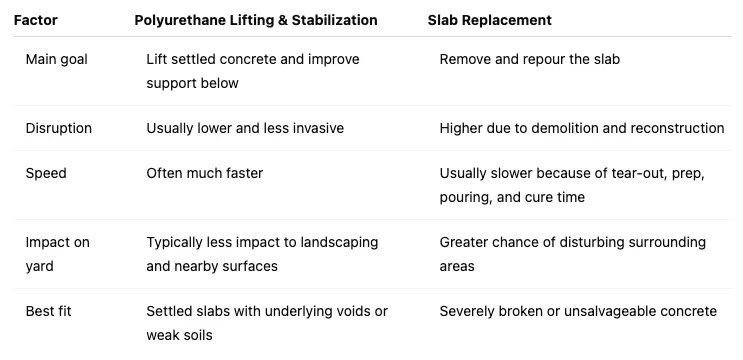
Sometimes replacement is necessary, but when the slab is still structurally usable and the main problem is loss of support below it, lifting and stabilization can be a far better option.
The table below shows why homeowners often explore polyurethane lifting before considering demolition:
Signs Your Patio or Sidewalk May Need Attention
If you own a home in St. Cloud or the greater Orlando area, these are some of the most common warning signs that patio or sidewalk settlement may be getting worse:
- one slab edge sitting noticeably higher or lower than the next
- cracking near settled areas
- low spots that collect water
- sections of patio or walkway that feel uneven underfoot
- repeated patching that never seems to last
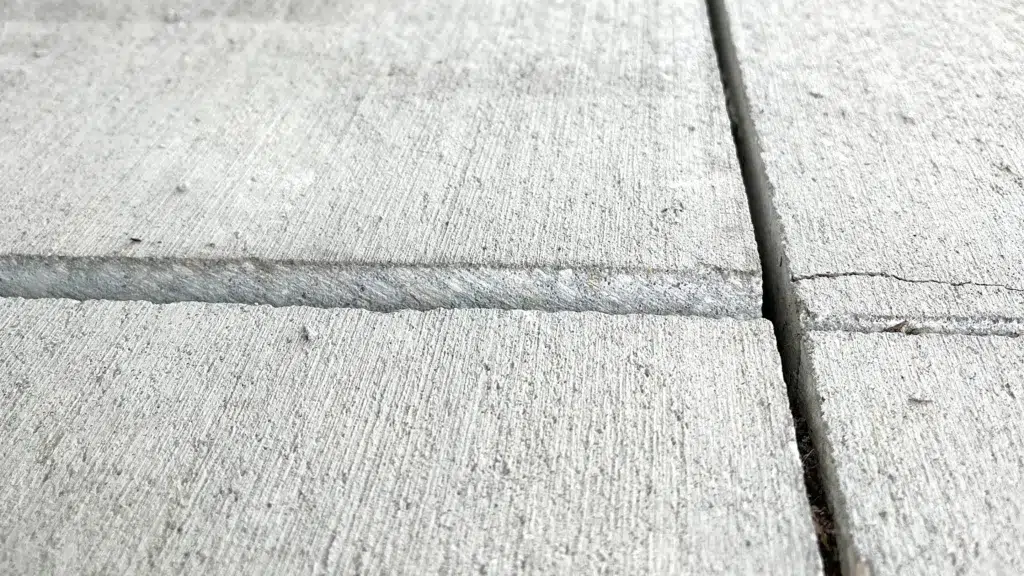
- visible gaps or separation where slabs meet
- a backyard path or patio area that no longer feels safe for guests
Catching these signs early often gives you more options and can help you avoid a bigger repair later.
What the Homeowner Gained After the Repair
By the time the project was complete, the St. Cloud home had more than a better-looking patio.
The final results included even, trip-free walking surfaces, stronger soils beneath the concrete, and a safer, more valuable property with extended concrete life. The project also demonstrated how polyurethane chemical grouting can provide a fast, non-invasive, and lasting solution for uneven slabs.
For a homeowner, that kind of outcome matters in very practical ways. It means fewer safety concerns, better everyday use of the backyard, and greater confidence that the repair addressed the real cause instead of just covering up the symptom.
It also means the property presents better. A level patio and sidewalk help a home feel cared for, safer for visitors, and more ready for the future—whether that means enjoying it for years to come or protecting value when it is time to sell.
FAQ
Why do patio and sidewalk slabs sink in Florida?
In many cases, the soils beneath the concrete lose support because of voids, moisture changes, loose sands, organics, or settlement over time. When that happens, the slab above can drop or shift.
Is polyurethane concrete lifting permanent?
Polyurethane lifting and soil stabilization are a long-lasting repair approach designed for Florida soils. The goal is not just to raise the slab, but to improve support below it as well.
Will I need to replace my patio or sidewalk?
Not always. If the slab is still in usable condition and the main issue is settlement from below, lifting and stabilization may be a strong alternative to replacement.
How do I know if uneven concrete is a safety issue?
If the height difference creates a noticeable trip point, feels unstable underfoot, or makes it harder for children, guests, or older family members to walk safely, it should be evaluated.
Final Takeaway
Uneven concrete around a home is not just about appearance.
For families, it is a safety issue. For homeowners thinking ahead, it is also a property-value issue.
In many cases, it is an early warning that the soils below the slab are no longer providing the support they should. That is why the best repair is often the one that lifts the concrete and strengthens the ground beneath it at the same time.
The St. Cloud project shows how that can be done without demolition. Helicon used structural polyurethane grout to lift multiple uneven patio and sidewalk slabs, stabilize deeper weak soils, and turn a hazardous backyard walking area into a safer, more usable space.
For homeowners in St. Cloud, Orlando, Kissimmee, Lake Nona, and nearby Central Florida communities, that is the bigger lesson: when outdoor concrete starts to sink, fixing the cause early is often the smartest way to protect both family safety and property value.
Call 844-Helicon today for a free inspection or fill out the form on our site.