Adding a second story to your home can dramatically increase living space and property value. But before the first wall is framed or the first beam is lifted into place, there’s one critical question every homeowner, builder, and commercial property owner must answer:
Can the existing foundation and soil safely support the additional weight?
In coastal Florida communities like St. Pete Beach, St. Petersburg, Clearwater, and Tampa, the answer often depends on what lies beneath the surface.
On a recent Helicon project in St. Pete Beach, soil testing revealed loose, weak sandy soils beneath an existing block home. Without reinforcement, the planned second-story addition could have placed excessive stress on the foundation—leading to settlement, cracking, and costly repairs.
The solution? A deep foundation system using helical piers.
This project highlights why soil testing and foundation evaluation should always happen before construction begins—and how helical piers can provide long-term structural support for additions in Florida’s challenging soil conditions.
Watch the Project Video
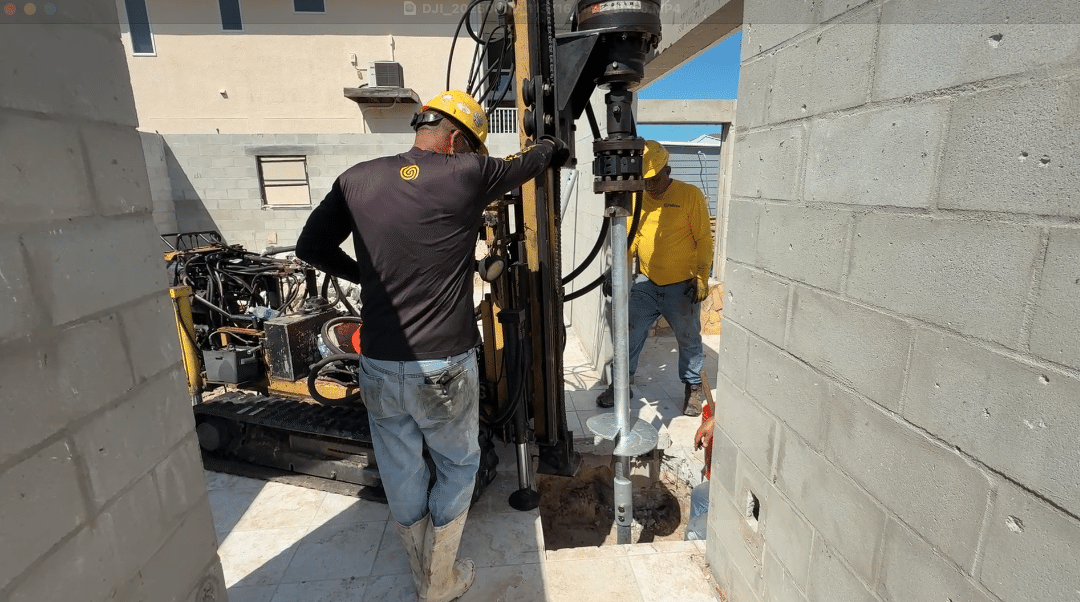
Below is the video showing how Helicon installed helical piers to reinforce the foundation before the second-story addition began.
Why Adding a Second Story Can Stress Your Foundation
When homeowners decide to expand upward, they’re increasing the structural load placed on the existing foundation system.
That additional weight transfers through the structure and ultimately into the supporting soil beneath the home.
If the soil cannot safely handle that load, several issues can occur:
- Foundation settlement
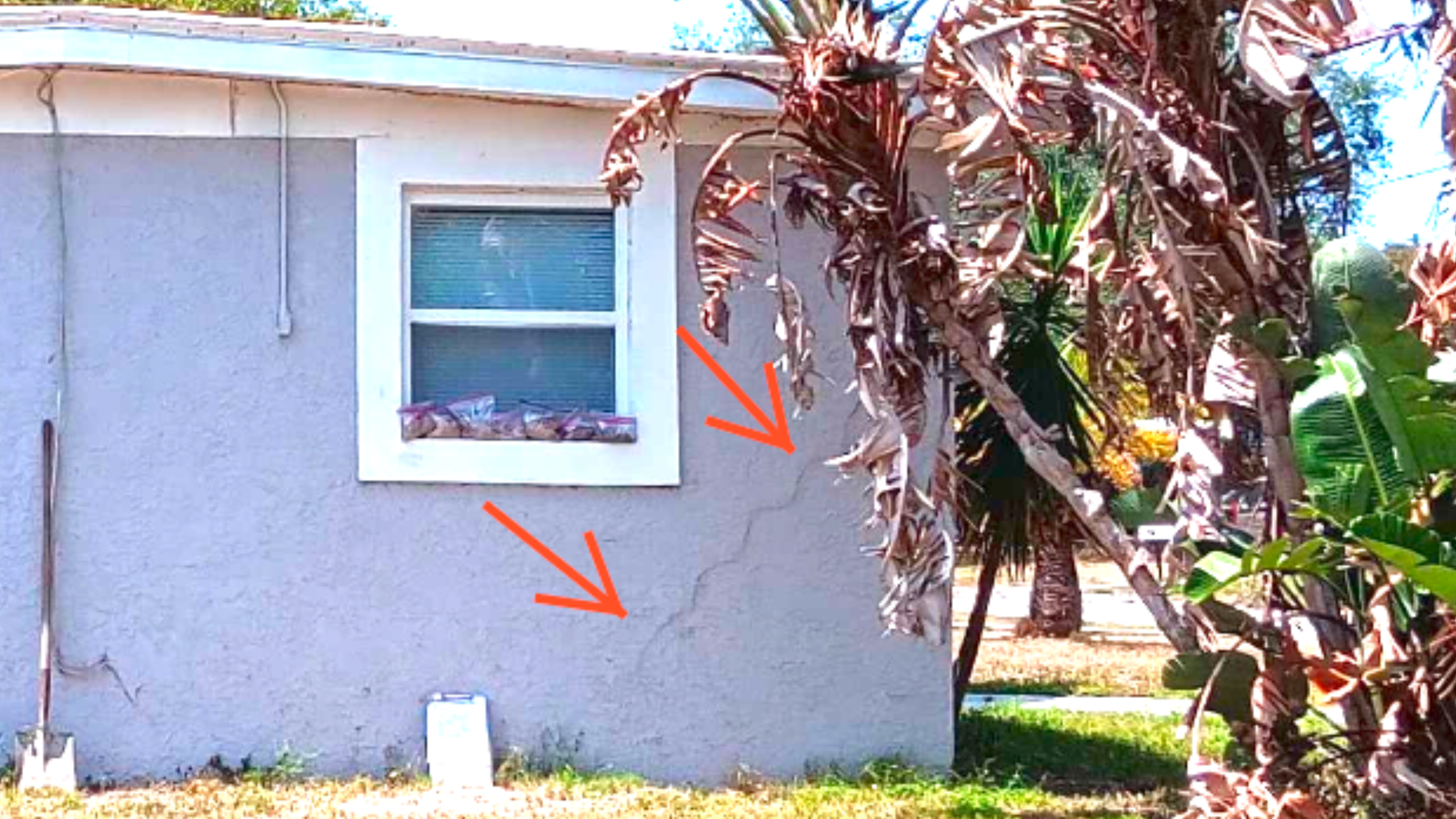
- Structural cracking
- Uneven floors
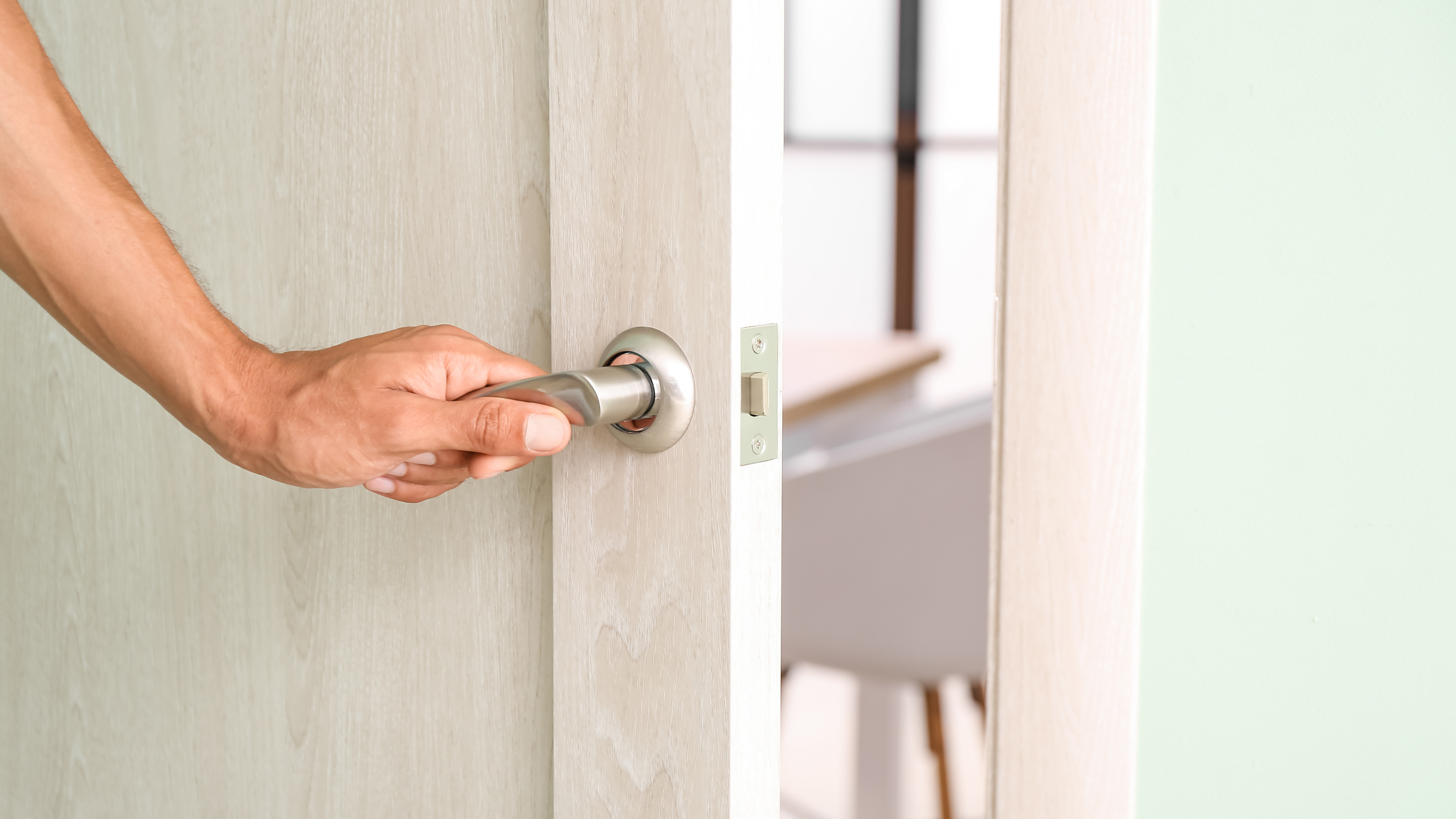
- Door and window misalignment
- Long-term structural damage
This is especially important in coastal Florida communities like:
- St. Pete Beach
- St. Petersburg
- Clearwater
- Tampa
- Sarasota
- Bradenton
These areas often contain sandy soils that vary dramatically in strength depending on depth and moisture conditions. That’s why soil testing is a critical first step before building upward.
Soil Testing Revealed Weak Sand Beneath the Home
Before construction began on this St. Pete Beach home, a Standard Penetration Test (SPT) was performed by UES Engineering.
An SPT is a common geotechnical test used to evaluate soil strength and density.
The results showed: Loose to weak medium-dense sand beneath the structure.
While sandy soil may appear stable on the surface, deeper layers can lack the strength needed to support additional structural loads.
When adding a second story, these weaker soil layers increase the risk of:
- Foundation movement
- Differential settlement
- Structural stress over time
Correcting these problems after construction is finished—when drywall, flooring, and finishes are already installed—can cost tens of thousands of dollars.
Instead, the Helicon team recommended installing a deep foundation support system before the addition was built.
The Solution: Helical Pier Foundation Support
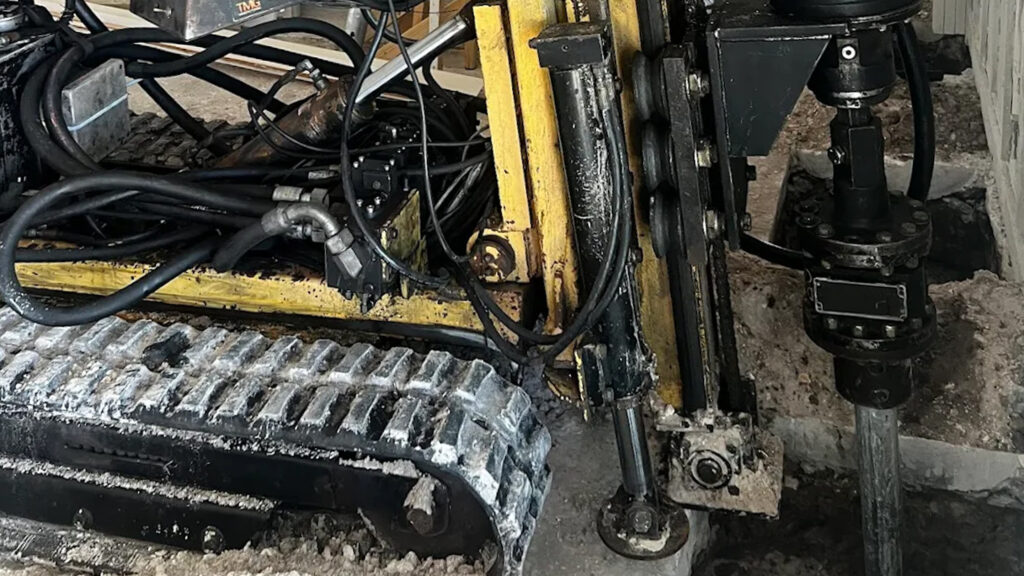
To stabilize the foundation and safely support the new second story, Helicon installed helical piers beneath the existing structure.
Helical piers are high-strength steel foundation supports that are mechanically rotated into the ground like a giant screw until they reach deeper, load-bearing soil layers.
Think of helical piers as underground steel stilts for your home, transferring the weight of the structure away from weak upper soils and into stronger, deeper soil layers.
This approach is widely used in:
- Residential additions
- Commercial construction
- Coastal construction projects
- Foundation repair and underpinning
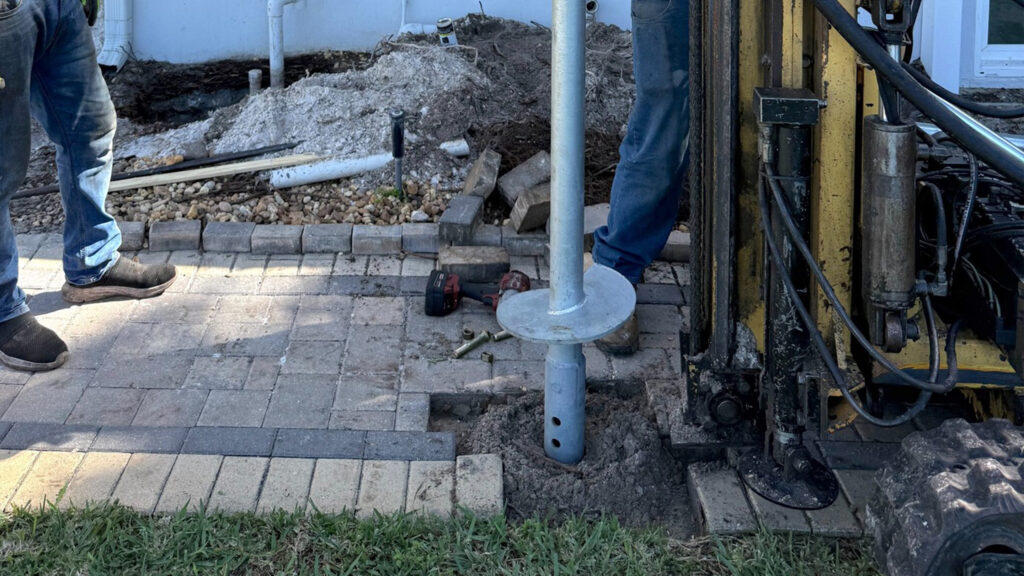
Helical Pier Installation Details – St. Pete Beach Project
For this home, Helicon installed a deep foundation system designed specifically for the site conditions.
Project highlights:
- 24 helical piers installed
- Average installation depth: 35 feet
- Final installation torque: 5,300 ft-lbs
- Lift pressure: 6,300 PSI
- Installation time: 3 days
- Existing structure: Block construction home
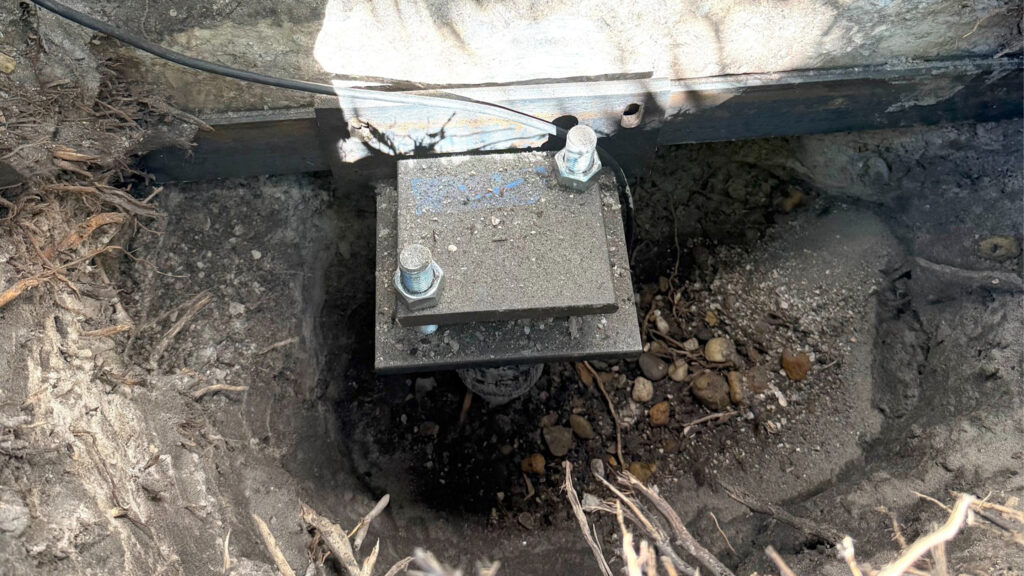
Each helical pier was installed with brackets positioned beneath the existing foundation.
These piers now serve as deep structural supports for the new second-story addition, transferring loads safely into stronger soils far below the surface.
How Helical Piers Work
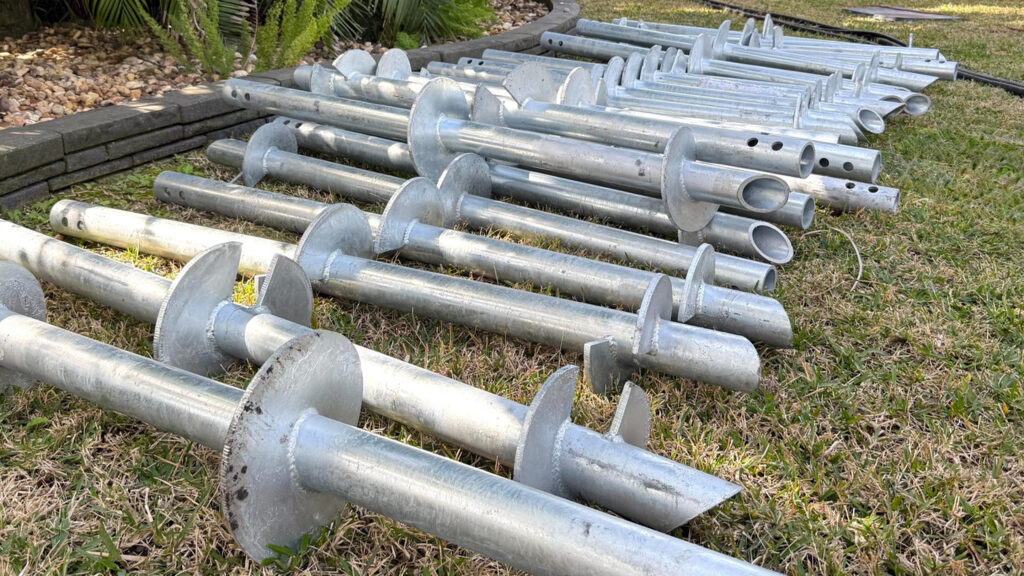
Helical piers get their name from the helix-shaped steel plates welded onto the pier shaft.
In this project, the selected configuration included:
- 8-inch helix
- 10-inch helix
- 12-inch helix
These helix plates function like threads on a screw, allowing the pier to be rotated into the ground while also creating bearing surfaces that support structural loads.
The pier itself includes a heavy-duty steel shaft—typically Schedule 80 steel, approximately 3 inches in diameter.
As the pier advances deeper into the soil, installation torque is monitored to ensure it reaches the required load-bearing capacity.
Once the pier reaches competent soil, it becomes part of a permanent deep foundation system.
For homes or buildings experiencing settlement issues, this process is known as foundation underpinning.
Why Helical Piers Are Ideal for Coastal Florida
Homes near the Gulf Coast face unique structural challenges.
In communities like St. Pete Beach, Treasure Island, Madeira Beach, and Clearwater Beach, soils often consist of:
- Loose sands
- Variable density layers
- High groundwater conditions
These conditions can make traditional shallow foundations vulnerable to settlement.
Helical piers offer several advantages for coastal construction:
Minimal vibration during installation
Ideal for existing structures and dense neighborhoods.
Deep load transfer
Loads are transferred to stronger soil layers well below weak surface sands.
Engineered load capacity
Each pier is installed to a specific torque that confirms structural capacity.
Faster installation
Most residential installations can be completed within days.
For this St. Pete Beach project, Helicon completed installation in just three days, allowing construction to move forward with confidence.
A Smart Investment Before Construction Begins
One of the biggest mistakes property owners make is waiting until after a foundation problem develops to address soil issues.
By installing helical piers before building the second story, this homeowner avoided potential problems like:
- Structural settlement
- Expensive post-construction repairs
- Disruption to finished interiors
Instead, the new addition will be supported by a deep engineered foundation system designed for the site’s soil conditions.
Before Adding a Second Story: A Foundation Checklist
If you’re considering adding a second story to your home or commercial building in Florida, here are five critical steps to take before construction begins.
1. Conduct Soil Testing
A geotechnical investigation, such as an SPT soil test, reveals the soil strength and composition beneath your structure.
Without this data, it’s impossible to accurately determine load capacity.
2. Evaluate the Existing Foundation
A structural engineer or foundation specialist should inspect the current foundation system to determine whether it can support additional loads and if it needs our foundation repair service(s).
3. Calculate Structural Load Requirements
Adding a second story significantly increases:
- Dead load (structural weight)
- Live load (occupants and furniture)
- Wind loads during storms and hurricanes
These loads must be transferred safely to the ground.
4. Determine if a Deep Foundation System Is Needed
If soils are weak or inconsistent, installing helical piers or other deep foundation supports may be necessary.
This reinforcement prevents future settlement.
5. Reinforce Before Construction Begins
Addressing soil and foundation capacity before building begins is far less expensive than repairing settlement after construction is complete.
Confidence During Florida’s Hurricane Season
Coastal homes in Florida must withstand intense weather conditions.
Strong storms can place additional stress on a structure, especially when new weight has been added to the building.
By reinforcing the foundation with deep helical pier supports, this St. Pete Beach homeowner now has added confidence that their home is supported by a stable, engineered foundation system designed for the local soil conditions.
FAQ’s About Helical Piers, Foundation Repair, and Second-Story Additions
Do I need to reinforce my foundation before adding a second story?
In many cases, yes—especially in Florida.
Adding a second story significantly increases the structural load placed on your foundation and the soil beneath your home. If the existing foundation or soil cannot safely support the added weight, the structure may experience settlement, cracking, or movement.
Before building upward, it’s important to perform:
- Soil testing
- Structural load calculations
- Foundation inspections
If weak soils are present, installing a deep foundation system like helical piers can safely transfer the load to stronger soils deeper underground.
What are helical piers, and how do they work?
Helical piers are steel foundation supports that are mechanically rotated into the ground until they reach stable soil capable of supporting structural loads.
They include helix-shaped steel plates that allow the pier to screw into the ground and create bearing surfaces for the structure.
Once installed, the piers transfer the weight of the structure from weak surface soils to stronger soils deeper underground.
Helical piers are commonly used for:
- Foundation repair
- Structural underpinning
- New construction support
- Second-story additions
- Coastal construction projects
How deep do helical piers go?
Helical piers are installed until they reach load-bearing soil layers capable of supporting the structure.
In Florida, this depth often ranges from 20 to 40 feet, depending on site conditions.
On the St. Pete Beach project highlighted in this article, the helical piers were installed to an average depth of 35 feet to reach competent soil layers capable of supporting the new second-story addition.
How long does it take to install helical piers?
Most residential helical pier installations take one to three days, depending on the number of piers and site conditions.
Helical piers are often faster to install than traditional deep foundation methods because they require minimal excavation and no curing time.
Can helical piers fix a settling foundation?
Yes. Helical piers are one of the most effective solutions for stabilizing and repairing settling foundations.
When installed beneath a foundation, they can:
- Stabilize the structure
- Lift sections of the foundation back toward their original position
- Prevent future settlement
This process is commonly referred to as foundation underpinning.
What are common signs of foundation problems?
Some of the most common signs of foundation issues include:
- Cracks in walls or ceilings
- Cracks in the foundation or slab
- Uneven or sloping floors
- Doors and windows sticking
- Gaps around window frames
- Exterior brick or stucco cracks
If you notice these symptoms, it’s important to have a professional foundation inspection performed.
Are helical piers good for coastal homes?
Yes—helical piers are particularly effective in coastal environments like St. Pete Beach, Clearwater Beach, Sarasota, and Naples.
Coastal soils often contain:
- Loose sand
- Variable soil density
- High groundwater levels
Helical piers allow foundations to transfer loads below these weaker soils into deeper, more stable layers, improving structural stability in coastal areas.
Are helical piers permanent?
Yes. Helical piers are designed to be permanent foundation supports.
They are made from high-strength structural steel and are engineered to support structures for the life of the building when installed correctly.
How much weight can a helical pier support?
The load capacity of a helical pier depends on several factors, including:
- Pier diameter
- Helix plate size
- Soil conditions
- Installation torque
Many residential helical piers can support tens of thousands of pounds per pier.
During installation, contractors monitor torque readings to ensure the pier reaches the required load-bearing capacity.
Need Foundation Support Before Your Addition?
If you’re planning a second-story addition—or if you suspect your home may need deeper foundation support—Helicon can help.
Our team specializes in:
- Helical pier foundation systems
- Foundation repair
- Soil stabilization solutions
- Structural underpinning
Whether you’re located in St. Pete Beach, St. Petersburg, Tampa, Clearwater, Sarasota, Fort Myers, or Naples, Helicon provides engineered solutions designed for Florida’s unique soil conditions.
Schedule a free foundation inspection today and speak with our team about the best solution for your project. Call 844-Helicon or visit our site at: https://heliconusa.com/