Your home’s foundation supports everything above it, yet many homeowners are unsure about what foundation repair is until warning signs appear. Cracks in walls, sticking doors, or uneven floors often signal deeper structural issues. Left unaddressed, small problems can slowly turn into costly repairs.
Understanding what foundation repair is helps you respond before damage spreads. At Helicon, homeowners often ask what these signs mean and whether repairs are truly necessary. The answer depends on the cause, severity, and timing.
This guide explains what foundation repair is, why problems occur, and which warning signs matter most. You’ll also learn the basic repair methods and how to make informed decisions when seeking professional help.
What Is Foundation Repair?
Foundation repair addresses structural issues affecting the foundation of your home. Contractors identify the damage, figure out the cause, and apply the right fix to restore stability and head off future issues.
When something goes wrong with this base, trained professionals diagnose the issue and make repairs. The repair process starts with an inspection.
A specialist examines your foundation to find cracks, movement, or other damage. They determine what caused the problem and recommend a solution.
Some fixes involve filling cracks with special materials. Others require installing supports like piers or anchors to lift and stabilize your foundation. The goal? Restore your foundation’s strength and stop problems from getting worse.
Importance of Foundation Stability
A stable foundation keeps your entire home safe. Without it, walls crack, floors slope, and doors stop closing properly.
These problems start small but can grow into expensive damage if you ignore them. Your foundation supports thousands of pounds every day.
It holds up your walls, roof, floors, and everything inside your home. When the foundation shifts or settles unevenly, that weight is distributed incorrectly.
Foundation problems can also affect your home’s value. Buyers and inspectors look closely at foundation condition during sales.
A damaged foundation can reduce your property value by thousands of dollars or make your home difficult to sell. Severe foundation damage can compromise your home’s structural integrity and create dangerous living conditions.
Common Problems With Foundations
Cracks are one of the most frequent foundation issues. Small hairline cracks might not seem serious, but larger cracks that widen over time signal bigger problems.
Horizontal cracks are especially concerning because they indicate pressure from soil pushing against your foundation walls. Settling and sinking happen when soil beneath your foundation compresses or erodes.
You might notice gaps between walls and ceilings, sloping floors, or windows that stick. Uneven settling causes different parts of your home to sit at different heights.
Water damage weakens foundations through constant moisture exposure. Poor drainage, plumbing leaks, or high water tables saturate the soil around your foundation.
This leads to erosion, increased pressure, and deterioration of foundation materials. Bowing or leaning walls occur when outside pressure pushes foundation walls inward. This creates a curve or tilt that threatens your home’s stability.
Causes of Foundation Issues
Foundation problems develop when the ground beneath your home shifts, water accumulates where it shouldn’t, or natural elements put pressure on your foundation walls. Understanding these causes helps you spot trouble early and protect your home from expensive damage.
Soil Movement and Settlement
The soil under your home naturally shifts and settles over time. Clay soil expands when it gets wet and shrinks when it dries out, creating constant pressure on your foundation.
Sandy soil doesn’t hold together well and can wash away, leaving gaps under your foundation. Your home settles into the ground during the first few years after construction.
This is normal. But an ongoing settlement means the soil can’t properly support your home’s weight anymore. Poorly compacted soil causes problems, too. If builders didn’t compact the soil correctly before pouring your foundation, it will compress unevenly over time.
This creates weak spots that lead to cracks and shifting. Different soil types across your property settle at different rates. One corner of your home might sink faster than another, leading to cracks or tilting in your foundation.
Water Damage and Drainage Problems
Water is one of the biggest threats to your foundation. When water pools around your foundation, it soaks into the soil and creates pressure against your foundation walls. This pressure can crack concrete and push walls inward. Poor drainage systems let rainwater collect near your home instead of flowing away.
Clogged gutters overflow and dump water right next to your foundation. Downspouts that are too short release water too close to your house.
The ground around your home should slope away from your foundation. If it slopes toward your house, water runs straight to your foundation every time it rains.
Plumbing leaks under your home add moisture to the soil constantly. Even small leaks cause big problems over months and years.
Tree Roots and Landscaping Impact
Large trees near your home can damage your foundation in two ways. Tree roots grow toward water sources and can push against foundation walls as they expand.
They can also remove moisture from the soil, causing it to shrink and pull away from your foundation. Trees planted within 20 feet of your home pose the greatest risk.
The bigger the tree, the more extensive its root system becomes. Shrubs and plants right next to your foundation make drainage worse.
They hold moisture against your foundation walls and make it harder to spot early warning signs of damage. Heavy landscaping equipment can compact the soil too much near your foundation. This changes how water flows and can create new drainage problems you didn’t have before.
Signs That You Need Foundation Repair
Foundation problems don’t appear overnight, but they do leave clear evidence when something’s wrong. Knowing what to look for helps you catch issues early before they turn into major structural problems.
Cracks in Walls or Floors
Cracks are one of the most visible signs that your foundation needs attention. Not all cracks mean trouble, but certain types require immediate action.
Vertical cracks that are wider than 1/4 inch need professional inspection. These often indicate foundation settlement or soil movement beneath your home.
Horizontal or stair-step cracks in basement walls are more serious. They suggest pressure from outside soil pushing against your foundation walls.
Floor cracks wider than 1/4 inch or those that grow over time signal foundation movement. You might also notice cracks radiating from door frames or windows, which happens when the foundation shifts and stresses the walls above.
Hairline cracks in concrete are usually normal settling. But if you can fit a dime into the crack or if it keeps getting bigger, you need to call a foundation specialist.
Doors and Windows Misalignment
Doors and windows that suddenly won’t open or close properly often point to foundation issues. When your foundation shifts, it changes the shape of door and window frames throughout your house.
You might notice doors that swing open or closed on their own. This happens because the foundation has tilted enough to change the level of your floors.
Common signs include:
- Gaps between doors and frames
- Windows that stick or won’t latch
- Cracks in drywall above door frames
- Doors that scrape the floor when opening
Interior doors are usually the first to show problems since they have tighter tolerances than exterior doors. If multiple doors in your home start acting up at once, your foundation is likely the cause.
Uneven or Sloping Floors
Floors that feel uneven when you walk or show visible slopes indicate foundation settlement. You can test this by placing a marble or ball on the floor to see if it rolls in one direction.
A slope of more than 1-2 inches across a room suggests significant foundation movement. You might also feel soft spots or bouncing in certain areas as floor joists lose proper support.
Warning signs include:
- Gaps between floors and baseboards
- Tilting or leaning floors near walls
- Cracked floor tiles
- Visible dips or humps in flooring
Wood floors may show separation between boards or warping. Even if the slope seems minor now, foundation problems get worse over time without repair.
Foundation Repair Methods
Contractors use different techniques to fix foundation problems depending on what’s causing the damage and what type of foundation you have. The most common approaches involve lifting and stabilizing your foundation with support systems, raising sunken concrete, or preventing water damage.
Piering and Underpinning Techniques
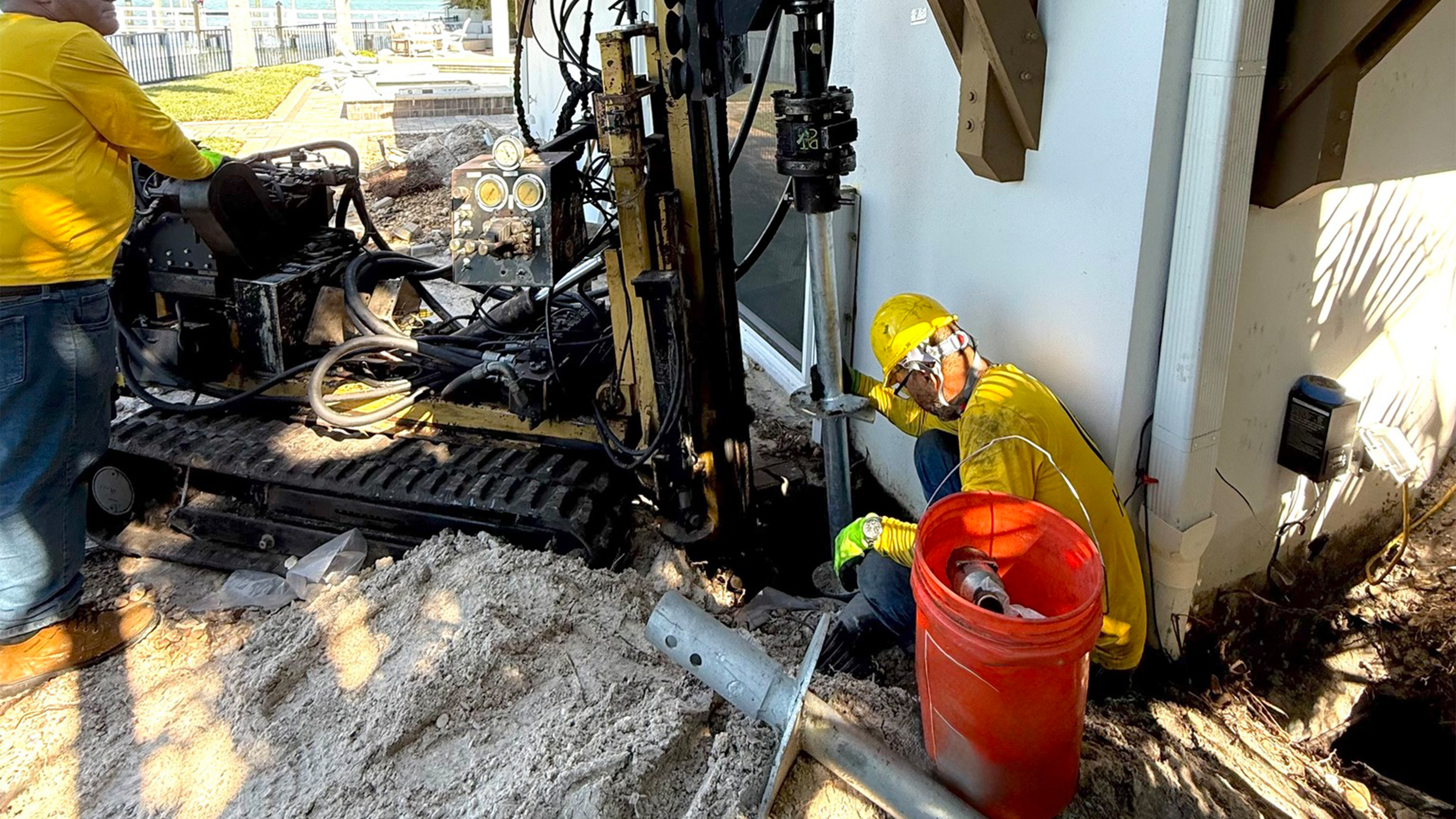
Piering strengthens your foundation by installing steel or concrete supports deep into the ground beneath your home. These supports, called piers, reach down to stable soil or bedrock that won’t shift or settle.
Steel push piers work well when your foundation has already settled. Contractors drive these piers through unstable soil until they hit solid ground.
Hydraulic jacks then lift your foundation back to its original position. Helical piers look like large screws that rotate into the ground.
They’re ideal for lighter structures or when soil conditions make push piers difficult to install. You can use them right away since they don’t need time to cure.
Concrete pilings involve pouring concrete into drilled holes to create permanent support columns. This method takes longer because the concrete needs time to set, but it provides strong, lasting support for heavy structures.
The piers transfer your home’s weight from weak soil to stable ground layers below. This stops further settling and can often reverse damage that’s already occurred.
Slabjacking and Mudjacking
Slabjacking raises sunken concrete slabs by pumping material underneath them. This method fixes uneven floors, driveways, and sidewalks without tearing out and replacing the concrete.
Mudjacking pumps a mixture of soil, cement, and water through holes drilled in the concrete. The mixture fills voids under the slab and lifts it back to the right level.
It costs less than replacing concrete but adds significant weight to the soil below. Polyurethane foam injection uses lightweight expanding foam instead of mud.
Contractors drill smaller holes and inject the foam, which expands and hardens in minutes. The foam weighs much less than mud and won’t put extra stress on already weak soil. Both methods work quickly and let you use the repaired area within hours. Slabjacking costs less than full concrete replacement and creates minimal mess around your property.
Sealing and Waterproofing Solutions
Water causes many foundation problems, so keeping moisture away from your foundation prevents damage and stops existing issues from getting worse.
Crack sealing fills gaps in your foundation with epoxy or polyurethane injections. Small cracks get epoxy that bonds the concrete together.
Larger or active cracks need flexible polyurethane that moves with your foundation and blocks water. Interior waterproofing includes installing drainage systems along your basement walls and adding sump pumps to remove water.
Contractors apply waterproof coatings to your walls to stop moisture from seeping through. Exterior waterproofingrequires excavating around your foundation to apply waterproof membranes and install drainage systems.
This method costs more but provides better long-term protection by stopping water before it reaches your foundation walls. You should also fix gutters, add downspout extensions, and grade your yard to slope away from your house. These simple steps direct rainwater away from your foundation.
Choosing a Foundation Repair Contractor
The right contractor makes the difference between a repair that lasts decades and one that fails within years. You need to verify credentials, ask specific questions about their process, and understand what protections you get after the work is complete.
What to Look for in a Contractor
Start by checking if the contractor holds proper licensing and insurance for foundation work in your state. Ask to see their license number and verify it with your state’s licensing board.
Their insurance should cover both general liability and workers’ compensation. Look for contractors with at least five years of experience specifically in foundation repair. General contractors or handymen don’t have the specialized knowledge needed for structural work. Check their reputation through multiple sources.
Read reviews on Google, the Better Business Bureau, and local community forums. Pay attention to how they respond to negative reviews.
Ask if they employ engineers or work with structural engineers. Complex foundation problems require engineering assessments, not just contractor estimates.
Get at least three written estimates. Each estimate should break down materials, labor, and the specific repair method they plan to use. Be wary of prices that seem too low compared to others.
Questions to Ask Before Hiring
Ask what specific repair method they recommend and why it fits your foundation type and soil conditions. A good contractor explains their reasoning in simple terms.
Find out how long the project will take from start to finish. Most foundation repairs take between one day and two weeks, depending on the extent of damage.
Ask if they’ll handle permits and inspections. Professional contractors pull the necessary permits and arrange for required inspections without you having to manage these details.
Request references from jobs completed in the last two years. Contact these homeowners and ask if they experienced any issues during or after the repair.
Verify who will actually do the work. Some companies use subcontractors, which can complicate communication and accountability.
Ask about their cleanup process. You should know if you’ll need to move items away from your foundation and what condition your yard will be in after completion.
Warranties and Guarantees
Most reputable foundation repair companies offer warranties ranging from 10 years to lifetime coverage. Read the warranty terms carefully before signing any contract. The warranty should cover both materials and labor. Some companies only warranty their products but charge full labor costs if something fails.
Understand what actions void the warranty. Many warranties become invalid if you hire another contractor to modify the work or if certain soil conditions change.
Ask if the warranty is transferable to future homeowners. A transferable warranty adds value to your home and shows the company’s confidence in their work. Get everything in writing. Verbal promises about warranties mean nothing if the company disputes a claim later.
Protecting Your Home Starts at the Foundation
Foundation problems rarely fix themselves. Cracks, shifting floors, and sticking doors often point to deeper issues below the surface. Learning what foundation repair is helps you act early and avoid escalating damage.
Addressing foundation issues promptly protects your home’s structure, safety, and long-term value. Helicon helps homeowners make sense of the warning signs and choose solutions that fit their specific situation.
If you’ve noticed changes in your home, the next step is simple. Schedule a professional inspection to understand what’s happening and determine whether foundation repair is needed before problems grow.
Frequently Asked Questions
What Is Foundation Repair?
Foundation repair is the process of fixing structural problems in the base of a home. It can involve stabilizing, lifting, or reinforcing the foundation to restore proper support and prevent further movement.
How Do I Know If I Need Foundation Repair?
Common signs include wall or floor cracks, doors and windows that stick, uneven floors, and gaps around frames. These symptoms often indicate that the foundation has shifted or settled unevenly.
Are Foundation Cracks Always Serious?
Not all cracks mean major problems. Small hairline cracks can be normal, but wide, growing, horizontal, or stair-step cracks often signal structural issues that should be evaluated by a professional.
What Causes Foundation Problems?
Most foundation issues come from soil movement, excess moisture, poor drainage, or improper soil compaction. Tree roots and plumbing leaks can also contribute to foundation damage over time.
What Are the Most Common Foundation Repair Methods?
Repair methods vary by situation but often include piering, underpinning, slab lifting, crack sealing, and waterproofing. The right solution depends on soil conditions, foundation type, and severity of damage.
How Long Does Foundation Repair Take?
Many foundation repairs take a few days to complete, though larger or more complex projects may take longer. Your contractor can provide a timeline after inspecting your home.
Can I Stay in My Home During Foundation Repair?
In most cases, yes. Foundation repair is often done outside or beneath the home, allowing homeowners to remain inside during the work, with some temporary noise or vibration.
How Long Do Foundation Repairs Last?
When done correctly, foundation repairs can last decades. The longevity depends on the repair method used, soil conditions, drainage management, and ongoing maintenance around the home.
Does Foundation Repair Increase Home Value?
Proper foundation repair can help preserve or restore home value. Addressing issues before selling also helps prevent inspection problems and reassures potential buyers.
When Should I Call a Professional?
If you notice persistent cracks, uneven floors, or repeated door and window issues, it’s best to schedule an inspection. Early evaluation helps prevent minor foundation problems from becoming major repairs.