

Uneven concrete can turn a simple driveway or sidewalk into a real problem. Sinking slabs create trip hazards, cause water to pool, and make your property look worn down. If you are searching for “concrete slab lifting near me”, you are likely dealing with one of these frustrating issues right now.
At Helicon, we see these problems every day across Florida. Shifting soil, moisture changes, and poor compaction often cause slabs to settle unexpectedly. The good news is that concrete slab lifting can correct these issues without tearing everything out and starting over.
This guide breaks down how concrete slab lifting works, what causes slabs to sink, and how to choose the right local contractor. You will learn what to expect from the process so you can fix the problem quickly and restore safe, level concrete.
What Is Concrete Slab Lifting?
Concrete slab lifting fixes sunken or uneven slabs by raising them back up where they belong. Slabs settle for all kinds of reasons, like soil erosion or water damage, but you don’t always have to rip them out and start over.
Basic Overview of Slab Lifting
Concrete slab lifting is a repair method that raises sunken concrete back to its proper level. Technicians inject material underneath your settled slab to fill empty spaces and lift the surface.
There are two main ways to do this. Mudjacking uses a mixture of water, cement, and other stuff pumped through holes drilled in your slab. Polyurethane foam injection uses expanding foam that’s lighter and needs smaller holes.
Both methods stabilize the ground beneath your concrete and give long-lasting support. The injected material hardens or expands and creates a solid base that holds your slab in place.
This approach saves you money compared to a full replacement. It’s also faster and a lot less disruptive to your property.
Common Causes of Slab Settlement
Soil erosion is a big reason your concrete sinks. Water can wash away soil particles under your slab, leaving behind voids that cause the concrete to drop.
Poor soil compaction during construction leads to settling over time. If the ground wasn’t properly prepped before pouring concrete, it compresses under the weight, and your slab ends up sinking.
Water infiltration weakens the soil under your concrete. Rain, plumbing leaks, and bad drainage all make things worse by softening the ground.
Other common causes include:
- Tree roots growing and then dying beneath slabs
- Natural soil shifting from freeze-thaw cycles
- Heavy loads on concrete that wasn’t designed for it
- Drought conditions causing soil to shrink
Signs Your Property Needs Slab Lifting
Uneven surfaces are usually the first thing you’ll notice. One section of concrete sits lower than the rest, and it just looks off.
Cracks often show up as slabs settle unevenly. They might start small, but usually get worse over time. Gaps between your concrete and nearby structures are another giveaway. You might see spaces forming between your driveway and garage floor, or between sidewalk sections.
Watch for these warning signs:
- Water pooling on concrete after rain
- Doors or windows that stick in nearby structures
- Tripping hazards where slabs meet
- Visible tilting toward your home’s foundation
Standing water means poor drainage caused by sunken concrete. Your slab should slope away from buildings, so if water collects in one spot, that’s a red flag.
Popular Methods for Concrete Slab Lifting
Two main methods dominate the concrete lifting industry: mudjacking and polyurethane foam injection. Both fill voids underneath sunken slabs, but they use different materials and equipment.
Mudjacking Process Explained
Mudjacking uses a mixture of water, soil, sand, and cement to lift settled concrete. Technicians drill holes about 1 to 2 inches in diameter through your sunken slab.
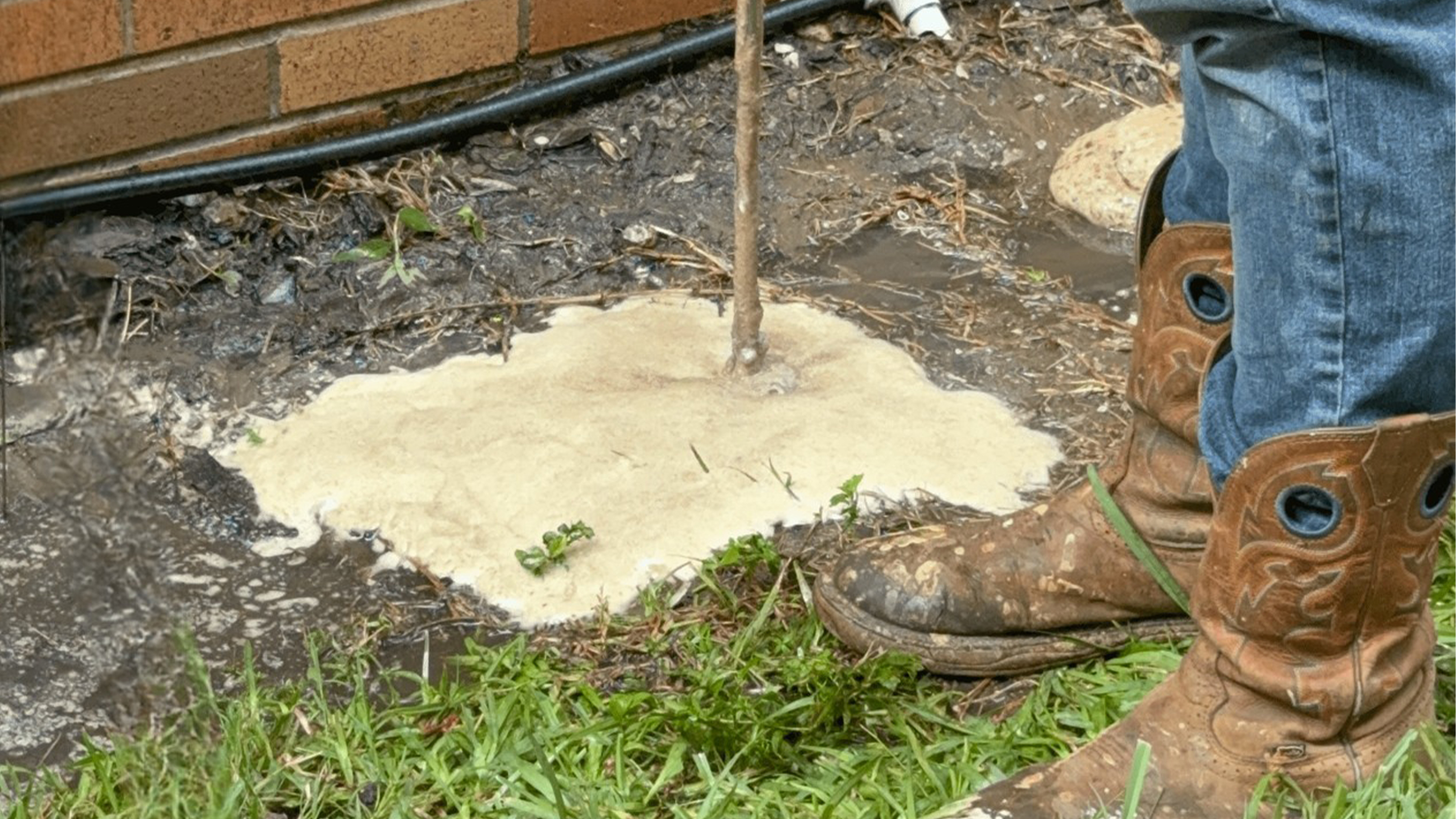
A pump pushes the slurry mixture through these holes into the empty spaces below. As the material fills the voids, it creates pressure that slowly raises the concrete.
The mixture usually takes 24 to 48 hours to fully cure and harden. This method works well for driveways, sidewalks, and patios.
The holes get patched with concrete after the job. You can usually walk on the surface within a day, though you might want to wait a bit longer before driving on it.
Polyurethane Foam Injection
Polyurethane foam lifting uses a lightweight, expanding foam instead of heavy slurry. Technicians drill much smaller holes, usually only 5/8 inch in diameter, which are less noticeable after repair.
They inject a two-part polyurethane foam beneath your slab through these small holes. The foam expands quickly and hardens in about 15 minutes.
This quick curing time means you can use your concrete surface almost immediately after the work finishes.
The foam weighs much less than mudjacking material, so there’s less added stress on the soil. It also resists water and won’t wash away or break down over time. This makes it a good choice for areas with drainage issues or unstable soil.
Comparing Slab Lifting Techniques
Mudjacking costs less upfront, usually $3 to $6 per square foot. It requires bigger drill holes and takes longer to cure.
The added weight can sometimes cause more settling in weak soil. Polyurethane foam costs more, often $5 to $25 per square foot, but you get faster results, smaller holes, and a lighter solution that won’t add pressure to your soil.
The foam lasts longer and stands up to moisture better than mudjacking materials. Both methods are way cheaper than replacing your concrete, which can run $8 to $15 per square foot or more.
Your choice depends on your budget, how fast you need to use the surface, and your soil conditions.
Benefits of Professional Concrete Slab Lifting
Professional concrete slab lifting comes with real advantages for your property. You’ll save money, help the environment, and restore both safety and appearance to your outdoor spaces.
Restoring Safety and Curb Appeal
Uneven concrete creates dangerous trip hazards for anyone walking on your property. A slab that’s sunk even an inch or two can cause someone to stumble.
Professional lifting eliminates these dangers by bringing surfaces back to their original level. Your property’s appearance improves a lot when sunken slabs are fixed.
Driveways, walkways, and patios look neglected when they’re uneven or cracked. Lifting restores a clean, uniform look that makes your home more attractive.
The work happens quickly, often in just a few hours. Most lifted concrete is ready to use the same day the work is finished.
Cost Savings Compared to Replacement
Concrete slab lifting typically costs 50-70% less than full replacement. You keep your existing concrete instead of paying for demolition, removal, and new materials.
Replacement involves tearing out old concrete, prepping the base, pouring new material, and waiting for it to cure. That process takes days or weeks and costs a lot more.
Lifting just corrects the problem underneath. You also avoid landscape damage that comes with replacement projects. Your grass, plants, and surrounding areas stay intact. There’s no need to repair extra parts of your yard after the work is done.
Eco-Friendly Advantages
Slab lifting keeps thousands of pounds of concrete out of landfills. Your existing concrete stays put instead of being broken up and hauled away. This reduces waste and conserves natural resources. The process uses minimal materials compared to replacement.
Modern polyurethane foam lifting methods are especially efficient, needing only small amounts of product to lift heavy slabs. Less material means less environmental impact from manufacturing and transportation. You won’t need new concrete, which has a big carbon footprint to produce. Cement production releases a lot of CO2 into the air.
How to Choose the Right Concrete Slab Lifting Service Near You
Finding the right contractor takes a bit of research and the right questions. You’ll want to check their credentials, see what past customers say, and make sure they can handle your specific repair needs.
Checking Credentials and Experience
Start by making sure the company has proper licensing and insurance for concrete lifting work in your area. A licensed contractor follows local building codes and safety standards.
Insurance protects you if something goes wrong during the repair. Ask how long they’ve been in business and how many concrete lifting projects they’ve completed.
Companies with at least five years of experience usually understand different soil conditions and repair challenges better. Look for specialists who focus mostly on concrete lifting, not just general contractors who do it on the side.
Find out which lifting method they use. The two main options are polyurethane foam injection and cement-based slurry.
Make sure they can explain why their chosen method fits your situation. Check if they offer warranties on their work. Good contractors stand behind their repairs with guarantees that last several years.
Evaluating Customer Reviews
Read reviews on places like Google, Yelp, and the Better Business Bureau. Look for patterns in what customers say, not just one or two opinions.
Pay attention to comments about punctuality, work quality, and how the company handled any problems. Reviews with specific details about the repair process are usually more reliable than vague ones.
Check the company’s BBB rating and see how they respond to complaints. A company that addresses negative feedback professionally shows they care about customers.
Be a little skeptical of businesses with only perfect five-star reviews—sometimes that’s a red flag. Ask the company for references from recent jobs similar to yours. Contact at least two or three past customers and ask about their experience.
Questions to Ask Before Hiring
Get answers in writing before you sign anything. Ask for a detailed estimate that breaks down labor costs, materials, and any extra fees.
Find out how long the repair will take and if you’ll need to stay off the concrete afterward. Most concrete lifting projects wrap up in a day, with slabs ready to use within a few hours.
Ask what prep work you need to do before they arrive. Some companies handle everything, while others expect you to clear the area.
Request info about their equipment and whether the work might damage your lawn or landscaping. Professional crews use compact equipment that minimizes yard disruption.
Get clarity on payment terms and whether they require a deposit. Avoid companies that want full payment upfront.
What to Expect During the Concrete Slab Lifting Process
The concrete slab lifting process usually takes just a few hours and doesn’t mess up your daily routine too much. Your contractor will drill small holes, inject lifting material beneath the slab, and restore your concrete to its proper level.
Preparing Your Property
Your contractor will inspect the work area before starting. They’ll mark utility lines and figure out which slabs need lifting. You should move any furniture, planters, or decorations off the concrete. Clear a path for the crew to get their equipment where it needs to go.
Move vehicles away from driveways or garage floors that need repair. If the work is indoors, protect nearby walls and stuff from dust.
The crew will need access to water and electricity for their equipment. Most will bring a polyurethane reactor with a pump or mudjacking gear. Usually, they’ll lay down protective coverings to keep your property clean during the job.
Project Timeline and Steps
The actual lifting process usually takes 2-4 hours for most homes. Bigger areas might take longer, depending on how much concrete needs raising.
The crew starts by drilling holes into the sunken concrete—typically 1-2 inches wide and spaced a few feet apart. Then they insert injection ports into each hole.
They pump the lifting material through the holes to fill the voids beneath the slab. As the material fills empty spaces, it pushes the concrete upward.
The crew keeps a close eye on the lift to reach the right height. Once the slab is level, they pull out the injection ports and patch the holes with concrete.
The patches blend in with your existing surface. You can usually walk on the concrete within 15 minutes after they finish.
Post-Lifting Care and Maintenance Tips
Wait 24 hours before driving heavy vehicles on newly lifted concrete. The patched holes need some time to fully cure and harden.
Keep the area clean and watch for any new settling in the next few weeks. Minor adjustments are rare, but possible if the ground shifts.
Contact your contractor if you notice any issues during the warranty period. Prevent future problems by directing water away from the concrete with good drainage.
Fix leaky gutters and downspouts that dump water near your slabs. Seal any cracks that pop up to stop water from washing away soil underneath.
Get Your Concrete Back on Level Ground
Sunken concrete is more than an eyesore. It creates trip hazards, drainage problems, and daily frustration around your home. Concrete slab lifting solves these issues by restoring safe, even surfaces without the cost or mess of replacement.
When the soil beneath your concrete shifts, the right repair approach matters. Helicon focuses on practical slab lifting solutions that address the root cause, not just the surface problem. The result is stable concrete that looks better and functions the way it should.
If you are tired of uneven slabs and searching for concrete slab lifting near you, now is the time to act. Schedule an inspection and take the first step toward safer, level concrete around your property.

![How To Repair Cement Block Foundation [Homeowner Guide]](https://heliconusa.com/wp-content/uploads/2026/02/iStock-528064331.webp "How To Repair Cement Block Foundation [Homeowner Guide] 2")
