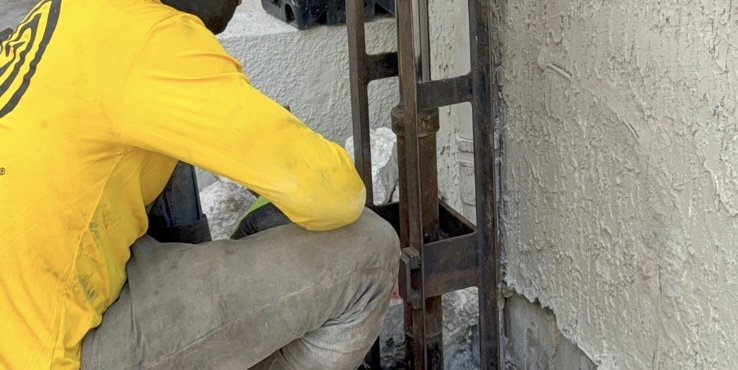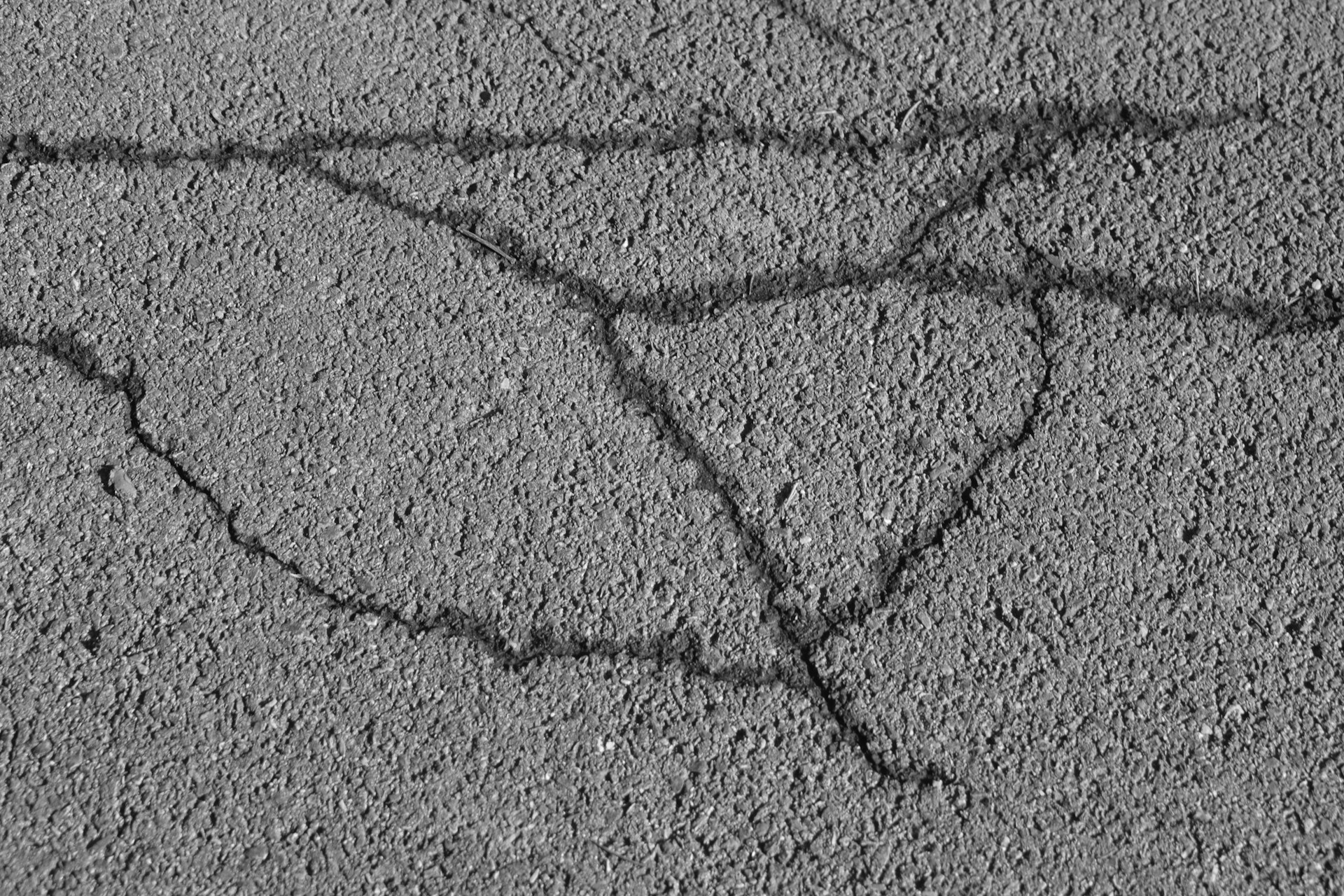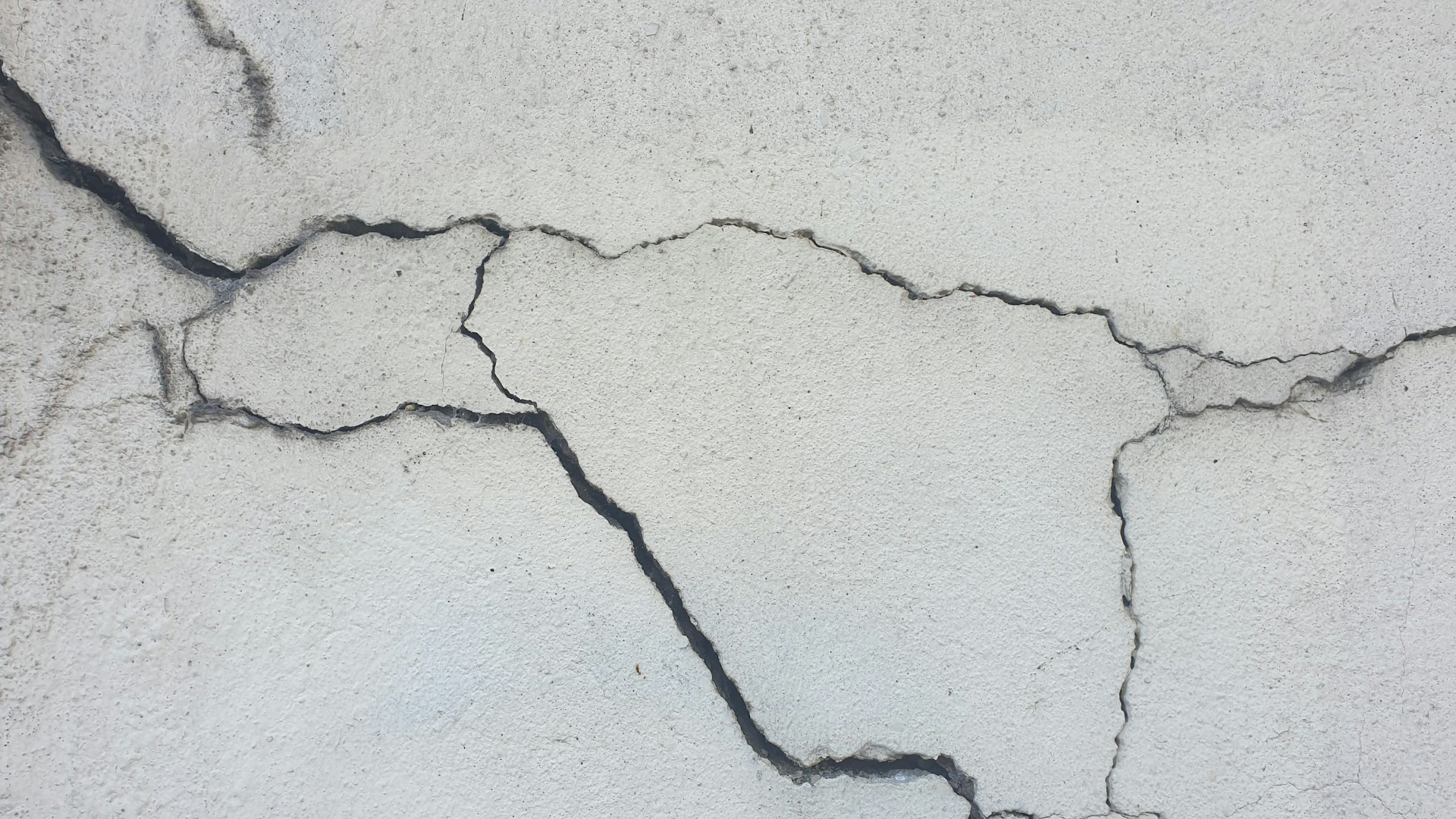
You spot a thin line running across your wall or driveway and your stomach drops. Most hairline cracks on a structure are less than 1/8 inch wide and pose no immediate structural threat, but the ones that grow, shift, or appear near doors and floors are a different story entirely.
The trouble is that they all look similar at first glance, which makes it hard to know whether you need a tube of spackle or a structural engineer.
This guide walks you through exactly how to sort one type from the other, what causes these lines to appear in the first place, and how to monitor them at home. The guidance here reflects what Helicon’s foundation professionals see in the field every day, and it will give you a clear, practical framework for making the right call.
Why Tiny Surface Damage Shows Up
Not every crack means something is wrong with your home’s structure. Most surface lines trace back to two predictable sources: the natural aging of building materials and the relentless movement of soil and moisture beneath your property.
Normal Aging And Material Shrinkage
Concrete and plaster both lose moisture as they cure and age, causing the material to shrink slightly. That shrinkage has to go somewhere, and it often shows up as fine surface lines. Fresh concrete is especially vulnerable during the first few days after it is poured, when rapid evaporation pulls moisture from the surface faster than the mix can handle it.
Drywall goes through a similar process. Tape and joint compound dry and contract over time, and small cracks appear at seams, corners, and nail or screw locations. These lines are shallow, meaning they sit entirely within the finish layer and do not extend into the structural material behind it.
Paint can contribute too. Multiple layers of paint over decades create a thick skin that cracks when the surface beneath flexes even slightly with temperature changes.
Moisture Swings And Florida Soil Movement
Florida’s climate adds a layer of complexity that most other states do not face. The soil here is heavily sand and silt-based, which means it does not compact or hold its shape the way clay-rich soil does in other regions. When heavy rain saturates that soil and a dry spell follows, the ground beneath a slab or foundation shifts in small but measurable ways.
High water tables make this worse. Water pressure beneath a slab pushes up, and when the water table drops, that support disappears. Those repeated cycles put stress on concrete and masonry surfaces that eventually shows up as fine cracking. Near coastal areas, erosion compounds the problem by removing the material that once supported the structure from below.
Where These Small Lines Appear Most Often
Hairline cracks tend to cluster in predictable spots because those areas experience the most stress from drying, movement, and load transfer. Knowing those locations helps you prioritize which cracks to watch closely and which ones to leave alone.
Interior Drywall And Plaster Areas
Drywall cracks appear most often at the corners of door and window openings, along ceiling-to-wall joints, and at the seams where two drywall sheets meet. These spots see the most movement because they sit at the edges of rigid frames or at transition points between panels.
Plaster walls, common in older Florida homes built before the 1970s, crack differently. Plaster is more brittle than drywall, so it develops fine spiderweb patterns called crazing when the surface dries unevenly. A single straight crack in plaster near a window frame is usually cosmetic. A spreading web of cracks covering a large area, especially near the ceiling, warrants a closer look to determine when to worry about wall cracks.
Ceiling cracks that run parallel to a wall and stay narrow are almost always the result of settling or drywall joint movement. Cracks that run across the full width of a ceiling or radiate outward from a single point are the ones that raise red flags.
Concrete Slabs, Patios, And Driveways
Concrete slabs crack because concrete shrinks. A driveway poured on a hot Florida afternoon loses surface moisture quickly, and those thin lines that appear within the first week are nearly always plastic shrinkage cracks. They run in irregular patterns and rarely go deeper than the surface layer.
Settlement cracks are different. They develop when the soil beneath the slab shifts or compresses unevenly, creating a low spot that the concrete then bends to accommodate. You can often feel a settlement crack before you see it clearly: one edge of the crack sits slightly higher than the other, which creates a small step across the surface.
Pool decks and patios see this pattern often in Florida because they sit on sandy soil that washes out during heavy rain. A crack that runs straight across a patio with no vertical displacement is usually fine. A crack where one side has dropped even a quarter inch is worth investigating.
Block Walls And Exterior Stucco
Stucco is a common exterior finish in Florida, and it cracks regularly because it is a rigid material applied over surfaces that move with temperature and humidity. Hairline cracks in stucco are almost universal in older homes and are usually cosmetic as long as they stay thin and do not allow water to get behind the finish layer.
Block walls tell a different story when cracks appear in a stair-step pattern. That diagonal line following the mortar joints between blocks is one of the clearest visual signals of foundation settlement, requiring a specific stair-step wall crack fix because one part of the wall has moved relative to another.
How To Tell Cosmetic Issues From Structural Concern
Width, direction, and location are the three measurements that separate a crack worth patching from one worth investigating. A crack that hits all three of those markers in the right way can wait; one that fails even one of them deserves more attention.
Size, Direction, And Pattern Clues
A crack under 1/8 inch wide, roughly the thickness of a dime, is generally considered hairline. At that width, the material on both sides remains close together, and the crack has not opened sufficiently to indicate significant movement.
Direction matters as much as width. Understanding the difference between vertical and horizontal foundation cracks is vital: vertical cracks usually result from normal shrinkage, whereas horizontal cracks in basement or block walls are the most serious because they indicate lateral pressure from soil pushing against the wall from the outside.
Pattern gives you the third clue. A single isolated crack that has not changed in months is rarely a concern. Multiple cracks forming a connected network, especially when they radiate from one point or repeat the same diagonal direction across several walls, suggest a shared underlying cause.
Changes Around Doors, Windows, And Floors
A crack in a wall by itself tells you one thing. A crack in that same wall, combined with a door that suddenly sticks, a window that no longer latches, or a floor that bounces underfoot, provides clear signs of foundation issues, indicating that the structure around that opening has moved.
Frames are rigid. When the structure around them shifts, the frame holds its shape while the surrounding material cracks and separates. That is why stair-step cracks in block walls almost always first appear near corners and openings.
Check the gap between the floor and the baseboard. A gap that was not there before, or one that has grown wider on one side of a room, points to the floor itself shifting. Combined with cracks in nearby walls, that gap narrows down the cause considerably.
Signs Water Or Soil Problems Are Involved
A crack that feels damp to the touch, shows white mineral deposits along its edges, or has a dark stain running down from it is actively letting water in. Those deposits, called efflorescence, form when water carries dissolved minerals through the concrete and leaves them behind as it evaporates on the surface.
In Florida specifically, a crack accompanied by a soft or spongy spot in the yard nearby can signal a subsurface void. That void might be the early stage of a sinkhole or simply an area where soil has washed out under a slab. Either way, it changes what you should do next.
Water pooling near a foundation after rain, combined with cracks in the interior walls, points to drainage failure as the root cause rather than a structural problem with the building itself.
What You Can Monitor On Your Own
Tracking a crack at home does not require expensive tools. A consistent routine with a few simple supplies gives you reliable data over time and makes it much easier to decide when to call a professional.
A Simple At-Home Tracking Routine
Start by cleaning the crack with a dry cloth to see its full length. Use a pencil to mark the ends of the crack, and write the date next to each mark. Photograph the crack in the same lighting conditions each time you check it, and store those photos with the date in a dedicated folder on your phone.
Measure the width at its widest point using a business card as a rough gauge: a standard card is about 0.01 inches thick, so if the crack is visibly wider than the card edge, it has crossed into territory worth documenting. For greater precision, a crack comparator card costs a few dollars at any hardware store and provides exact width readings.
Check the crack every two weeks for the first two months. If nothing changes, move to monthly checks. If you see the marks separate or the crack widen between visits, that change in a short window is more informative than the total width alone.
When To Patch And When To Wait
A crack that has stayed the same size for three months or more is stable and safe to patch. Use a flexible concrete patching compound for slabs and driveways, and standard joint compound or spackle for cracks in interior drywall. Flexible materials matter because they can move slightly with the surface without re-cracking.
Do not patch a crack that is still actively changing. Covering it with filler hides your ability to track it, and the filler will crack again quickly if the underlying movement has not stopped. Wait for stability to be restored first, then proceed with the appropriate foundation crack repair.
When It Makes Sense To Call A Professional
Some crack patterns go beyond what a homeowner can reasonably assess without professional tools. The difference between a cosmetic patch job and a major repair often comes down to catching those patterns early rather than late.
Red Flags That Need A Closer Look
Call a professional when you see any of the following:
- A crack wider than 1/4 inch
- A horizontal crack in any block, brick, or poured concrete wall
- A stair-step crack in exterior block or brick that spans more than two courses of masonry
- Any crack accompanied by a door or window that has recently become very difficult to open
- A crack that has grown visibly wider or longer within a single month
- White mineral staining or active dampness along any crack in a foundation wall
- A soft depression in the yard near a cracked slab or foundation
Each of these signals points to a cause that patching the surface will not fix. The crack is a symptom; the cause is what needs attention.
Repair Options That Address The Underlying Cause
Surface patching works for purely cosmetic cracks, but structural concerns require foundation wall repair methods that reach the root of the problem. Polyurethane foam injection fills voids beneath slabs and lifts sunken concrete back to its original position. It sets quickly, adds minimal weight, and does not require tearing out existing concrete.
Helical piers transfer a structure’s load through weak or shifting soil down to stable ground below. This approach addresses settlement at its source rather than merely temporarily stabilizing the surface.
For seawalls and block walls with cracks caused by erosion or void formation behind them, targeted grout injection seals the crack and fills the void in one step. A free, no-obligation inspection from Helicon Foundation Experts can pinpoint which method best fits the specific conditions beneath your property and provide clarity on the cost of foundation crack repair.
Frequently Asked Questions
These questions cover the most common concerns homeowners have when they first spot a thin crack, from concrete and walls to ceilings and beyond.
Are small cracks in concrete normal, and when should I worry?
Small cracks in concrete are extremely common and often appear as the material cures, shrinks, and ages. A crack under 1/8 inch wide with no vertical displacement between its two sides is typically cosmetic. You should worry when a crack widens over weeks, one side sits higher than the other, or it appears alongside soft or spongy ground nearby.
What causes thin cracks to appear in walls or plaster over time?
Thin wall cracks usually result from the building materials drying and shrinking over time, seasonal temperature swings, or minor settling of the structure. In Florida, soil movement from alternating wet and dry cycles adds pressure beneath foundations, which is transferred up through walls. Cracks at the corners of door and window frames are especially common because those spots experience concentrated stress when the structure shifts.
Are fine cracks in a ceiling dangerous or a sign of structural damage?
Most ceiling cracks are cosmetic and result from drywall joint movement, settling, or changes in humidity. A thin crack that runs parallel to a wall and stays narrow is rarely a concern. Cracks that span the full width of a ceiling, appear alongside sagging, or grow wider over time are the ones that call for a professional assessment.
How can I repair minor cracks so they don’t spread or reappear?
For interior drywall, flexible joint compound or paintable caulk works well on stable cracks. For concrete slabs and driveways, use a flexible polyurethane or epoxy-based concrete patching compound that can move slightly with the surface. The key rule is to wait until the crack has been stable for at least two to three months before patching, because filling an active crack will only delay and hide the real problem.
Can a tiny crack in a tooth heal on its own, or does it need treatment?
Tiny surface cracks in tooth enamel, called craze lines, are very common and do not heal on their own because enamel does not regenerate. They are usually superficial and cause no pain, but a dentist can monitor them during regular checkups. Deeper cracks that reach the dentin or cause sensitivity need professional treatment to prevent further damage.
What should I do if I notice a thin crack on my phone screen or glass?
A hairline crack on a phone screen will not repair itself and typically spreads with continued use, pressure, or temperature changes. Apply a tempered glass screen protector immediately to contain the existing damage and prevent the crack from spreading. Contact the manufacturer or a repair shop to assess whether a screen replacement is needed before the crack reaches the underlying display layer.
Peace Of Mind Starts With The Pattern
A single thin line on your wall or driveway is rarely the emergency it feels like. What matters is whether that line is stable, isolated, and narrow, or whether it is part of a pattern that includes movement, moisture, and changes elsewhere in the structure. Those two situations call for completely different responses.
The habit of documenting what you see, and checking it consistently over a few months, turns an anxious discovery into useful information. Most cracks stay cosmetic. The ones that do not give you clear, readable signals before they become serious problems.If you are seeing multiple cracks, stair-step patterns near corners, or doors and windows that have started sticking for no apparent reason, it is time to get professional eyes on the situation. Request a free inspection from Helicon for a clear answer and to move forward with confidence.