Proudly serving all of Florida with offices in Tampa, Orlando, and Fort Myers

  • Helicon
  • 9
  • Tampa Waterfront Pool Foundation Repair: Triple‑Helix Galvanized Helical Piers

Tampa Waterfront Pool Pre-Construction: Triple‑Helix Galvanized Helical Piers

Tampa, FL

Market: Residential

Solution: Pre-Construction, Foundation Repair

Services: Galvanized Steel Helical Piers (triple‑helix configuration) for pre‑construction pool support

The Project

Client: Milana Homes (builder)
Asset: New in‑ground pool at a luxury waterfront residence
Objective: Provide a pre‑construction deep foundation to resist uplift and settlement so the finished pool remains stable through seasonal tides, heavy rains, and storm events.

Why a pool needs more than concrete: A pool shell is heavy, but on coastal parcels, the water table sits high and rises quickly with storm surge. When hydrostatic forces beneath the shell exceed the weight of the pool + overburden, the structure can heave or float—damaging plumbing, cracking the shell, and moving decks and coping. A helical system anchors the pool to competent soils and spreads loads uniformly, limiting both uplift and downward movement.

Site & Soil Context (Tampa Waterfront)

Coastal Hillsborough County lots often contain interbedded sands, fill, and lenses of plastic clays. Shallow soils can be variable over short distances, causing unpredictable bearing conditions. High groundwater and tidal influence increase the risk of buoyancy under the pool shell. During drilling, crews encountered resistant clay zones—not unusual for the area—which demanded careful tooling, torque management, and sometimes revised helix sequencing to reach design capacity without compromising alignment.

The Challenge

  1. Penetrating clay layers: Clay soils resist penetration and can “spin out” lighter helix configurations. Achieving target torque without deflection requires the right lead section geometry, steady crowd force, and vigilant monitoring.
  2. Tension + compression design: The system had to resist upward forces (hydrostatic uplift during high water) and downward forces (dead load + live load + surcharge from surrounding deck).
  3. Tight access and schedule: We needed to mobilize compact equipment, protect adjacent structures/utilities, and keep the builder’s schedule on track for pool excavation and shotcrete operations.

Engineering Rationale: Why Helical Piers for Pools

  • Bidirectional capacity: Helical piers provide axial tension (uplift resistance) and compression support in a single element, ideal for pool shells subject to fluctuating water pressures.
  • Torque‑to‑capacity correlation: Installation torque is a measurable proxy for axial capacity, giving the build team real‑time QA/QC during installation.
  • Low vibration, small footprint: Helicals install with minimal disturbance compared with driven piles, protecting neighbors, utilities, and the project timeline.
  • Galvanized longevity: Hot‑dip galvanization enhances corrosion resistance in coastal environments.

The Solution

Design Summary:
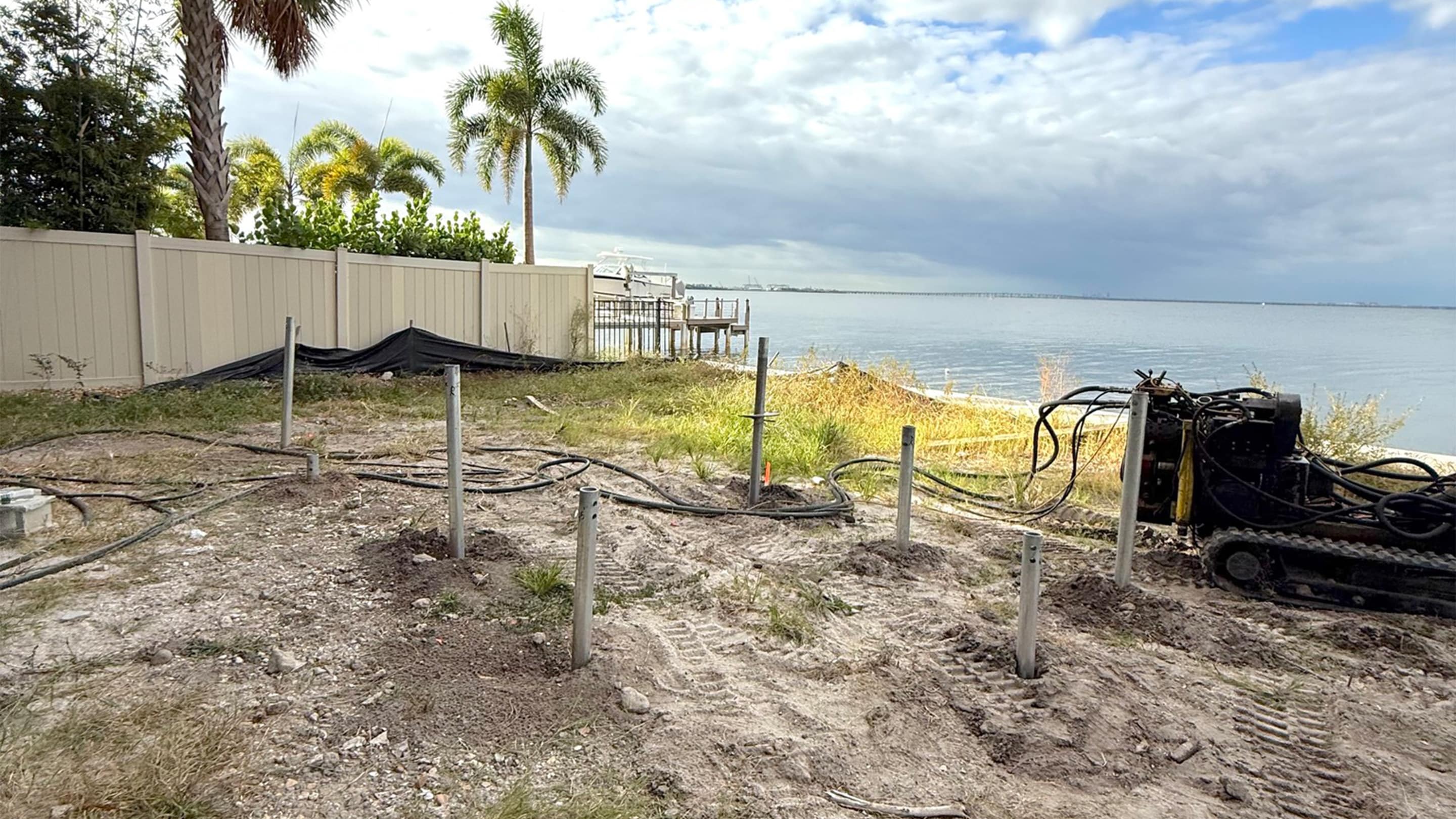
Count: 32 helical piers
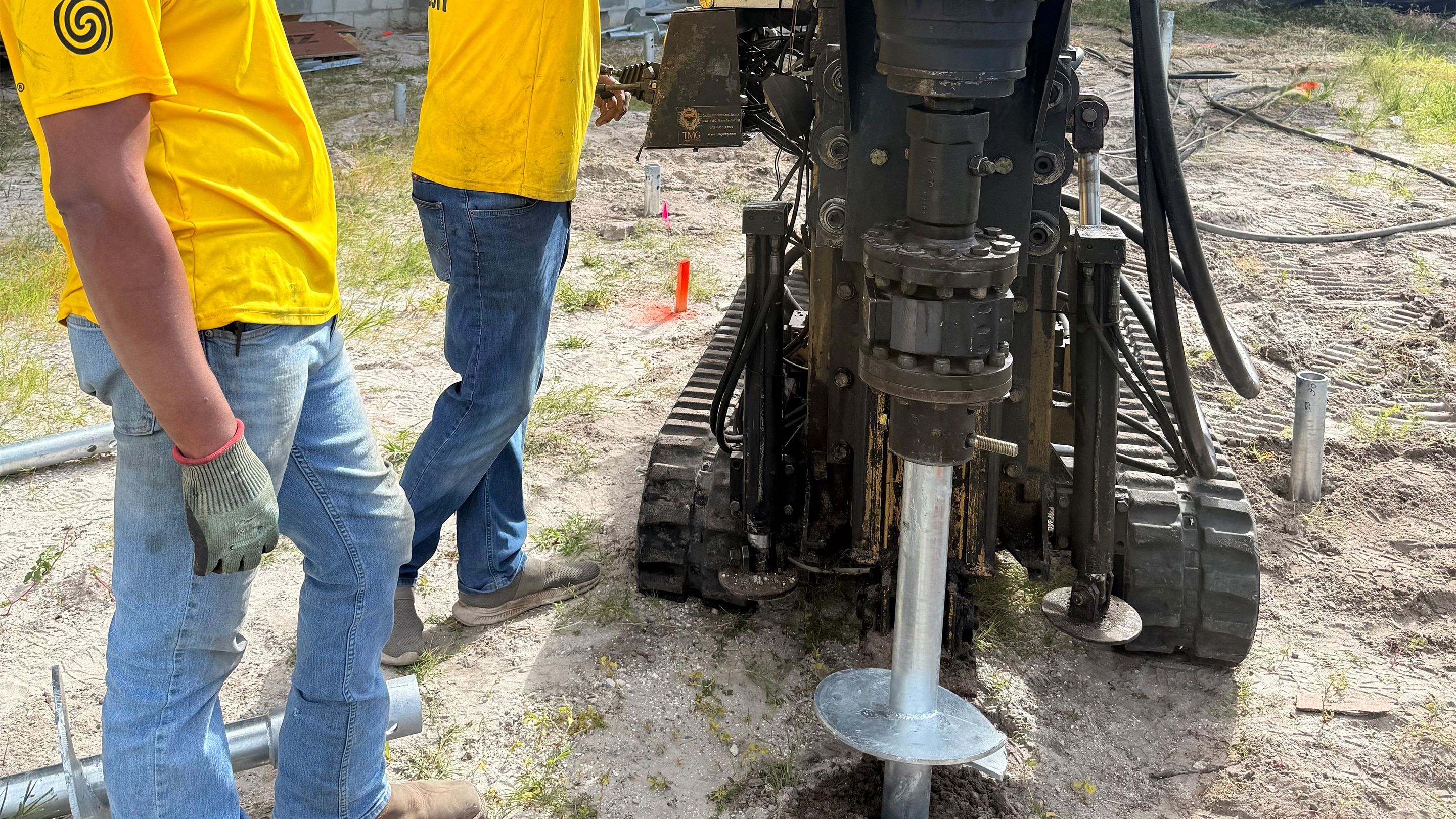
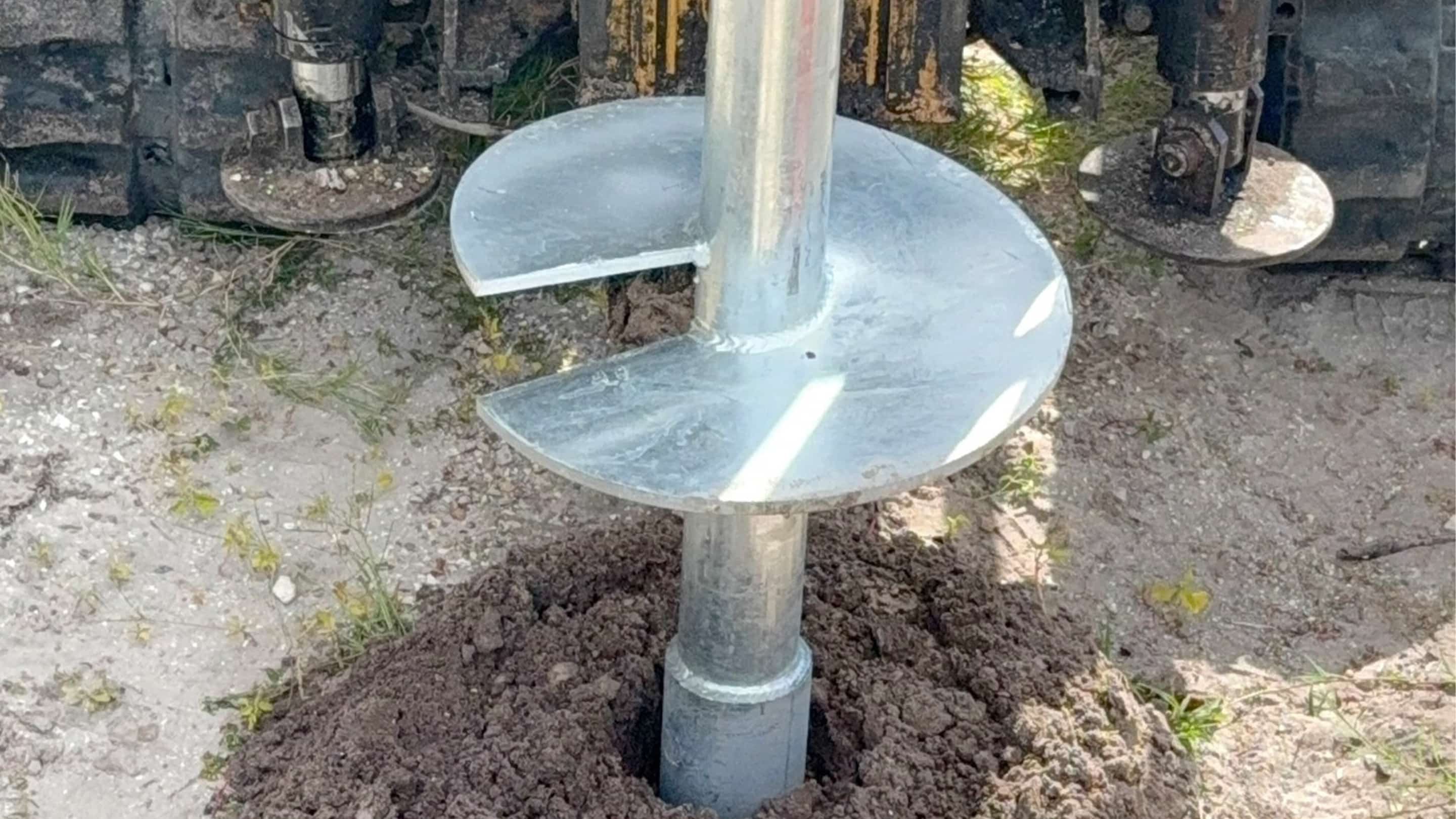
Configuration: Triple‑helix leads selected to improve penetration in mixed soils and to develop capacity efficiently in the target strata.
Finish: Galvanized steel shafts and plates for corrosion protection.
Role: Provide uplift anchorage and vertical support beneath the new pool shell.

Load Path Goals:
– Resist hydrostatic uplift during high groundwater and storm surge.
– Provide settlement control by seating on competent horizons below variable fills/clays.
– Distribute loads evenly across the pool footprint to minimize differential movement at the shell and deck interface.

Installation Approach & Sequencing for Foundation Repair

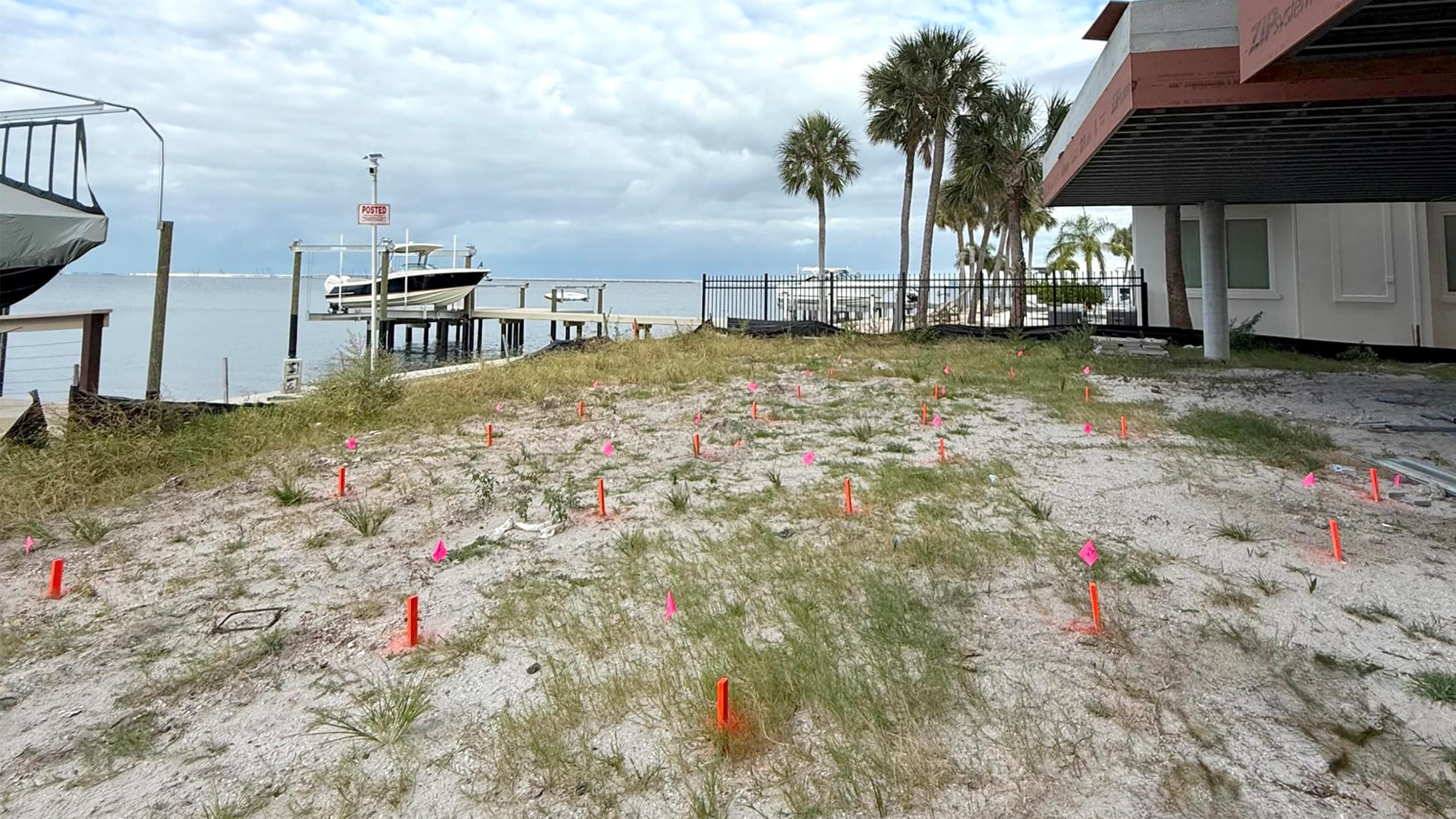
  1. Layout & Mark‑outs
    Helicon coordinated with Milana Homes to stake pier grid locations aligned with the pool shell engineering. Utilities and setbacks were verified to maintain clearances.
  2. Piloting & Lead Selection
    Where clay resistance was expected, crews selected triple‑helix leads with appropriate plate spacings. Pilot bores were used selectively to confirm alignment and reduce wandering in layered soils.
  3. Advancement to Capacity
    Using hydraulic drive heads, each pier was advanced while monitoring torque continuously. In stiff clays, operators maintained steady crowd and carefully managed rotation to avoid plate polishing or stalling. As torque approached the calculated design threshold, technicians recorded readings to validate capacity.
  4. Elevation Control & Bracketry
    Pier tops were cut to elevation and bracket hardware prepared to interface with the pool foundation design. Where specified, caps or templates were set to simplify later rebar/shotcrete work.
  5. QA/QC & Documentation
    The team logged torque vs. depth for all 32 piers, took photos of key milestones, and provided an as‑built package to the builder for the project record and inspections.

Results & Benefits

  • Verified Deep Support: Target torques achieved across all locations, indicating capacity in the intended bearing strata—even through resistant clay layers.
  • Uplift Protection: The pool shell will be anchored against buoyancy loads during high groundwater and storm surge.
  • Settlement Control: Loads transfer to competent horizons, reducing risk of differential movement, cracked coping, and plumbing stress.
  • Schedule Confidence: Minimal disturbance and rapid installation helped the builder keep excavation, steel, and shotcrete sequencing on track.
  • Coastal Durability: Galvanized components improve life‑cycle performance in Tampa’s marine‑influenced environment.

Builder FAQs (Pre‑Construction Pool Foundations)

Why triple‑helix instead of single‑helix?
In mixed sands and clays, triple‑helix leads improve soil engagement and capacity development while reducing the chance of stalling or polishing in stiff layers.

How do you know the piers will hold?
We correlate installation torque to axial capacity using established models and the engineer’s criteria. Each pier’s torque vs. depth is recorded for your records.

Will this slow my schedule?
No—helical installation is fast and low‑impact, typically completing in days with little site prep. It often accelerates schedules by eliminating rework.

Do helicals replace good soil prep?
They complement it. Proper sub‑base, drainage, and reinforcement still matter; helicals ensure the load path reaches competent soils and resists uplift.

Best‑Practice Notes for Coastal Pool Construction

  • Hydrostatic Relief Planning: Consider under‑shell drains or relief details per the pool engineer. Helicals handle uplift, but drainage still helps manage pore pressure.
  • Perimeter Soil Stabilization: In areas with loose backfill, polyurethane soil stabilization can be used to tighten the deck support zone and reduce future settlement at the coping/deck interface.
  • Utility Coordination: Final plumbing penetrations should respect pier lines; include sleeves and flexible couplers to accommodate minimal movement.
  • Inspection & Documentation: Keep torque logs and as‑builts for permit closeout and warranty files.

About Helicon

Helicon is Florida’s trusted partner for foundation repair, helical piers, soil stabilization, concrete lifting, and sinkhole remediation. We support homeowners, builders, and designers across Tampa Bay with clean, documented, and durable solutions tailored to Florida soils.

Designing a waterfront pool in Tampa, St. Pete, or Clearwater? Helicon’s helical pier and soil stabilization teams deliver engineer‑verified foundations that protect your investment from uplift and settlement—without disrupting your schedule. Call 844‑HELICON for a free pre‑construction consultation

FREE INSPECTION REQUEST

This field is for validation purposes and should be left unchanged.
Name(Required)
Address(Required)
Address
This field is hidden when viewing the form