
Merritt Island, FL
The Project
The Challenge
The Solution
FREE INSPECTION REQUEST

Market: Residential
Solution: Soil Stabilization and Seawall Repair
Services: One‑part polyurethane chemical grout injections behind seawall; crack sealing at cap; JET Filter installation for pressure relief
Property: Single‑family waterfront residence with a vinyl panel seawall and concrete cap. The wall serves as the primary line of defense against the Banana River Lagoon’s tidal action, wind‑driven waves, and seasonal storm surges common to Florida’s Space Coast.
Observed Conditions (Pre‑Work):
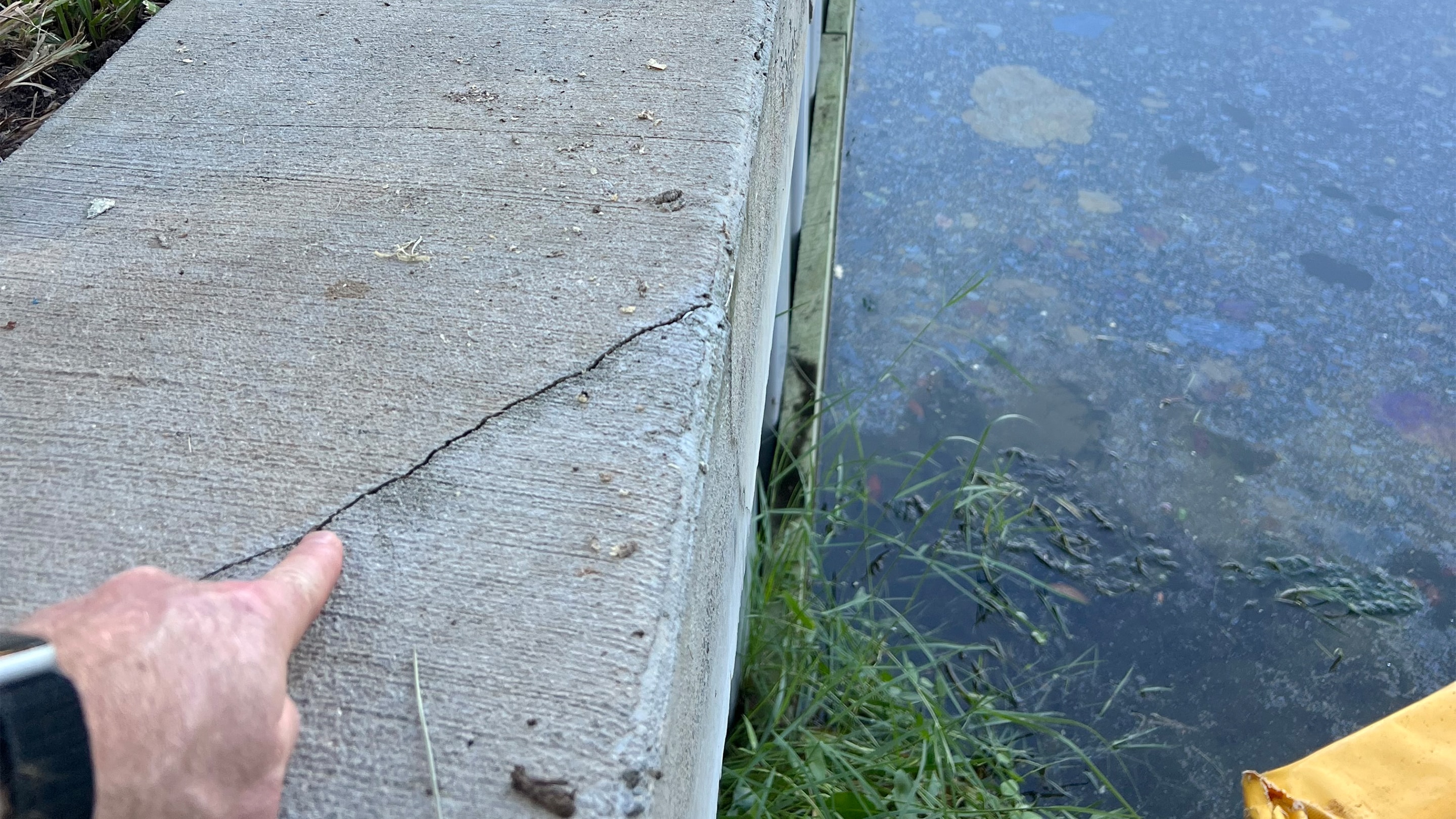
– Cracks along the seawall cap, admitting water behind the wall during tides and storms.
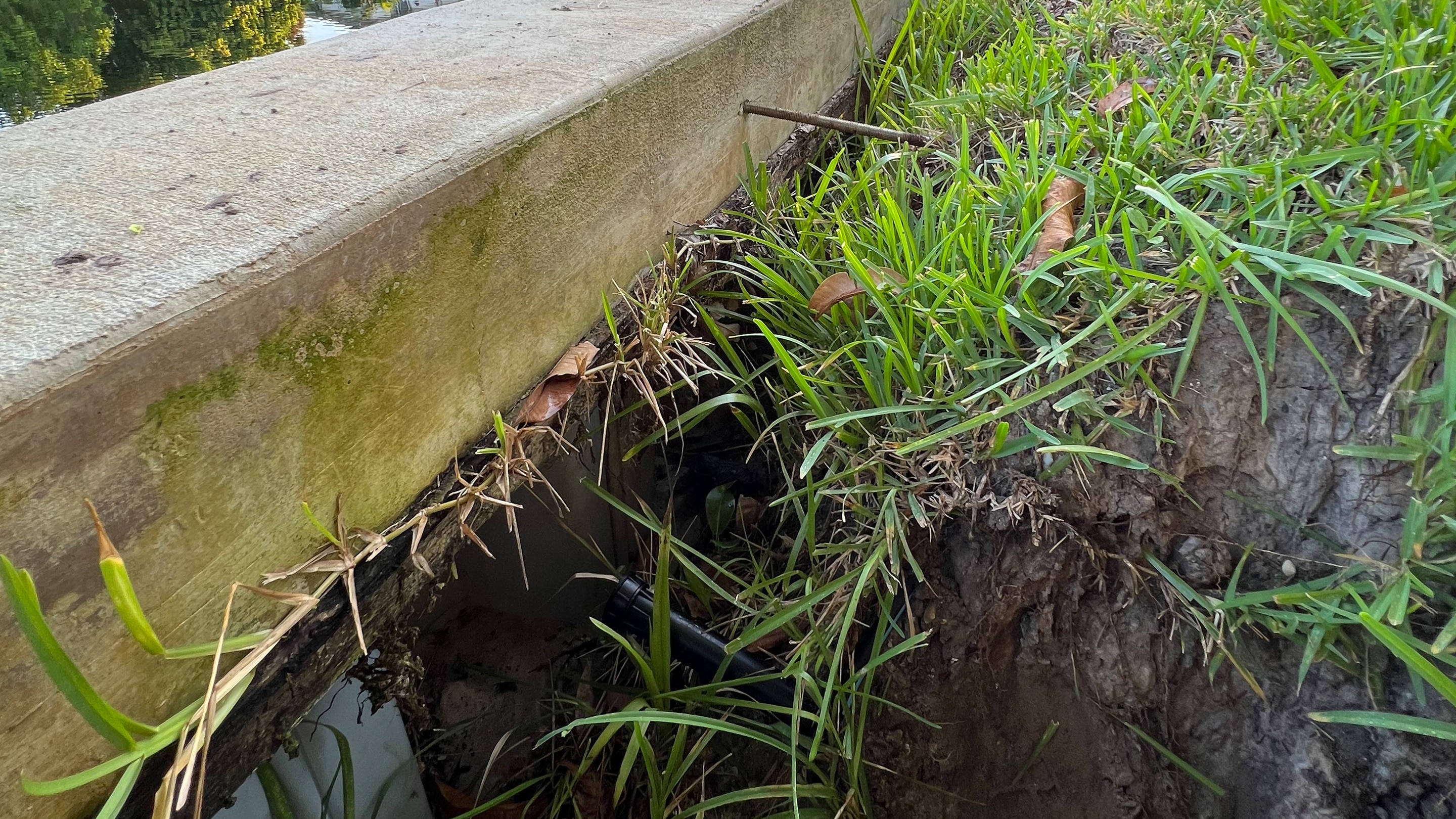
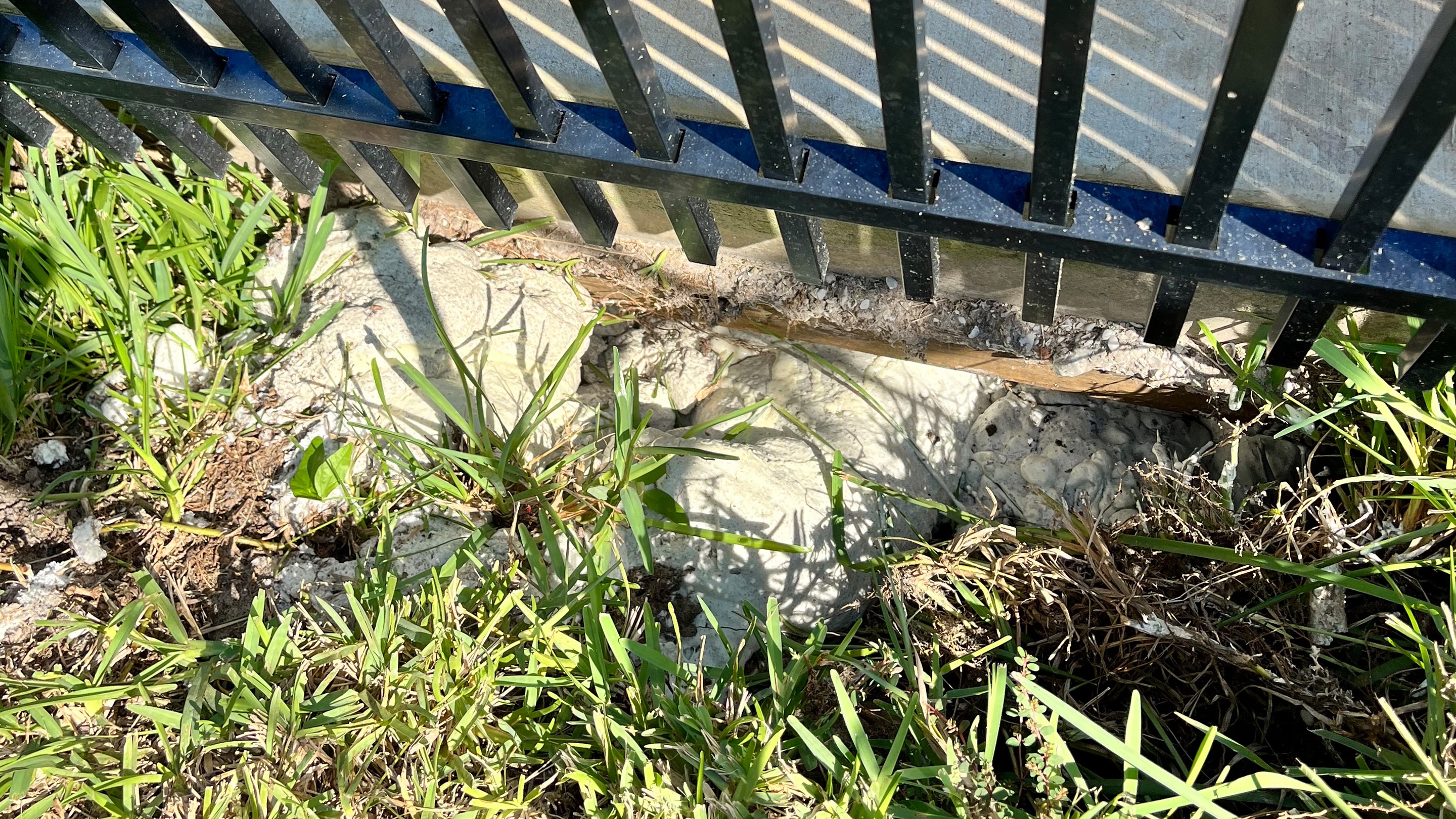
– Active water seepage at the back of the wall with soil migration evidenced by depressions/soft spots in the yard.
– Large voids behind the wall panels, indicating chronic under‑backfill erosion and loss of confinement.
Owner Objectives:
Seawalls are unique: they must hold back both water and soil, and failures rarely start where you can easily see them. This project presented three specific challenges:
Helicon implemented a three‑part program tailored to seawalls:
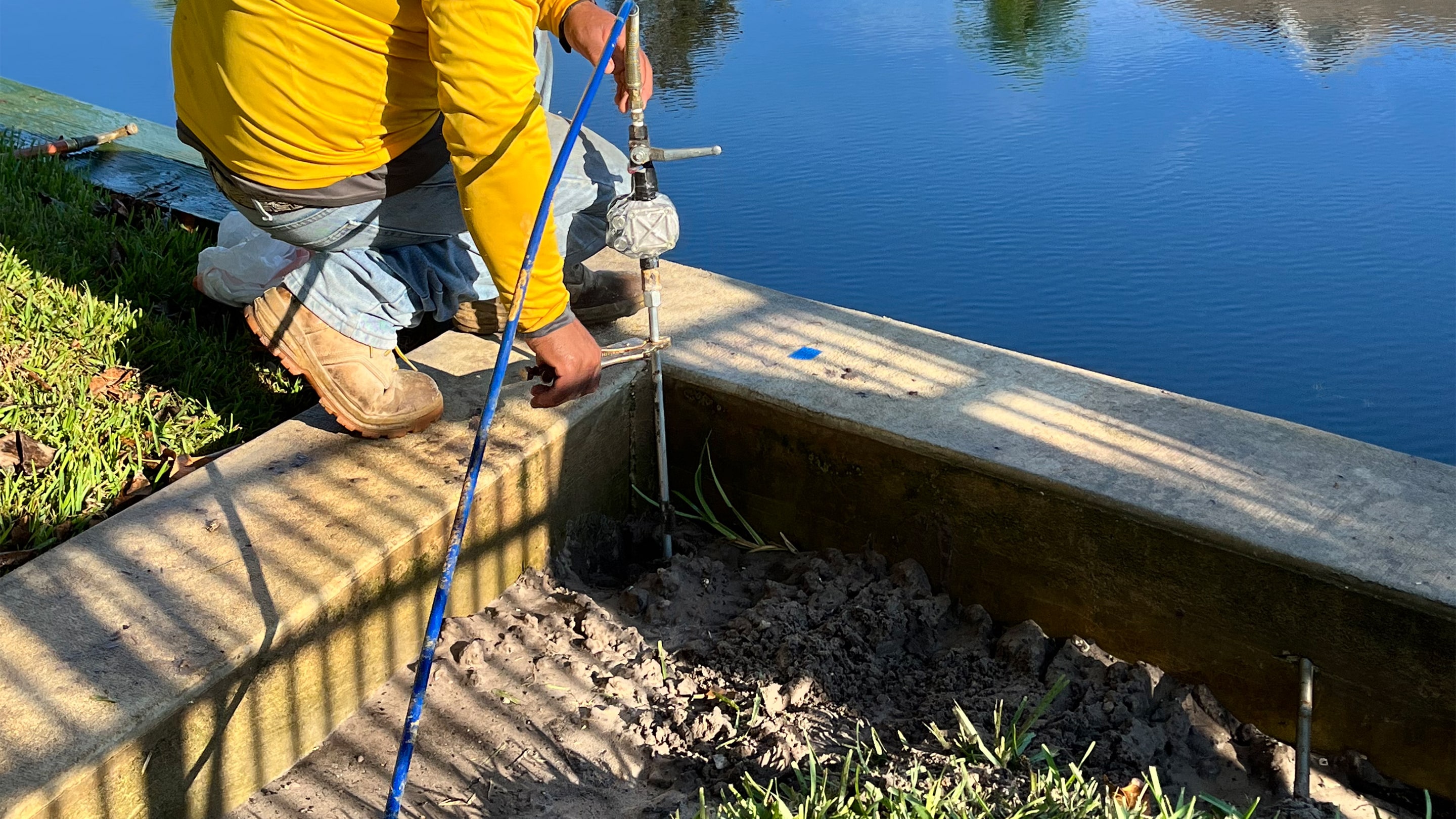
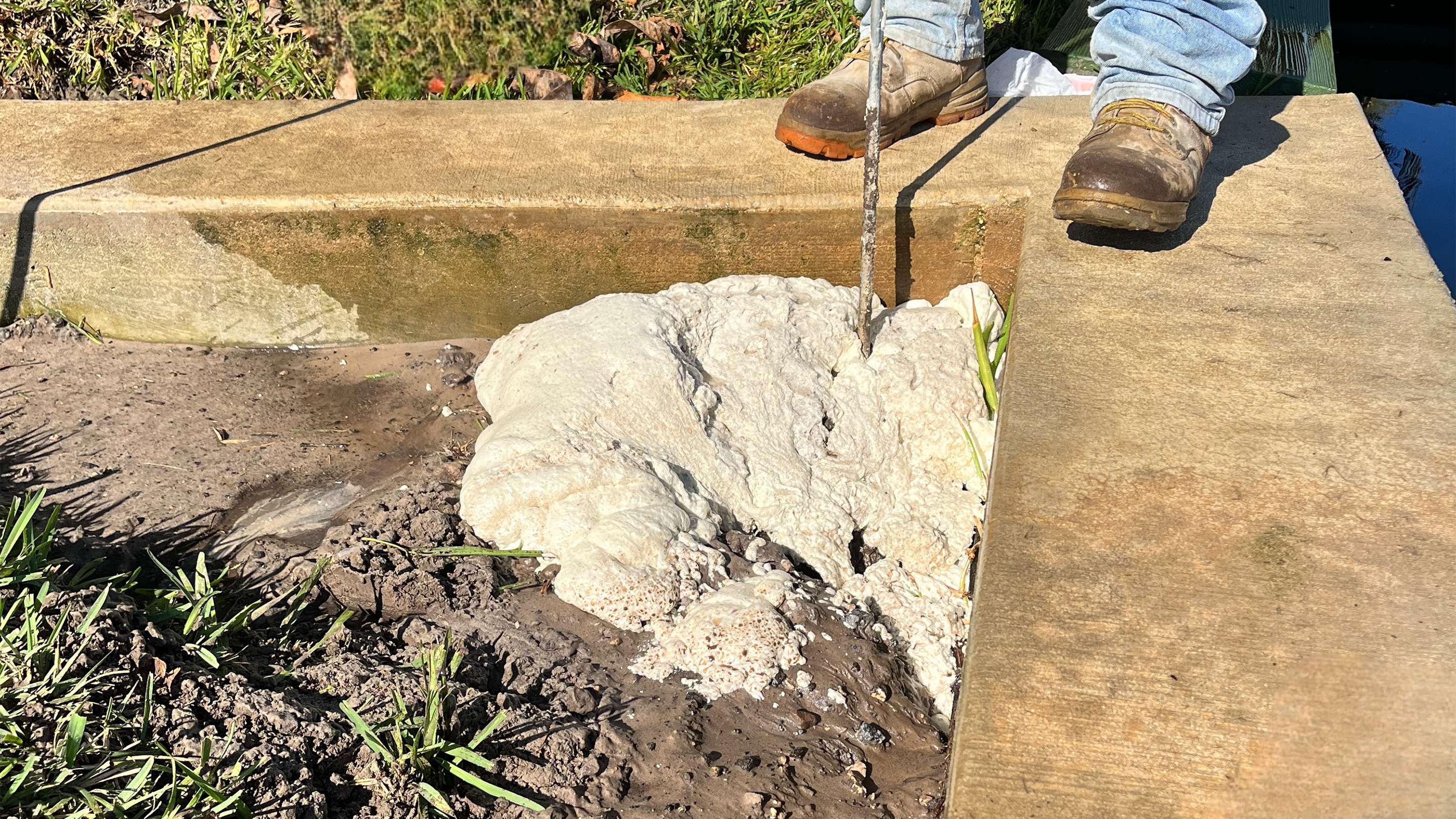
We used a seawall‑specific, one‑component polyurethane that reacts with moisture to expand and form a watertight, soil‑binding matrix. This chemistry excels at cutting off leaks, chasing wet pathways, and knitting granular soils back together without adding significant mass.
Injection Strategy:
– 19 mapped injection points, sequenced along the wall length and adjusted to target the largest voids.
– Low‑to‑moderate staged volumes, advancing from the deepest cavities upward to re‑couple the backfill to the wall.
– Cap‑adjacent injections to intercept paths originating at cracks and joints along the cap.
Production: ~115 gallons of one‑part polyurethane installed over the work week, with point‑by‑point logging of volumes.
We sealed cap cracks and joints that had been serving as recurring leak paths. By closing those openings, we reduced short‑circuit flows and protected the new soil‑grout matrix from fresh erosion.
To prevent pressure buildup (a common driver of wall distress), we installed 11 JET Filters along the wall. These engineered weep drains allow water to pass while retaining soil, relieving hydrostatic pressure safely so the wall and backfill are not forced apart. When paired with proper sealing and soil stabilization, filters reduce the risk of future cap cracking or panel deflection.
Will injections alone stop future movement?
They halt active erosion and restore support. For longevity, pair injections with pressure relief (JET Filters) and routine maintenance—keep cap joints sealed, clear weep pathways, and watch for new cracks after major storms.
How long does the foam last?
Once cured, the resin is inert and resistant to water. Performance depends on drainage and loading—with filters in place and cap joints maintained, the soil‑foam matrix provides durable support.
Is this safe for the waterway?
Yes—work is performed with shoreline protection, and the resin reacts rapidly in the soil mass. Crews adhere to best practices to prevent material from entering the waterbody.
Will I see the ports afterward?
Ports are small and patched at completion. The cap crack repairs blend with typical cap maintenance.
Helicon is Florida’s trusted partner for seawall repair, foundation repair, soil stabilization, concrete lifting, and sinkhole mitigation. We serve homeowners and HOAs across Brevard County and the Space Coast, with rapid mobilization and clean, minimally disruptive methods tailored to coastal environments.
Water pushing through your seawall cap? Soft ground or sink‑outs forming along the edge? Helicon’s seawall stabilization program seals leaks, fills voids, and relieves hydrostatic pressure—without demolition. We serve Merritt Island, Cocoa Beach, Cape Canaveral, Melbourne, and the Space Coast. Call 844‑HELICON to schedule a free seawall evaluation and protect your waterfront investment.
FREE INSPECTION REQUEST