- Helicon
- 9
- Hudson Pool Deck Soil Stabilization: Two‑Part Polyurethane Injections Protect a Settling Amenity
Hudson Pool Deck Soil Stabilization: Two‑Part Polyurethane Injections Protect a Settling Amenity
Hudson, FL
Market: Residential
Solution: Concrete Lifting & Soil Stabilization
Services: Two‑Part Polyurethane Slab Injections
The Project
Property Type: Single‑family residence with in‑ground pool and cast‑in‑place concrete deck
Location: Hudson, FL (Pasco County)
Owner Objectives:
- Stop settlement forces by stabilizing soils beneath the pool deck.
- Restore slab contact and reduce future risk of crack propagation or trip edges.
- Get expert guidance on whether concrete lifting was warranted, while keeping disruption as low as possible.
- Understand the role (if any) of sinkholes and how to evaluate that risk.
Pre‑Work Indicators:
- Localized panel settlement near corners/edges of the deck.
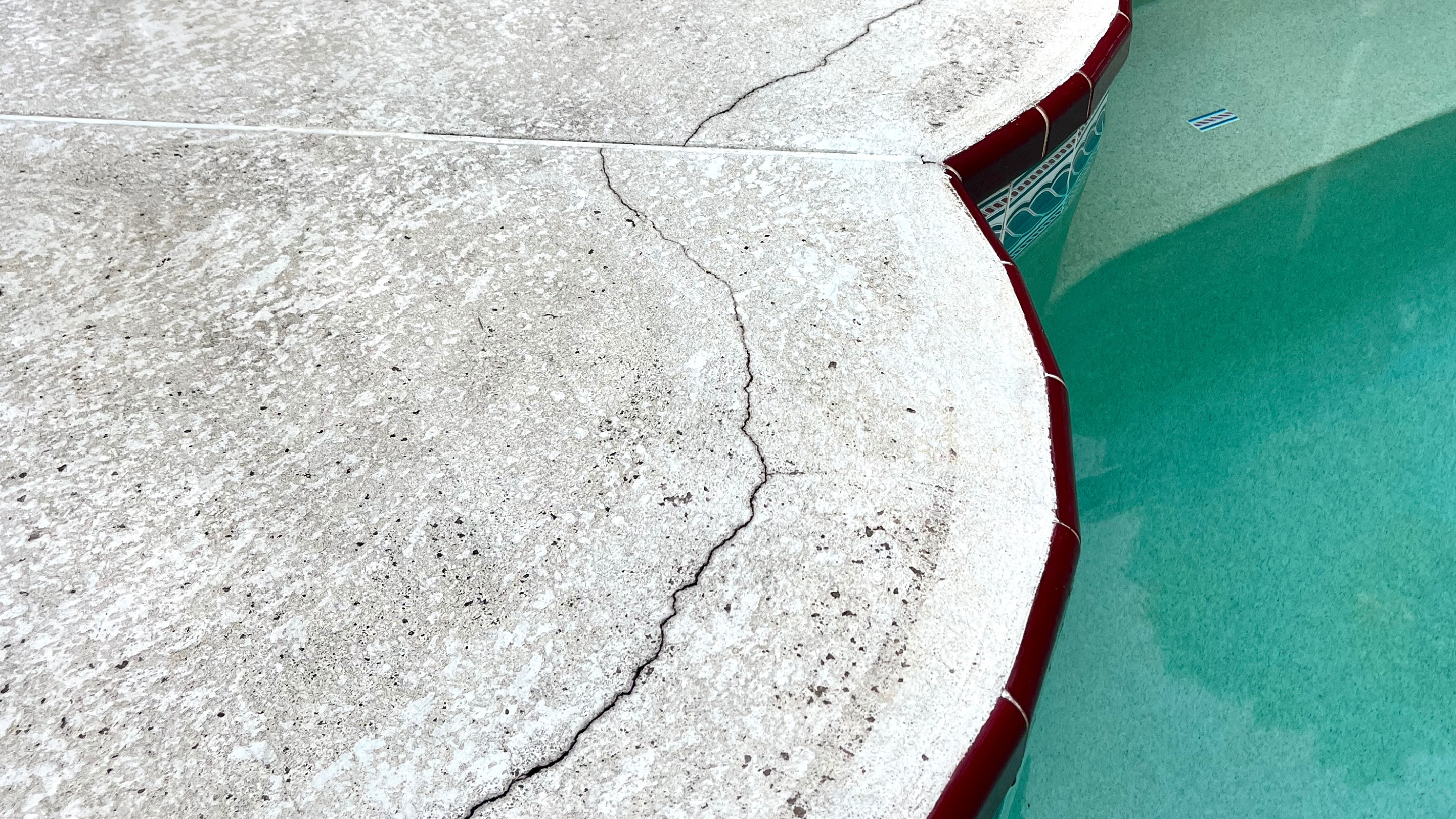
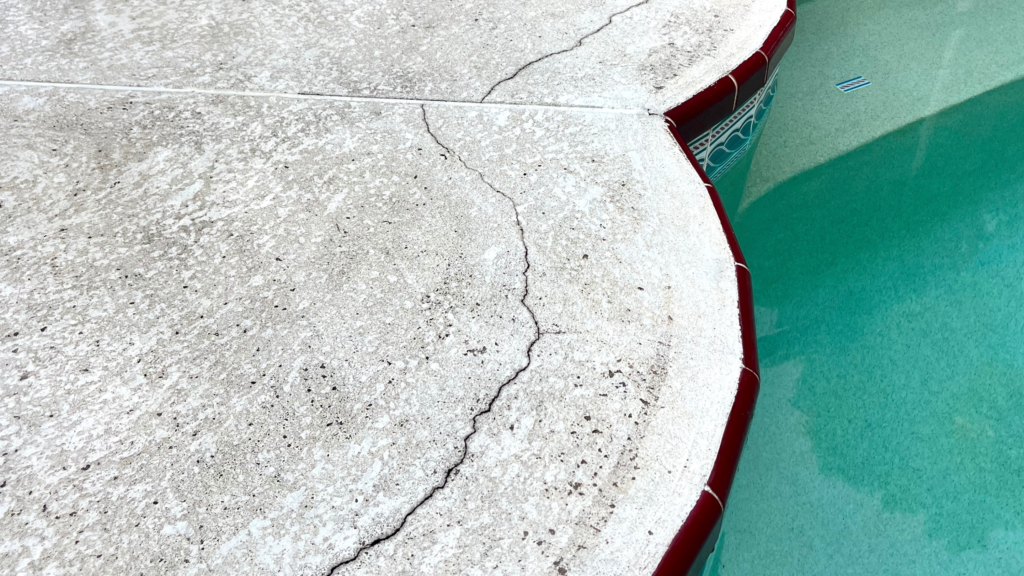
- Hairline cracking and hollow responses on percussion—classic signs of voiding under the slab.
- No structural distress to the pool shell, mechanicals, or nearby flatwork.
Likely Contributors:
Florida pool decks often sit on mixed backfill. Over many years, moisture variability from rain, splash‑out, and irrigation can loosen near‑surface soils. Organics decay (roots) or minor washout toward the pool shell can create pockets that no longer support the slab evenly. This is a soil mechanics issue, not a concrete defect.
The Challenge
On paper, this was a straightforward stabilization—no special access constraints, limited obstruction risk, and cooperative soil conditions. Still, three concerns guided the plan:
- Stabilization vs. lift expectations. Homeowners often ask for a perfect concrete lifting result right away. Here, the owners wisely prioritized soil stabilization first so any minor alignment corrections would sit on a reliable base.
- Pool adjacency. Injections near a pool demand careful control to avoid over‑pressurizing slab edges or transmitting forces toward the shell.
- Sinkhole anxiety. The owners asked about sinkholes. We clarified that true sinkhole evaluation requires a separate geotechnical investigation (borings, geophysics) and isn’t part of a standard stabilization scope. If their risk tolerance requires certainty, we recommended engaging an engineer for testing.
The Solution
Two‑Part Polyurethane
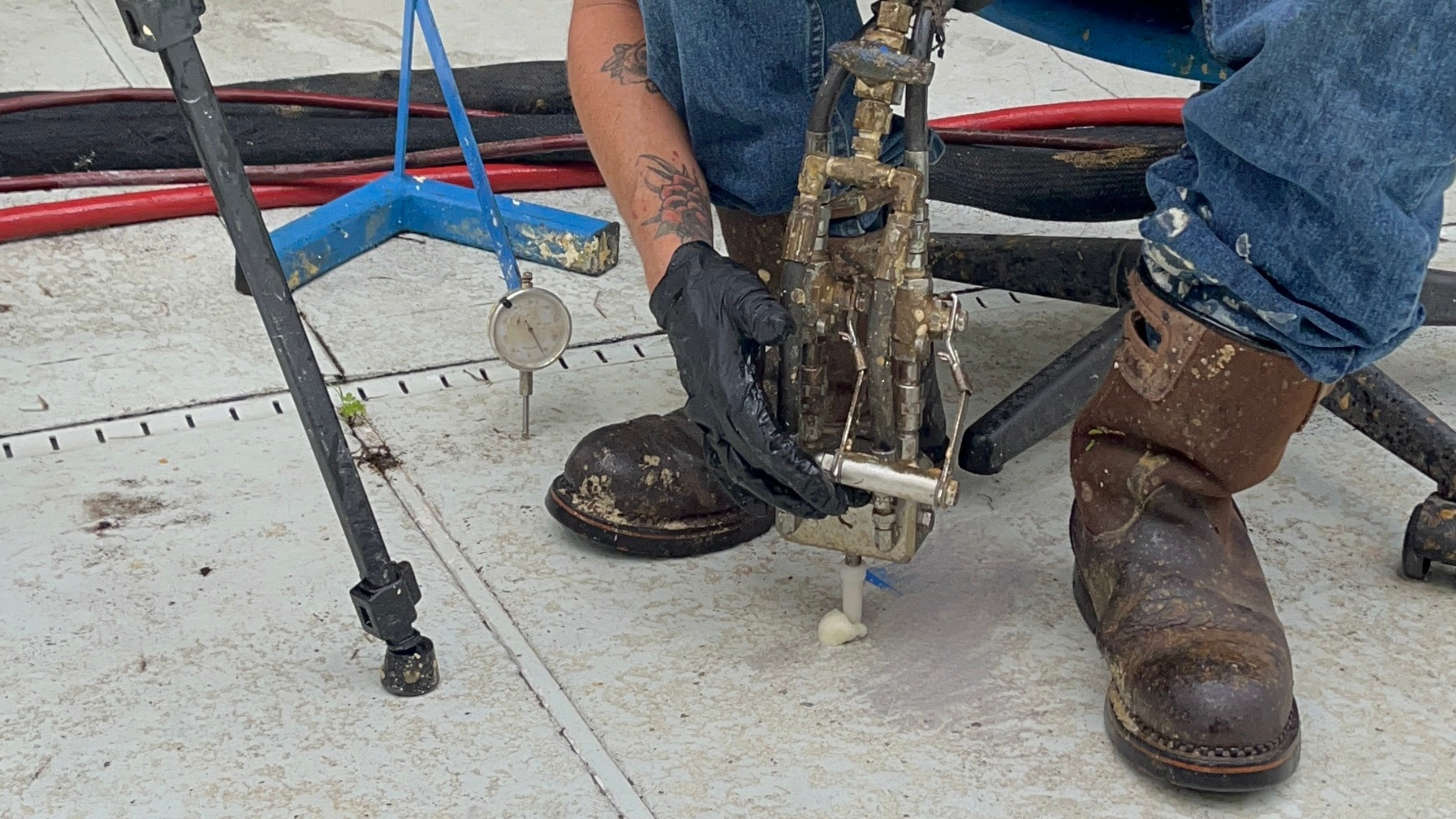
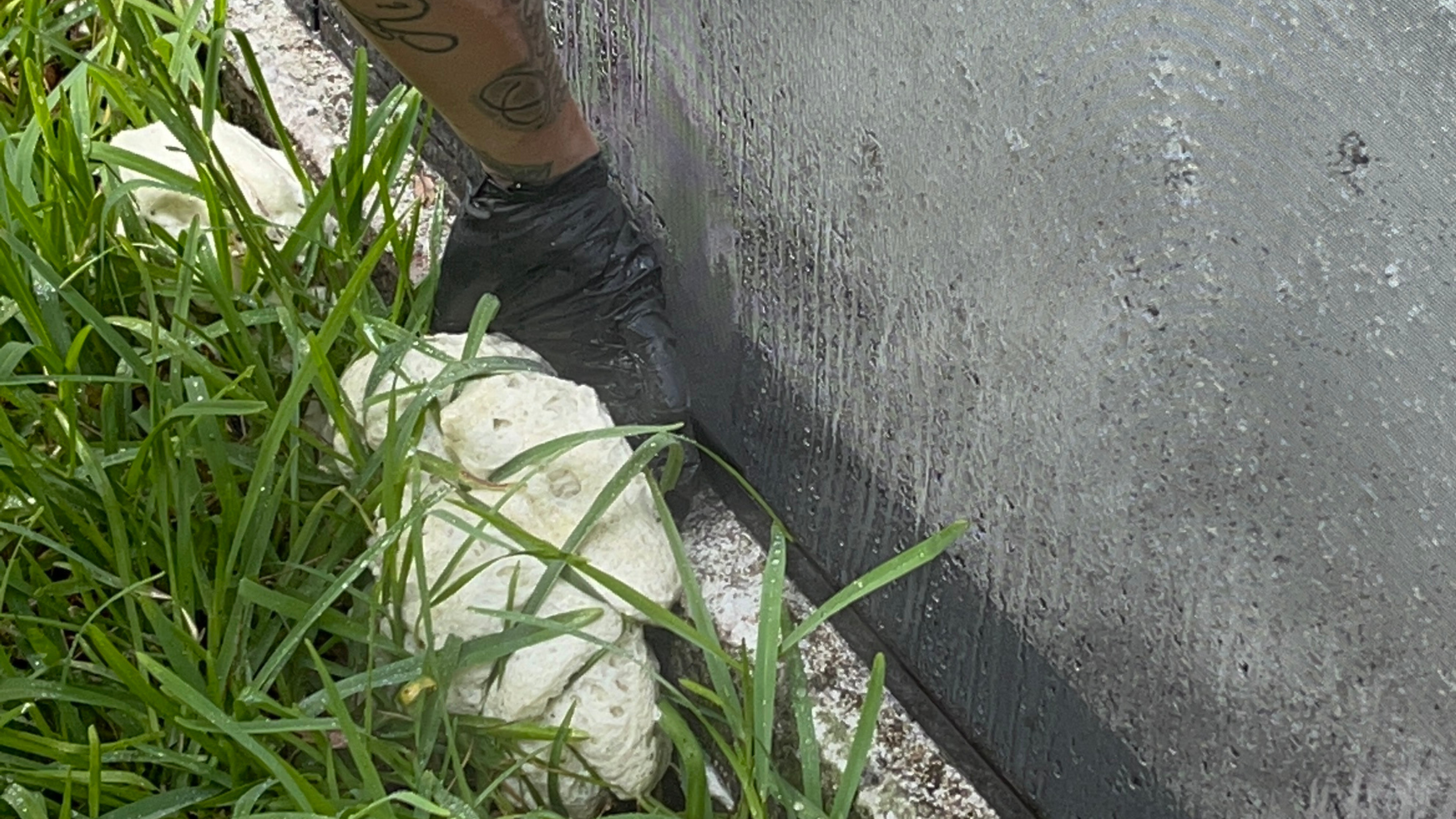
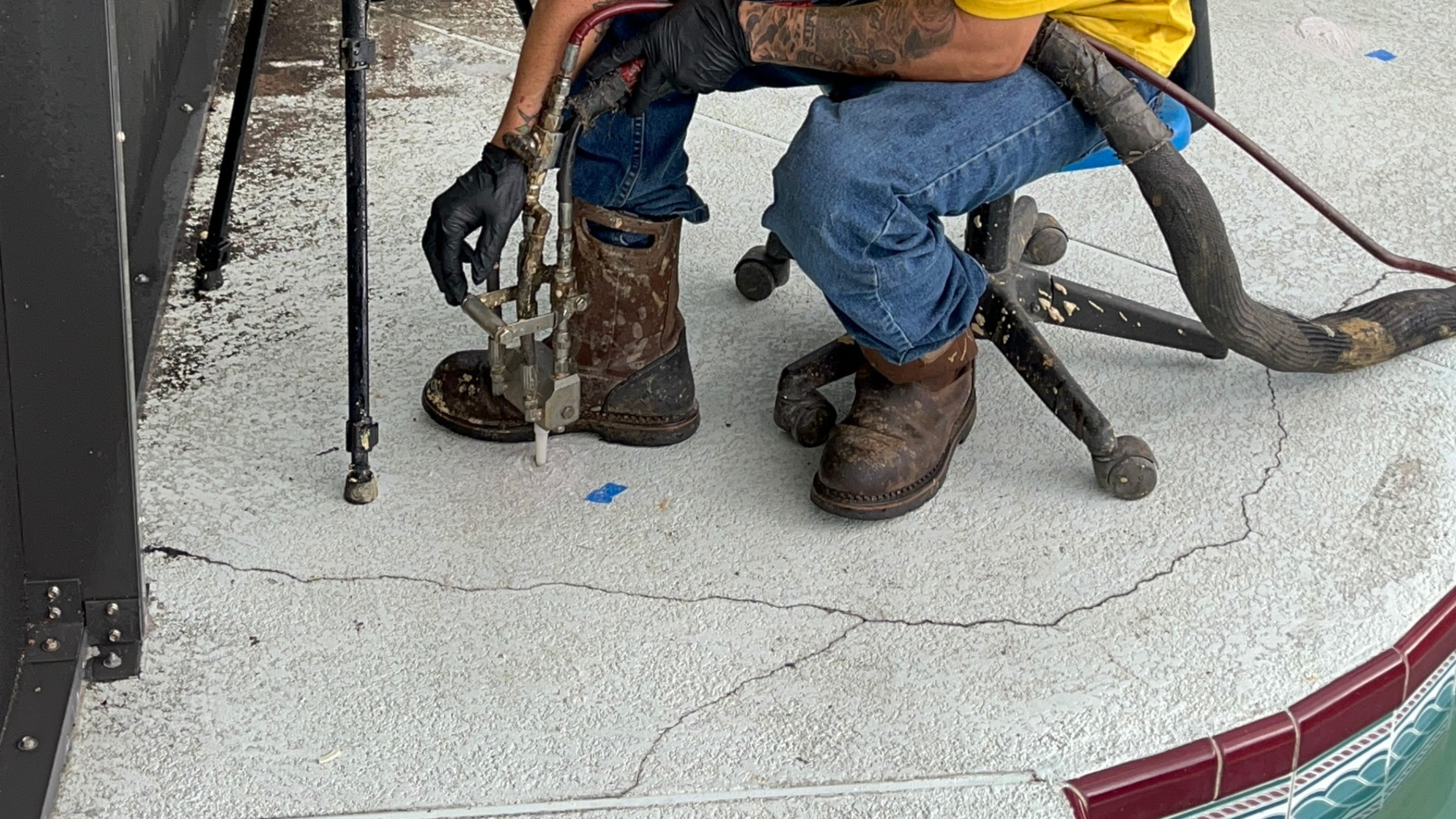
Helicon installed 225 pounds of two‑part structural polyurethane foam beneath the affected deck areas through small, mapped injection ports. The material flows along low‑resistance paths—voids and loose pockets—then reacts and expands, creating a soil‑foam matrix that re‑couples grains and restores uniform bearing under the slab.
Why Polyurethane for Pool Decks:
- Lightweight, structural support: Adds negligible dead load versus cementitious fills, reducing re‑settlement risk in Florida’s sandy soils.
- Fast cure, minimal downtime: Foam cures in minutes, allowing rapid return to service.
- Small ports, tidy finish: Injection holes are penny‑sized and patched flush, preserving curb appeal.
- Moisture‑tolerant & inert: Ideal for humid, rain‑intense climates and areas exposed to splash‑out.
Results & Benefits
- Void closure and re‑support
- Hidden voids were filled and the near‑surface soils densified, restoring the continuous load path from foot traffic and furniture through the deck into the bearing layer.
- Stability prioritized
- By tackling soil stabilization first, the deck now behaves predictably. If the owners pursue any additional concrete lifting or cosmetic work, it will be built on a stable base.
- Low disruption, fast turnaround
- Work was completed with small ports, compact equipment, and rapid‑cure foam. The deck returned to service the same day under typical conditions.
- Florida‑suited durability
- Once cured, polyurethane is inert and resists moisture, helping the repair stand up to Pasco County’s seasonal downpours and splash cycles.
Sinkholes vs. Settlement: What’s the Difference?
Settlement at a pool deck is most often a near‑surface soil issue: voids from organics decay, washout, or under‑compaction. Sinkholes, by contrast, are karst phenomena involving dissolution of limestone at depth and migration of overlying soils. The symptoms can look similar on the surface, but the diagnostics and remedies differ:
- Settlement remedy: Polyurethane soil stabilization (sometimes paired with slab lifting) to restore contact and bearing in the top few feet.
- Sinkhole remedy: Deep support (e.g., underpinning) and pressure grouting targeted by a geotechnical engineer after testing.
If the owners want certainty about sinkhole presence, a licensed geotechnical engineer should be engaged for formal testing. Stabilization is still valuable in either case—it addresses the immediate performance of the deck and can be performed before or after geotechnical evaluation.
Homeowner FAQs
- Can you make it perfectly level?
- Our first responsibility is stability. Where the slab responds uniformly, we can pursue measured concrete lifting—but we avoid over‑correction that can stress finishes or the shell interface.
- How long does the foam last?
- After cure, polyurethane is inert and moisture‑resistant. Performance depends on drainage and loading, but under normal use, results are long‑lasting.
- Will injections harm pool plumbing or lights?
- We map conduits, keep shots short and metered, and monitor response to avoid injection into utilities. The process is surgical compared with demolition or replacement.
- Will I see the ports?
- Ports are small and patched flush. Over time they blend with typical deck maintenance and can be concealed further during cosmetic work.
Care & Maintenance (Keep It Stable)
- Manage runoff: Direct downspouts away from the deck and keep drainage clear of edges.
- Maintain joints & sealants: Keep control joints and edge sealants in good shape to limit water ingress and fines migration.
- Avoid point loads: Distribute heavy planters, grills, or furniture to reduce edge stress.
- Seasonal check‑ins: Photograph joints and edges twice a year to confirm stable conditions; call early if changes appear.
About Helicon
Helicon is Florida’s trusted partner for soil stabilization, concrete lifting, foundation repair, and sinkhole remediation. We serve homeowners across Pasco County and the Greater Tampa Bay area, delivering engineered, minimally disruptive solutions that protect your property for the long term.
Seeing cracks or soft spots around your pool deck in Hudson, Port Richey, or New Port Richey? Helicon’s soil stabilization and concrete lifting methods close voids, restore support, and improve elevations—often in one day. Call 844‑HELICON or fill out the form to schedule a free inspection today.
FREE INSPECTION REQUEST