Proudly serving all of Florida with offices in Tampa, Orlando, and Fort Myers

  • Helicon
  • 9
  • Brandon, FL Foundation Repair – Push Piers Stabilize Long‑Owned Family Home

Brandon, FL Foundation Repair - Push Piers Stabilize Long‑Owned Family Home

Brandon, FL

Market: Residential

Solution: Foundation Repair

Services: Underpinning with Push Piers

The Project

Property Type: Single‑family residence (owner‑occupied)
Location: Brandon, Hillsborough County, Florida
Owner Goals:

  • Stop ongoing settlement at the right side of the home
  • Reduce the chance of new cracking and misalignment
  • Attempt elevation recovery if structure and soils allow
  • Minimize disruption to daily life and landscaping

Observed Condition:

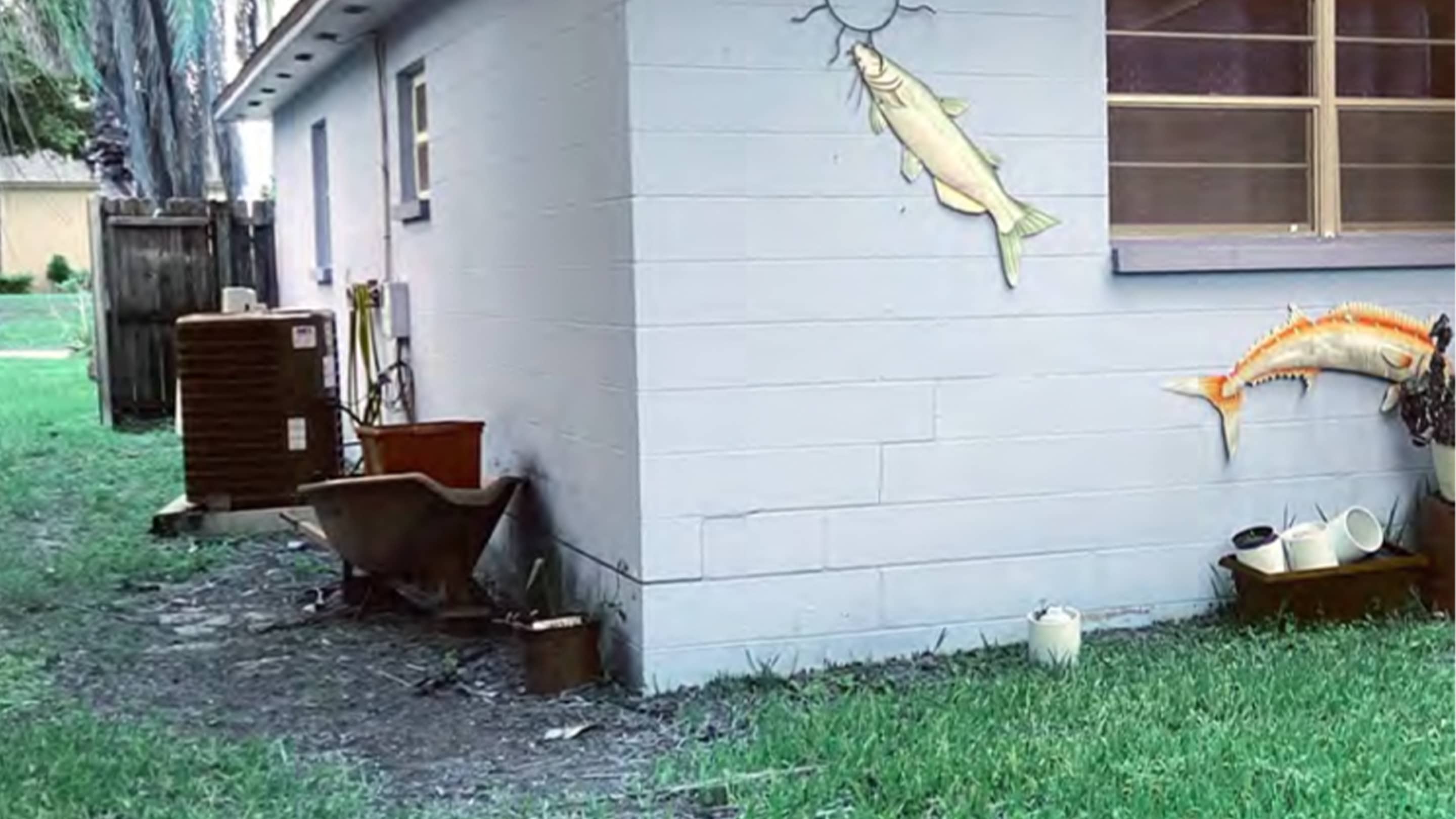
  • Stair‑step cracking in masonry on the right elevation
  • Minor interior symptoms consistent with edge settlement (e.g., hairline drywall cracks, subtle door/trim misfit), typical of localized differential movement
  • No evidence of widespread sinkhole activity based on testing and engineering evaluation

The Challenge

Underpinning a lived‑in home requires precision and realism about outcomes:

  1. Challenging shallow soils. Brandon neighborhoods can include rock‑laden shallow zones and sandy clays that shrink and swell with seasonal moisture changes. These conditions reduce near‑surface reliability and can telegraph as stair‑step cracking or racked openings.
  2. Multiple contributing factors. Engineering noted the combined effects of thermal expansion/contraction of building materials, tree root activity including decay, and moisture‑sensitive sandy clays. No single factor explains all movement; a solution must isolate the foundation from ongoing soil variability.
  3. Lift is not guaranteed. Structural lifts depend on footing integrity, superstructure tolerance, and live response during jacking. The program was designed to halt settlement first, then pursue prudent lift where safe.

Geotechnical Findings (What We Looked For)

To rule out unusual subsurface risks and inform pier design, the engineering team deployed Ground Penetrating Radar (GPR) and in‑situ testing (including Standard Penetration Tests). Objectives included:

  • Identifying near‑surface anomalies, utilities, and obstructions
  • Characterizing shallow soils (sand/clay fractions, rock fragments)
  • Screening for signs of sinkhole‑related voiding or significant soil loss

Findings supported a localized settlement mechanism driven primarily by shallow soil behavior (including shrink‑swell), temperature‑related expansion/contraction, and vegetation influences, rather than a broader karst failure. That made steel push‑pier underpinning the most effective structural remedy.

The Solution

Helicon recommended six (6) steel push piers installed along the affected side to carry foundation repair loads to competent bearing strata. Push piers are hydraulically driven steel elements that seat the building on deeper, more reliable soils—bypassing problematic surface layers.

Why Push Piers for This Home

  • Permanent stabilization: Transfers load to competent strata, isolating the foundation from seasonal changes in shallow soil.
  • Controlled lift potential: Once bearing is confirmed, hydraulic jacks can attempt measured elevation recovery at the bracket, within structural tolerances.
  • Minimal excavation: Small exterior pits at footing locations protect landscaping and speed restoration.
  • Predictable QA/QC: Real‑time drive resistance and bracket loads provide a measurable path to capacity verification.

Installation Overview

  1. Layout & Mark‑outs: We flagged utilities and located root systems to minimize disturbance. Pier locations were set along the right foundation line based on crack mapping and load paths.
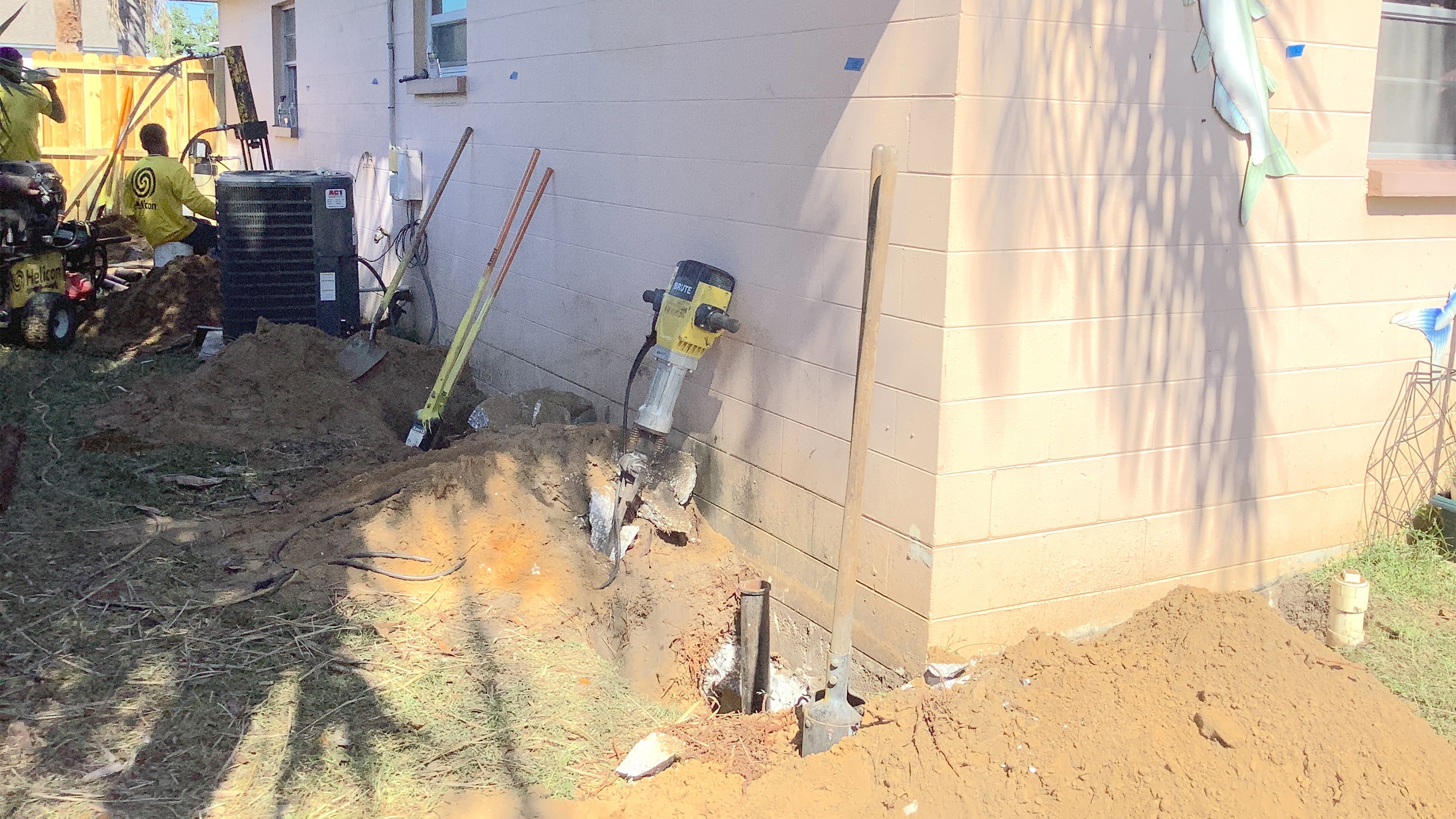
  2. Access & Excavation: Small, clean excavations exposed the footing at each pier point. Spoils were contained to protect landscaping and walkways.
  3. Bracket Prep: Footing surfaces were cleaned and prepared. Steel underpinning brackets were mounted per manufacturer/engineer specs.
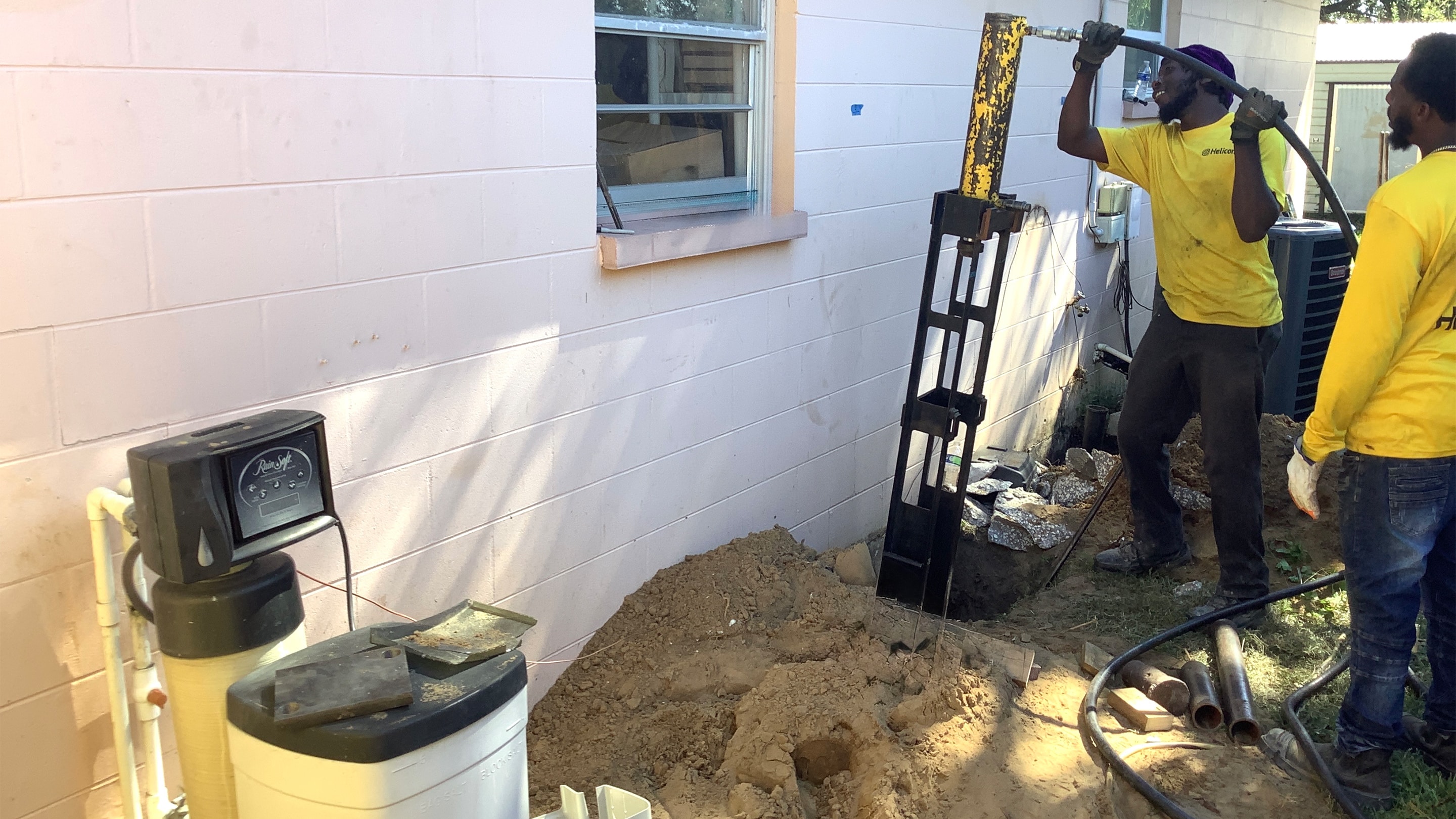
  4. Pier Driving: Using hydraulic drive heads, we advanced steel pier segments in 5‑foot sections until refusal (target end‑bearing). Drive resistance was monitored to verify adequate capacity.
  5. Load Transfer & Lift Attempt: After reaching design capacity, we transferred a portion of the structure’s weight to the piers and performed a carefully monitored lift attempt where feasible, watching for crack closure and frame response.
  6. Lock‑off & Restoration: Brackets were locked, excavations backfilled/compacted, and surfaces restored. The site was cleaned and a final walkthrough completed with the homeowner.

Results & Benefits

  • Settlement Stopped at the Source: With the right elevation now supported on deep, reliable strata, the foundation is decoupled from problematic shallow soils. New settlement at the treated section is highly unlikely under normal service conditions.
  • Crack Behavior Stabilized: Existing cracks often tighten or stop growing after underpinning. Where lift was safely achieved, visible improvements to joint alignment and door/trim fit are common.
  • Lower Risk of Seasonal Movement: By shifting load away from shrink‑swell sandy clays and areas impacted by root activity, the home is less sensitive to rainfall swings and dry spells.
  • Clean, Fast Execution: Small crews, compact equipment, and targeted excavations reduced disruption. Most underpinning projects at this scale are complete in 1–2 working days, with landscape restoration following.

Homeowner FAQs

Can you return the wall to “perfectly level”?
Not always. Our first priority is permanent stabilization. If the footing and framing respond well during jacking, we pursue a measured lift—but the structure’s tolerance sets the limit. Preventing further damage beats over‑lifting and risking finishes.

Will new cracks appear later?
Underpinning reduces the settlement forces that drive cracking. Normal hairline movement from temperature and humidity is possible in any home, but the foundation driver of your stair‑step cracking has been addressed where piers are installed.

How deep do the piers go?
Depth varies by location and is governed by refusal/drive resistance at competent bearing. Some sites reach suitable strata at modest depths; others require additional segments. Depth itself is less important than achieving verified capacity.

What about tree roots now?
Underpinning reduces sensitivity to root‑zone soil changes by carrying loads on deeper strata. We also discuss landscaping best practices and drainage improvements to promote long‑term stability.

Maintenance & Monitoring Tips

  • Drainage: Maintain gutters and downspouts; discharge water away from the right elevation.
  • Landscaping: Avoid large new trees close to the foundation; manage irrigation to prevent chronic saturation/dryout cycles.
  • Observation: Photograph repaired cracks and check quarterly for changes; call Helicon if you see notable movement.
  • Add‑On Piers (If Needed): If future loads or symptoms appear elsewhere, additional piers can be added modularly.

About Helicon

Helicon is Florida’s trusted partner for foundation repair, soil stabilization, concrete lifting, and sinkhole mitigation. We serve homeowners across Hillsborough County and the Greater Tampa Bay area, delivering engineered, minimally disruptive solutions that protect your property for the long term.

Seeing stair‑step cracks or doors binding on one side of your Brandon home? Helicon’s underpinning specialists can evaluate your foundation, design a targeted push‑pier plan, and explain realistic expectations for lift. Call 844‑HELICON to schedule a free inspection and protect your home’s value.

FREE INSPECTION REQUEST

This field is for validation purposes and should be left unchanged.
Name(Required)
Address(Required)
Address
This field is hidden when viewing the form