

Bradenton, FL
The Project
The Challenge
The Solution
FREE INSPECTION REQUEST


Market: Residential
Solution: Soil Stabilization & Seawall Repair
Services: One‑part polyurethane seawall grout injections (leak sealing & void fill), two‑part polyurethane slab injections (stabilization & measured lift), JET Filter installation (hydrostatic pressure relief)
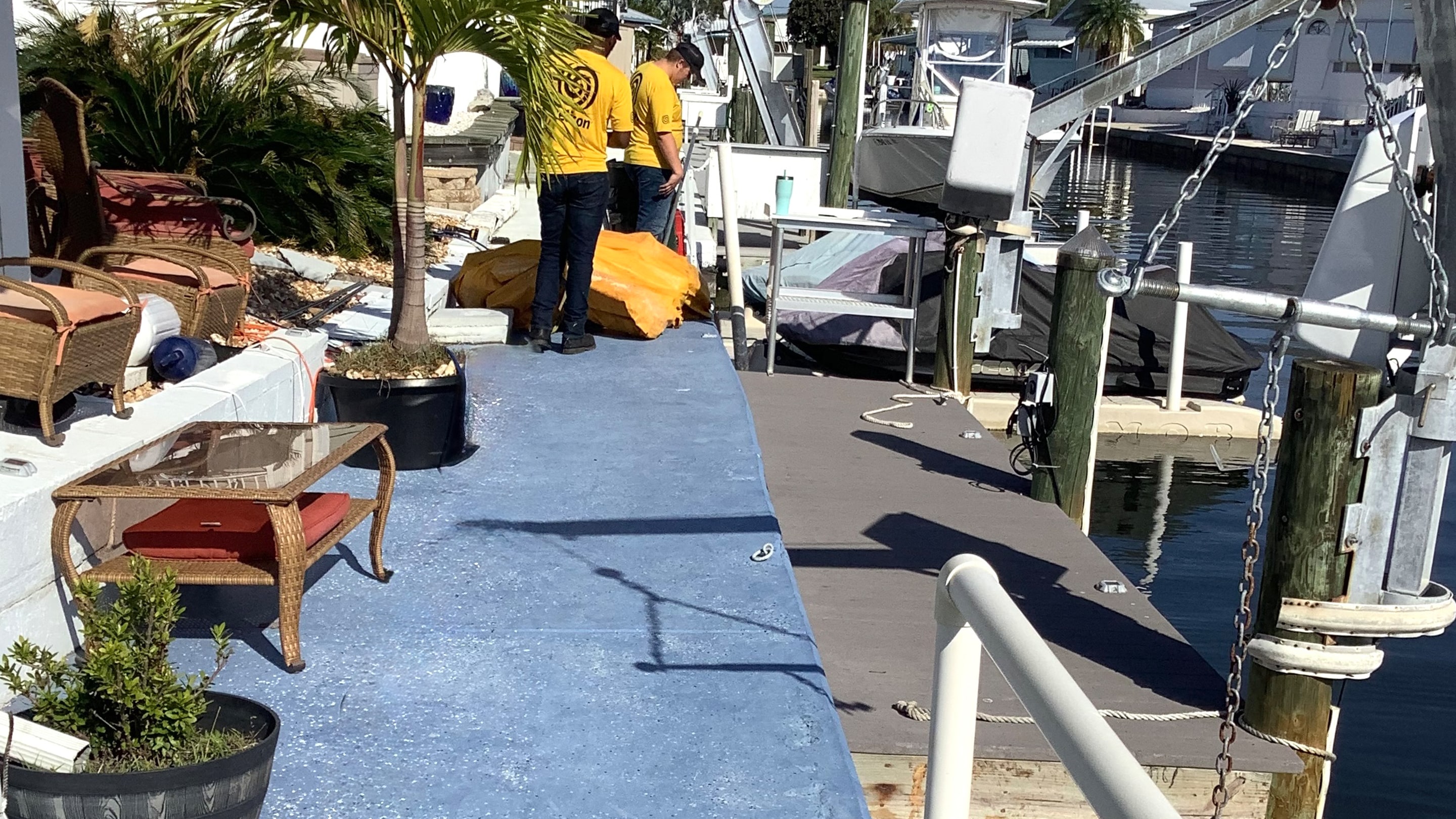
Property Type: Single‑family waterfront residence with a vinyl/concrete seawall and adjacent patio/sidewalk slab.
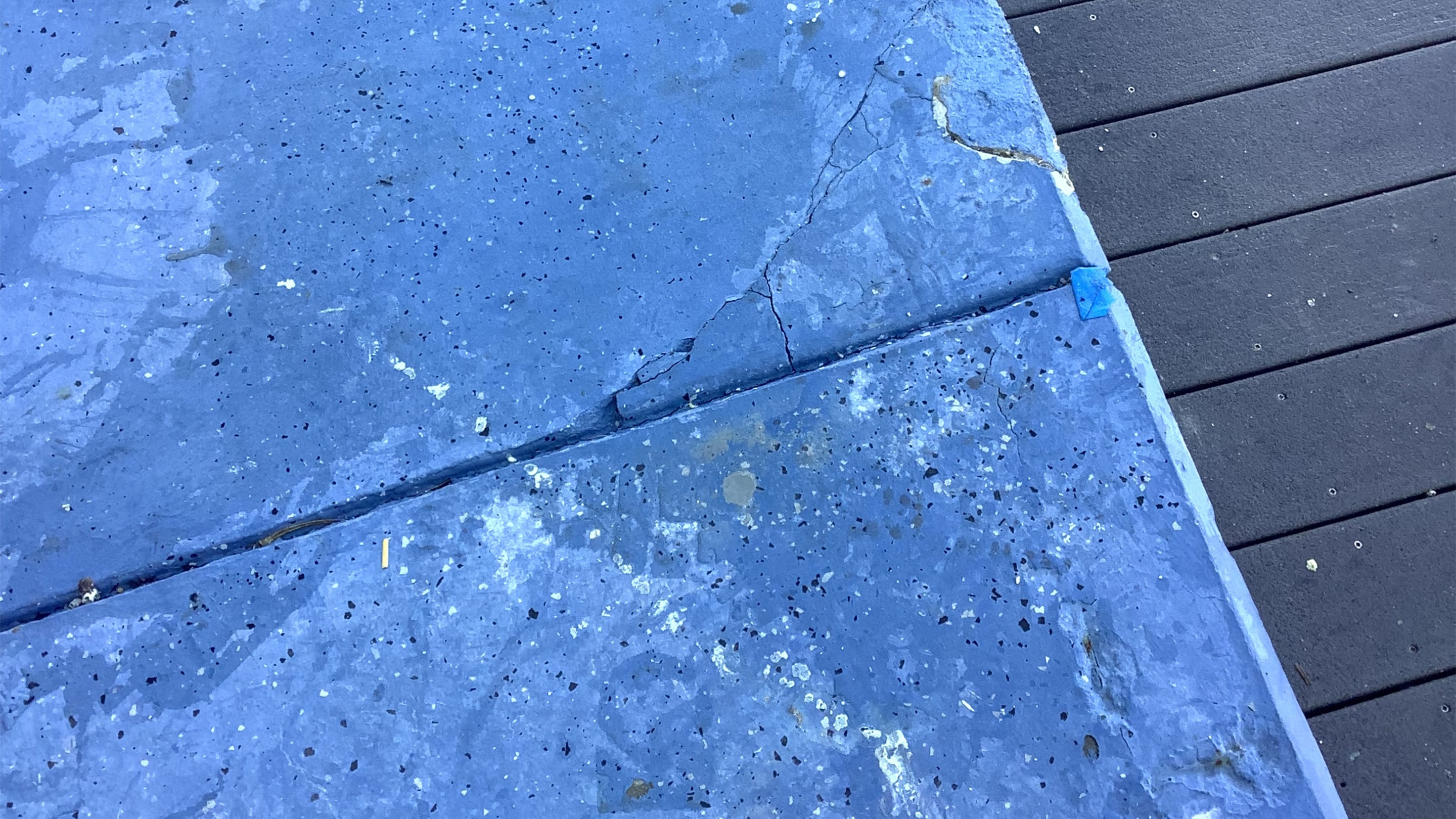
Primary Symptoms: Soil loss along the wall line, soft areas and depressions in the yard, and slab edge settlement near the seawall. The owner also reported water migration during tides—classic signs that joints, seams, or hairline cracks were allowing inflow/outflow behind the wall.
Owner Objectives: 1. Eliminate future seawall erosion by sealing leak paths and stabilizing the backfill.
2. Fill voids behind the wall and beneath the slab to restore support.
3. Attempt slab lift within safe structural limits.
4. Keep the waterfront usable during the work and avoid demolition.
Waterfront assets are unforgiving: a leak path that seems minor today can become a conveyor belt for fines tomorrow. Each tide cycle draws water through gaps at panel seams, tie‑back penetrations, or cap cracks, extracting sand/silt and leaving hidden voids. Over time, the lawn sinks, pavers tip, and rigid concrete slabs lose bearing—often first at their edges.
This site presented three intertwined challenges common to coastal Florida:
Our program combined two resins and drainage relief to address the problem at its source and its symptoms.
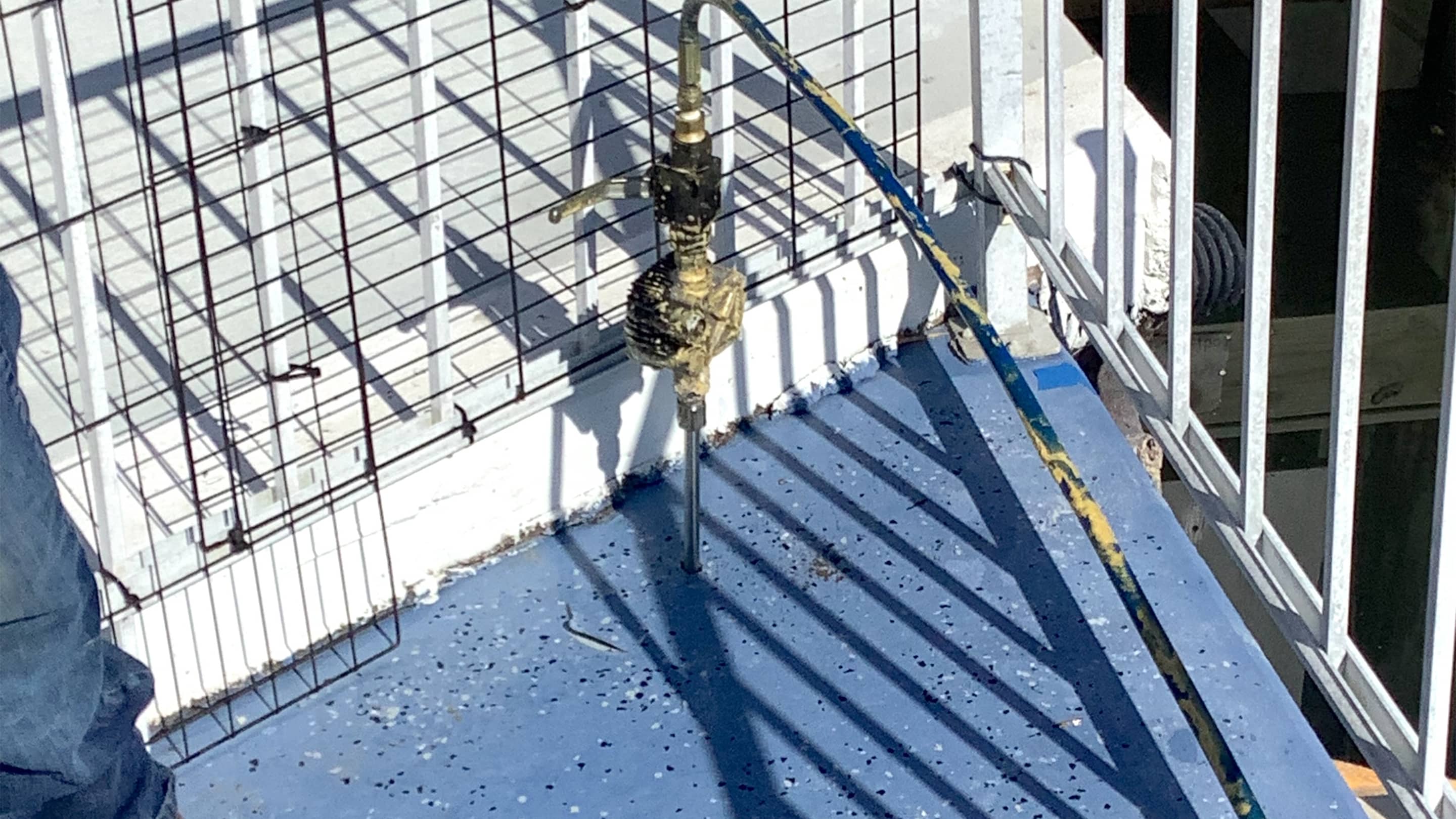
We installed 10 mapped injection points along the seawall line. One‑part polyurethane is a moisture‑reactive resin designed to seek and seal wet paths. In saturated soils, the low‑viscosity resin chases seams and voids and then expands to form a watertight, soil‑binding matrix—locking surrounding sands in place while cutting off the inflow/outflow that had been pumping fines from the yard.
Production: ≈45 gallons (~500 lbs) of one‑part resin in staged lifts, advancing from deeper cavities upward toward cap joints and panel seams. The injection pattern prioritized zones with the most evident seepage and greatest likelihood of backfill loss.
Outcome: Active leaks shut down, voids filled immediately behind the wall, and the backfill mass re‑coupled to the structure.
For the adjacent hardscape slab, we used two‑part structural polyurethane. Mixed at the port, the foam expands to fill voids, tighten granular soils, and re‑establish uniform contact under the slab. Our technicians executed metered lift shots in short pulses, monitoring edges and joints to prevent over‑correction.
Production: ≈316 lbs of two‑part foam installed in a targeted grid beneath the settled slab panel(s).
Outcome: Slab re‑supported with incremental elevation recovery in select zones; improved transitions and reduced rocking/trip potential.
To handle the pressure behind the wall after sealing leak paths, we installed 5 JET Filters—engineered weep drains that let water exit while retaining soil. This step helps prevent pressure spikes that can crack caps, open seams, or stress wall panels, especially during king tides and storm surges.
Outcome: A balanced system—sealed where water shouldn’t go, drained where it must, and stabilized so the wall and backfill work together.
Can you guarantee a full return to original slab elevation?
No. Lift is never guaranteed and depends on slab thickness, reinforcement, historic cracking, and real‑time subgrade response. Our primary promise is stability; we pursue measured lift only within safe limits.
Will the foam harm the waterway?
We deliver in small, controlled shots and use shoreline protection. The resins react primarily within the soil mass. Crews follow coastal best practices to prevent material contact with open water.
How long will this last?
Once cured, polyurethanes are inert and resist moisture. Longevity hinges on drainage, tide exposure, and cap/joint maintenance. The addition of JET Filters helps manage pressure that otherwise re‑opens seams.
Will I see the repairs?
Injection ports are small and patched at completion. Cap crack sealing (if performed) blends with typical seawall maintenance aesthetics.
Helicon is Florida’s trusted partner for seawall repair, soil stabilization, concrete lifting, and foundation repair. We serve homeowners across Manatee and Sarasota counties, delivering clean, minimally disruptive solutions designed for coastal environments.
Seeing wet seams, soft ground, or slab drop along your Bradenton or Sarasota waterfront? Helicon’s polyurethane programs seal leaks, fill voids, and stabilize slabs—often with gentle lift where conditions allow. Call 844‑HELICON to schedule a free inspection and protect your shoreline investment.
FREE INSPECTION REQUEST