

Why Concrete Lifts &
Settles in Florida
Concrete slabs rely entirely on the strength and stability of the soil beneath them. In Florida, sandy soils, clay content, heavy rainfall, and fluctuating moisture levels can all weaken that support over time. When the soil shifts, erodes, or compresses unevenly, the concrete above it begins to crack, sink, or tilt.
Understanding what causes slab movement is key to preventing recurring settlement.
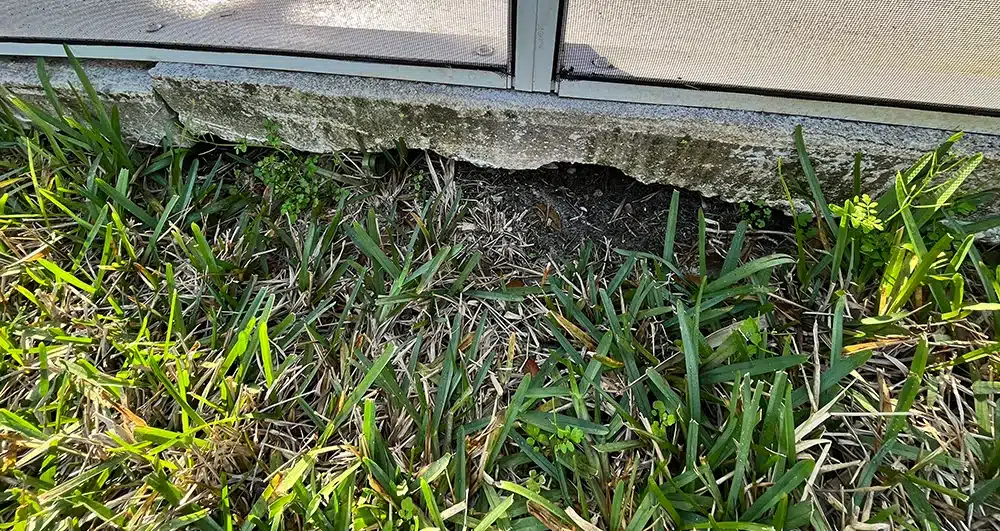
Eroding Soil Beneath the Soil
Water from heavy rain, irrigation systems, poor drainage, or leaking utilities can wash away soil beneath concrete surfaces. As supporting material erodes, voids develop under the slab.
Without consistent support, sections of concrete begin to settle into these empty spaces. Over time, this leads to cracking, uneven transitions, and trip hazards.
Preventing further erosion is essential to maintaining long-term slab stability.
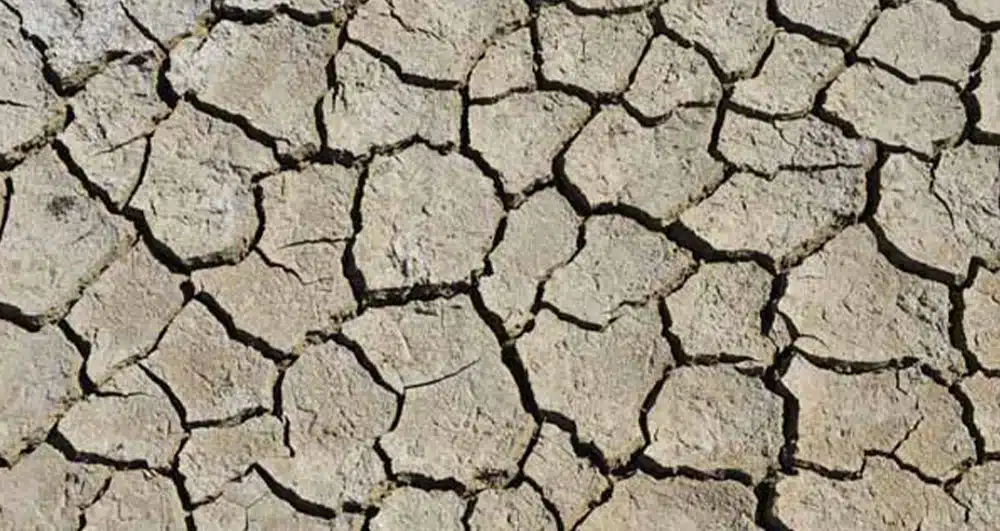
Soil Shrinkage & Expansion
Florida’s clay-heavy soils expand when saturated and shrink during dry periods. This repeated cycle places stress on concrete slabs.
As soil contracts, it may pull away from the underside of the slab, creating gaps. When moisture returns, uneven expansion can cause lifting or shifting.
These moisture-driven soil changes are a common cause of recurring slab movement in driveways, patios, and pool decks.
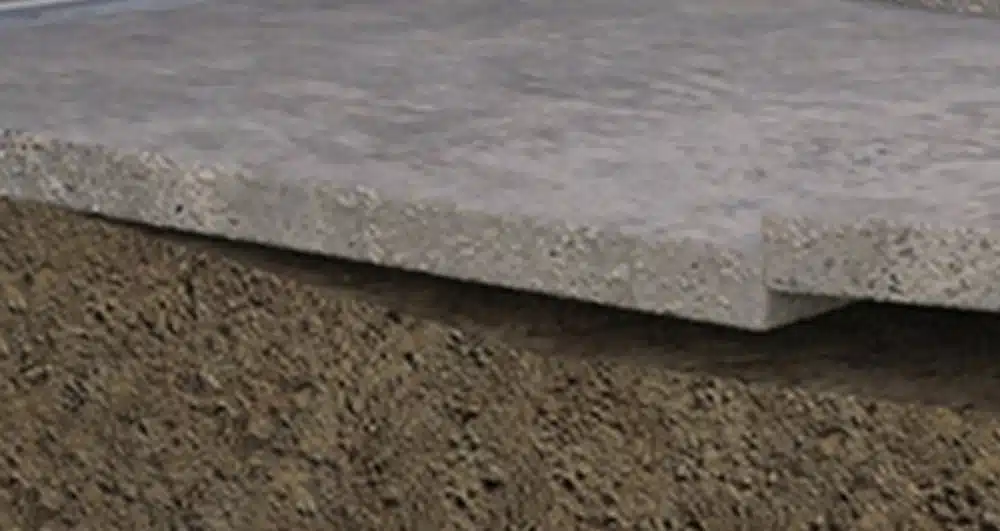
Poor Soil Compaction
If the soil was not properly compacted during construction, it may gradually compress under the weight of the slab and surrounding structures.
Organic material buried beneath fill soil can also decompose over time, leaving voids behind. As these materials break down, the slab above may begin to sink unevenly.
Settlement caused by inadequate compaction often appears years after the concrete was originally poured.
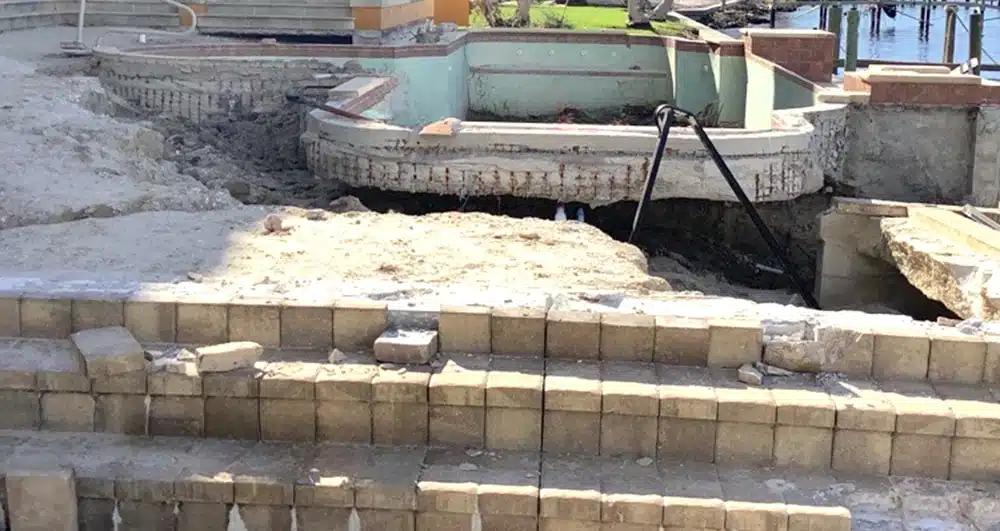
Heavy Loads or Repeated Traffic
Driveways and patios are subject to repeated weight from vehicles, equipment, and foot traffic. Over time, these loads can compress soil unevenly, especially if the base material was not properly prepared.
In Florida’s sandy soils, repeated loading accelerates compaction and settlement. Areas closest to garages or frequently used parking spots are particularly vulnerable.
Identifying and stabilizing weak soil helps prevent ongoing compression and surface damage.
Seeing Signs of Concrete Settlement?
Schedule a professional evaluation to determine what’s causing your slab to sink or shift and restore proper support before the damage spreads.