
Windermere, Florida
The Project
The Challenge
The Solution
FREE INSPECTION REQUEST

Market: Residential
Solution: Foundation Repair
Services: Two‑Part Structural Polyurethane Slab Injections
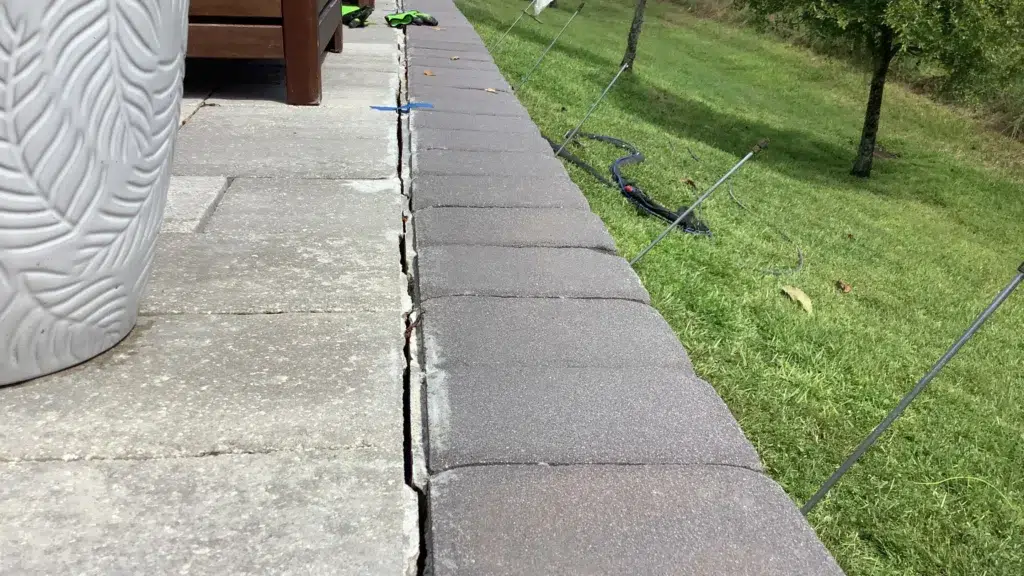
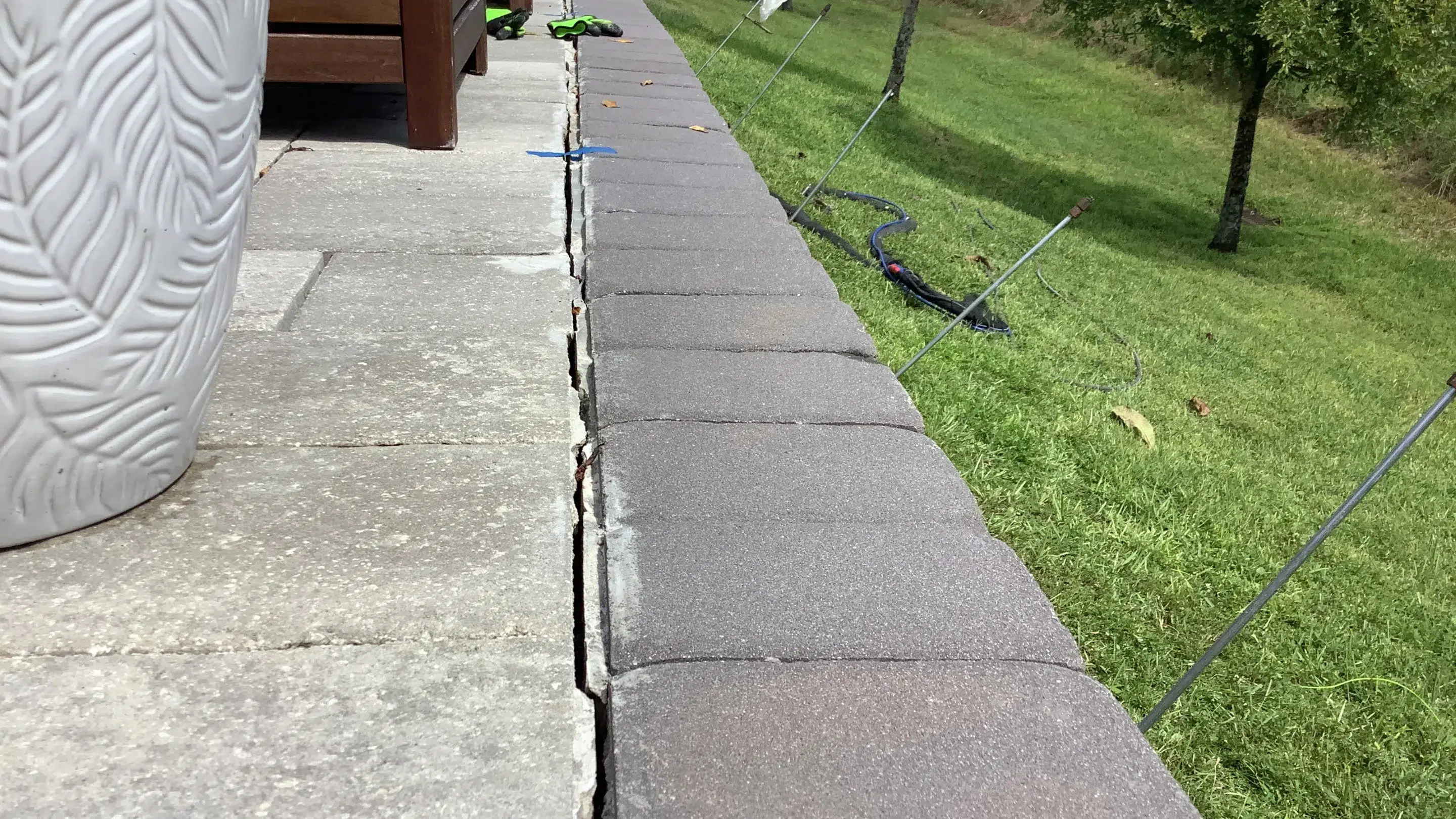
The homeowner first noticed a gap forming between the retaining wall and the adjacent deck structure. Small cracks began to appear along the wall face and around the base where the wall meets the supporting soil. These symptoms often indicate that soil settlement or washout is occurring beneath the foundation elements of the wall.
Retaining walls rely on stable soil conditions to resist both vertical loads and lateral earth pressure. When the soil beneath a retaining wall begins to shift or compress, the structure can move out of alignment with adjacent structures—exactly what was beginning to occur in this Windermere home.
Recognizing the potential seriousness of the issue, the homeowner contacted Helicon for a professional foundation repair inspection and stabilization plan.
Retaining walls are critical structural elements that hold back soil and support surrounding structures such as decks, patios, and landscaping features. When settlement occurs beneath a retaining wall foundation, several problems can develop:
In Florida—particularly in Orange County and the greater Orlando area—sandy soils can be highly susceptible to movement when exposed to moisture fluctuations, poor compaction, or erosion. These soil conditions make professional foundation repair and soil stabilization solutions essential when settlement begins.
By the time Helicon arrived on site, cracks and separation had already begun to form. While early intervention is always ideal, our team frequently encounters situations where settlement has already progressed before homeowners become aware of the issue.
This project presented several key challenges:
The retaining wall had already begun shifting away from the deck. Once structural movement begins, stabilization must be handled carefully to prevent additional displacement.
The primary goal was not cosmetic repair, but true foundation repair—stopping the underlying soil movement responsible for the wall separation.
Because the retaining wall supports both soil and deck loads, any repair method had to reinforce the ground beneath the wall without introducing additional stress.
Traditional foundation repair methods involving excavation would have required significant disruption to landscaping and surrounding structures. The homeowner preferred a minimally invasive solution.
Structural Polyurethane Injections
After evaluating the conditions, Helicon recommended a two‑part structural polyurethane injection system—a proven solution for modern foundation repair and soil stabilization.
This method allows technicians to stabilize weak soils and restore structural support without excavation, heavy equipment, or structural demolition.
How Structural Polyurethane Foundation Repair Works
Two‑part polyurethane injections work by introducing a liquid resin into the soil beneath the foundation. When the two components combine, the material expands and hardens rapidly, filling voids and strengthening the surrounding soil matrix.
The process delivers several important benefits for foundation repair projects:
For retaining wall stabilization, polyurethane injections are particularly effective because they can be precisely delivered beneath specific load points.
Installation Process
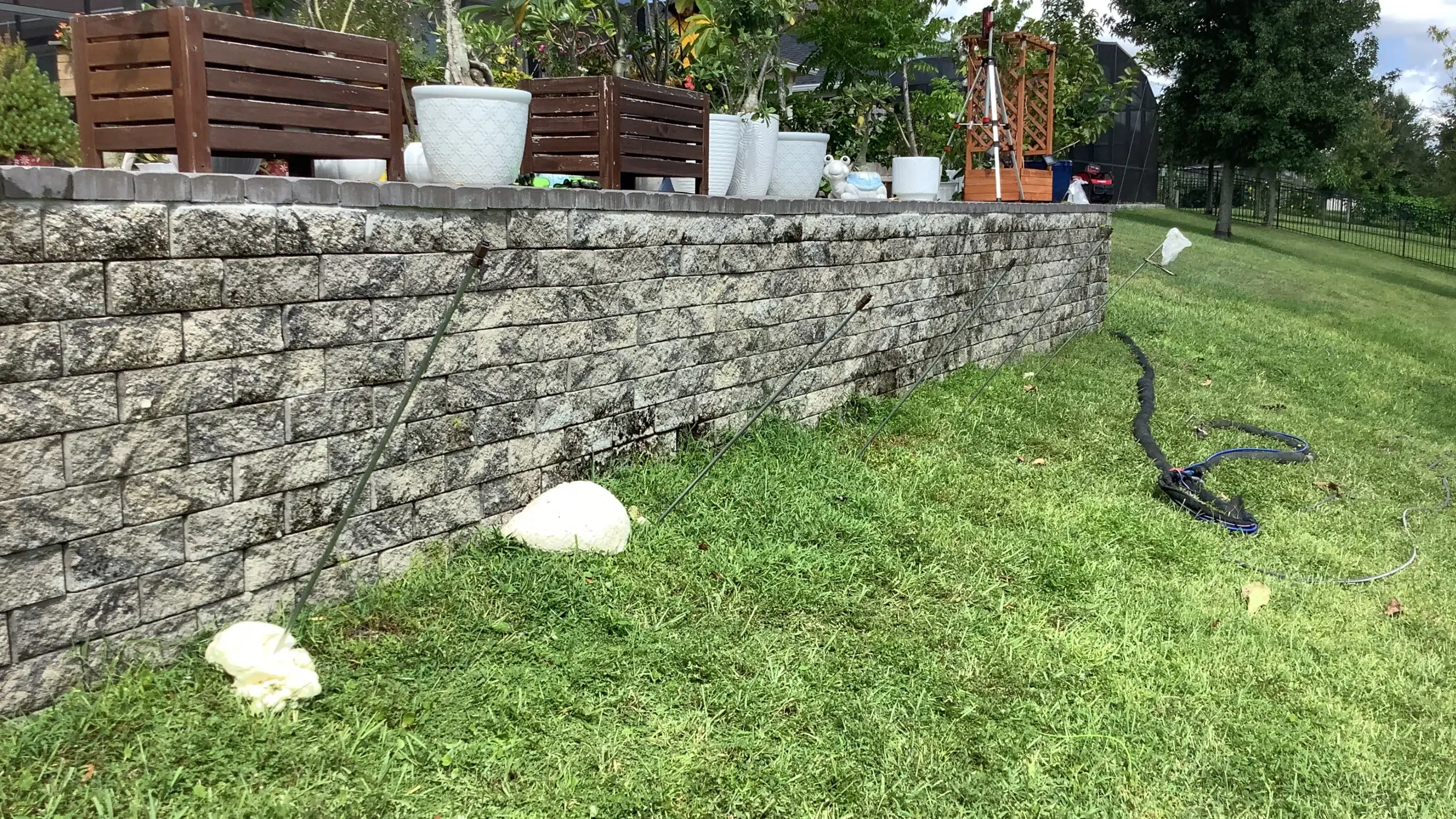
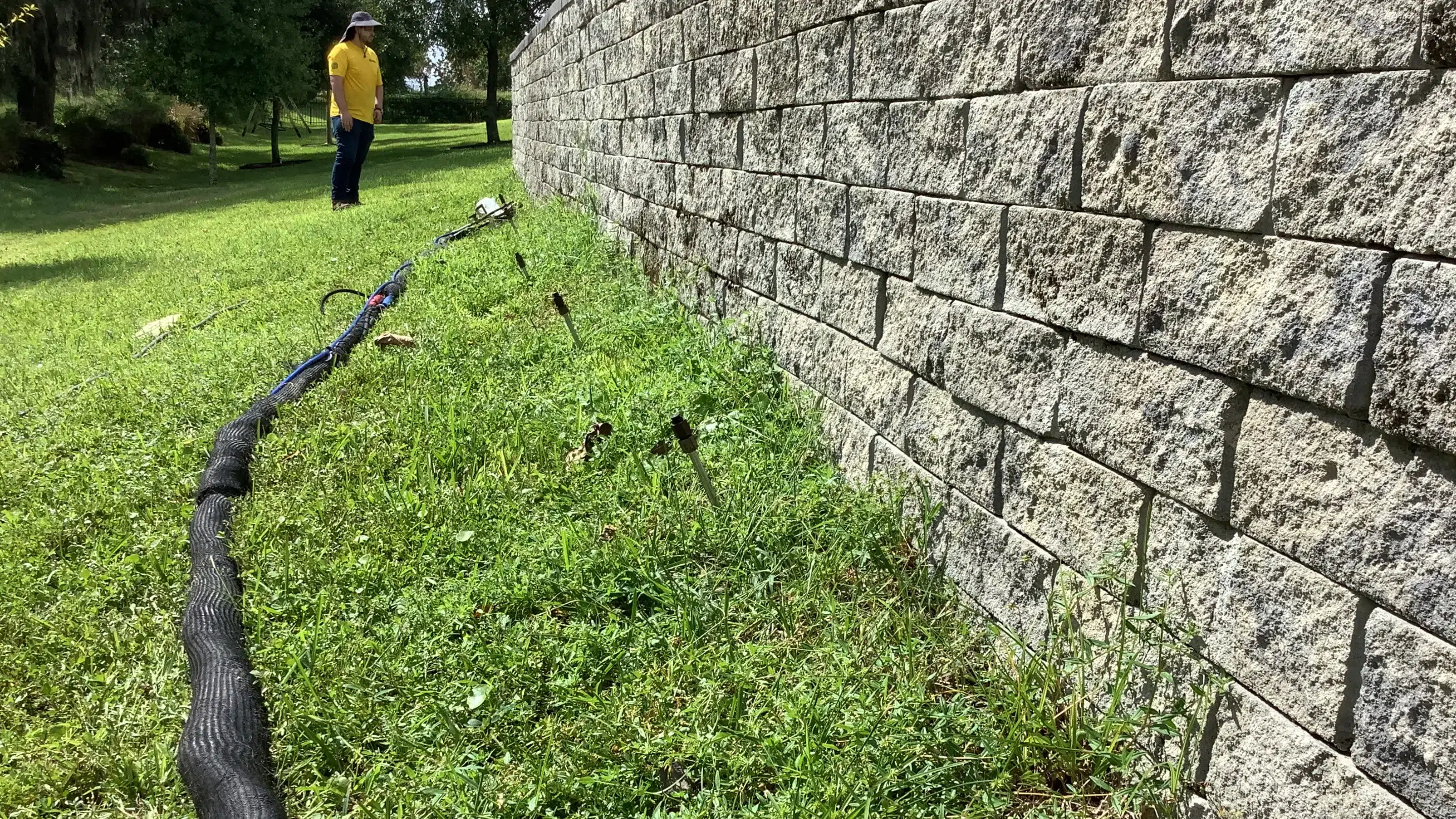
Helicon technicians carefully mapped the injection points beneath the retaining wall to target the areas experiencing settlement.
Step 1: Injection Point Preparation
Small injection ports were installed along the wall base in strategic locations. These ports allow polyurethane material to reach the weakened soil zones.
Step 2: Controlled Polyurethane Injection
The two‑part polyurethane resin was injected beneath the wall foundation. As the material expanded, it filled voids and compacted loose soil layers.
Step 3: Soil Stabilization and Load Transfer
As the polyurethane cured, it formed a rigid structural foam that increased soil density and redistributed loads more evenly beneath the wall.
Step 4: Final Stabilization Verification
Technicians monitored soil response and material usage to ensure the stabilization process achieved optimal results.
Total Material Installed
This foundation repair project utilized approximately 277 pounds of structural polyurethane material to stabilize the affected retaining wall and surrounding soil conditions.
The injections were strategically placed to address the exact zones of settlement while avoiding unnecessary material use.
Results and Structural Benefits
After the injections were completed, the retaining wall foundation was significantly more stable. The polyurethane stabilization created a reinforced soil matrix capable of supporting the wall and resisting future movement.
Key Outcomes
The homeowner now has peace of mind knowing that the underlying soil conditions have been professionally stabilized using a modern foundation repair solution.
Why Professional Foundation Repair Matters
When structural settlement first appears, it can be tempting to address only visible cracks or cosmetic issues. However, without stabilizing the soil beneath the structure, those cracks will inevitably return.
Professional foundation repair and soil stabilization focuses on correcting the root cause of structural movement.
By addressing the soil conditions beneath the retaining wall, Helicon ensured that the structure would remain stable long after cosmetic repairs are completed.
Helicon is a trusted Florida leader in foundation repair, soil stabilization, concrete lifting, and sinkhole remediation. Serving homeowners across the state—including the Windermere and Orlando areas—Helicon delivers engineered structural solutions that protect homes from the ground up.
If you notice cracks, retaining wall separation, or signs of settlement around your home, it may be time for a professional foundation repair inspection.
Helicon’s team of specialists provides advanced foundation repair and soil stabilization solutions designed specifically for Florida homes.
Call 844‑HELICON today to schedule your free foundation repair inspection.
FREE INSPECTION REQUEST