
Tavares, FL
The Project
The Challenge
The Solution
FREE INSPECTION REQUEST

Market: Residential
Solution: One-Part Polyurethane Injection, Two-Part Structural Polyurethane, and JET Filter Installation
Services: Soil Stabilization
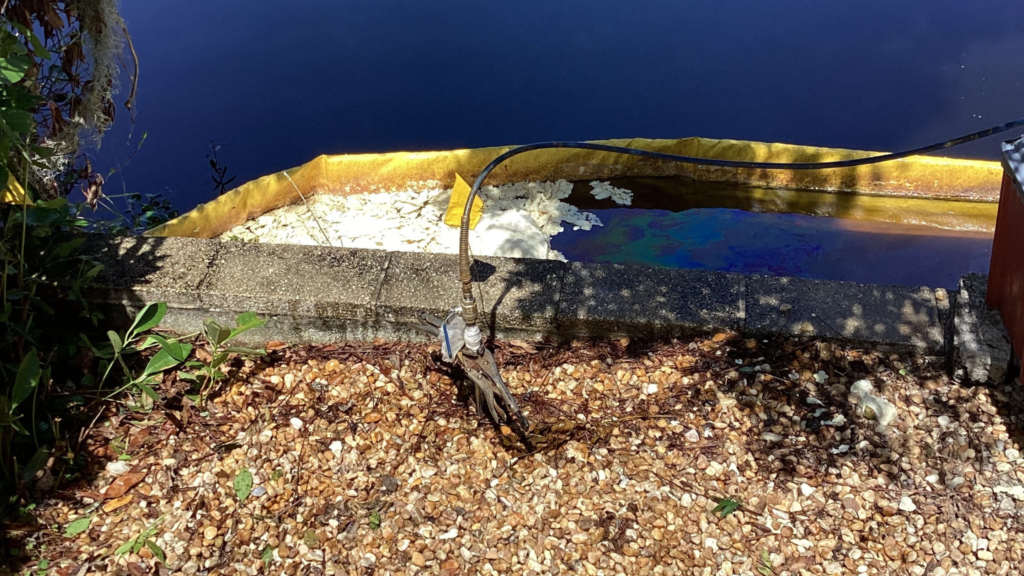
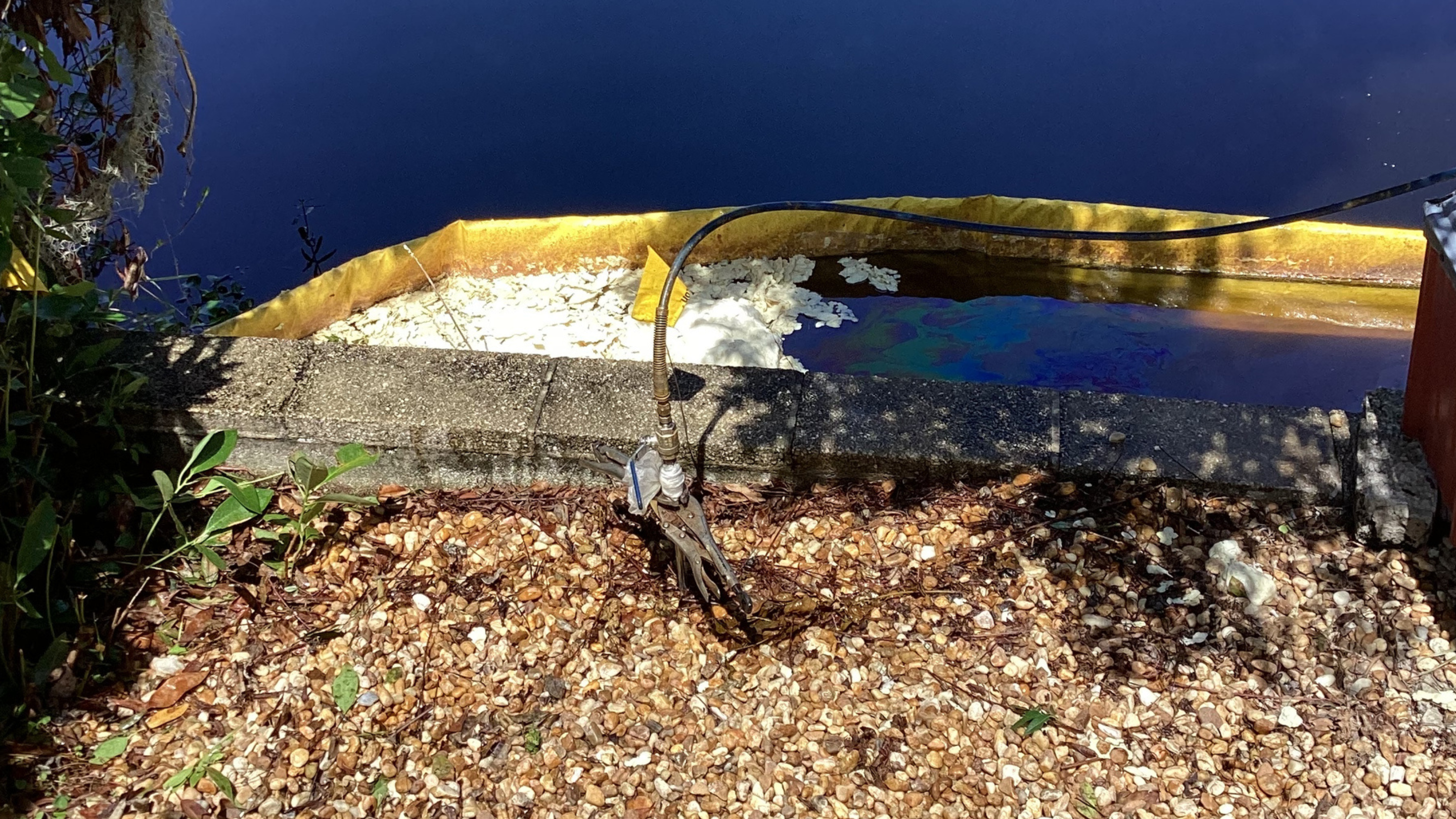
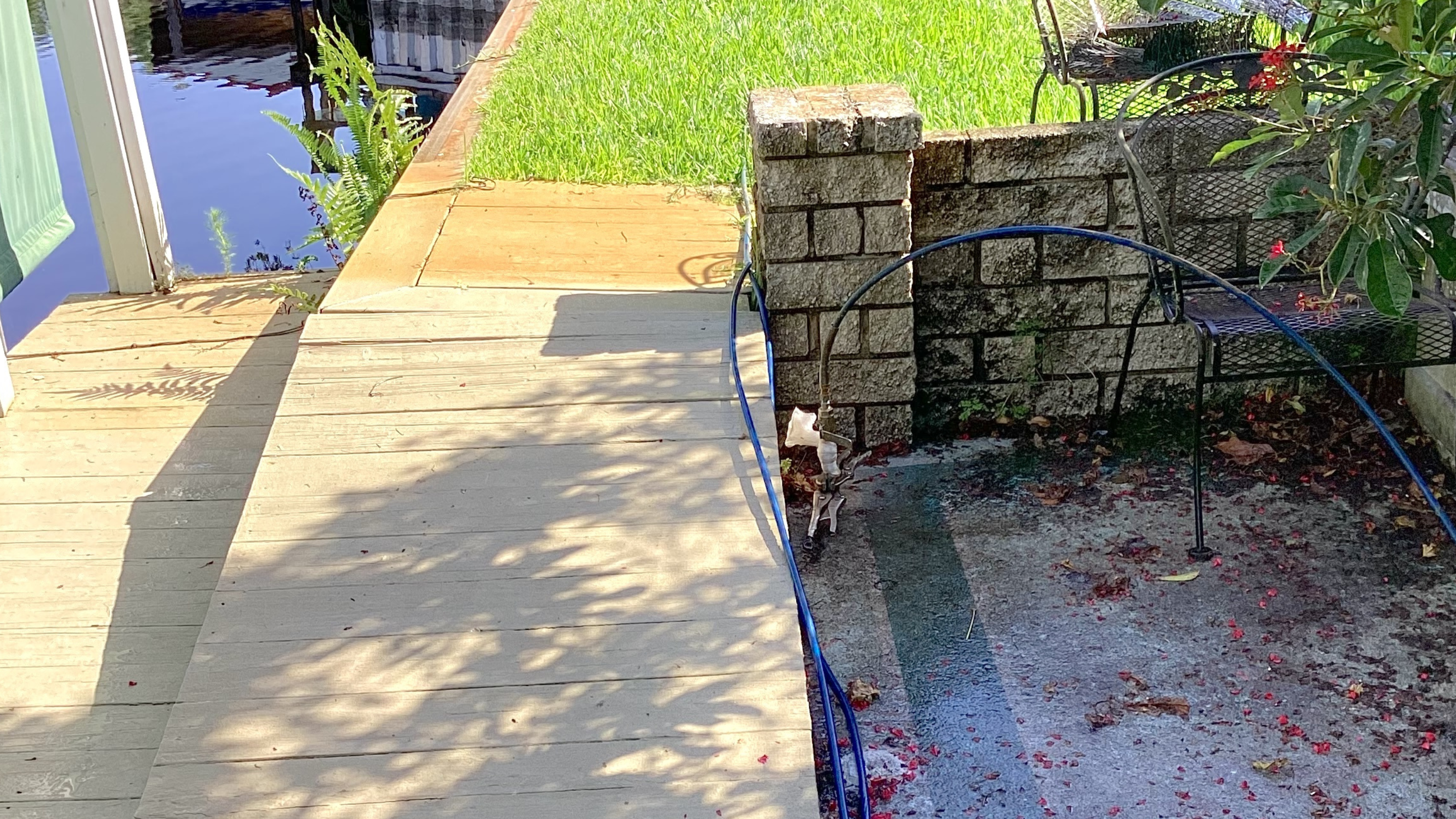
The Tavares property had a concrete slab positioned near a cinder-block seawall. Over time, soil erosion developed beneath the slab and behind the wall.
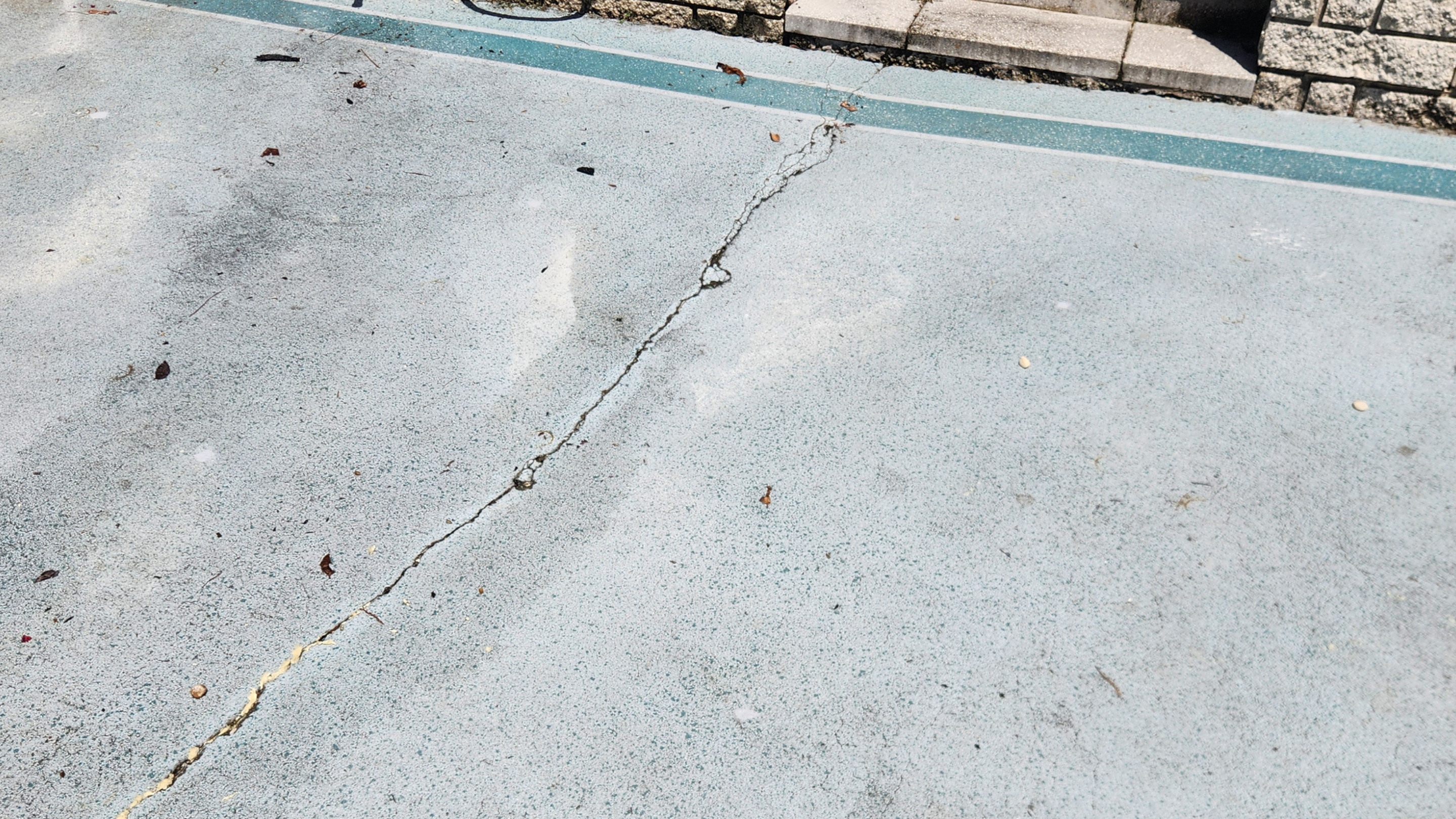
As the supporting material weakened or migrated, the slab lost uniform bearing. A crack formed through the middle of the concrete, and the slab began sloping downward along that crack.
This condition created both a structural concern and a usability problem. A settled slab can become uneven, collect water, create a trip hazard, or continue moving if the support loss beneath it remains untreated. The visible crack was therefore a symptom of a larger support problem.
The homeowner’s expectation was to:
This was not a straightforward concrete-lifting project. The repair needed to address the relationship between the seawall, the supporting soils, the slab, and the water pressure acting behind the wall.
Seawalls retain soil while separating a waterfront property from the adjacent water. When the soil behind a seawall remains stable, nearby patios, walkways, pool decks, and other concrete improvements can maintain more uniform support.
When erosion develops, however, the support system begins to change.
Soil may migrate through openings, joints, cracks, or other weak points in the seawall. Water movement can also carry fine particles away from the retained area. As soil is lost, voids or weak zones can form beneath nearby concrete.
The concrete slab may initially appear intact because concrete can bridge across a limited unsupported area. As the void grows or the remaining support weakens, the slab can begin to crack, slope, or settle.
That pattern was visible on the Tavares property. The slab was sloping along a central crack, indicating that the two sides were no longer being supported in the same way.
A surface patch would not have corrected that condition. The area required professional soil stabilization behind the seawall and structural support beneath the slab.
The seawall was constructed from cinder block and did not have an existing hydrostatic pressure-release system.
Hydrostatic pressure develops when water accumulates behind a retaining structure. If that water cannot drain effectively, pressure can build against the wall.
That pressure may contribute to:
For that reason, the repair could not focus only on replacing lost support. The project also needed a way to help manage water pressure after the injections were complete.
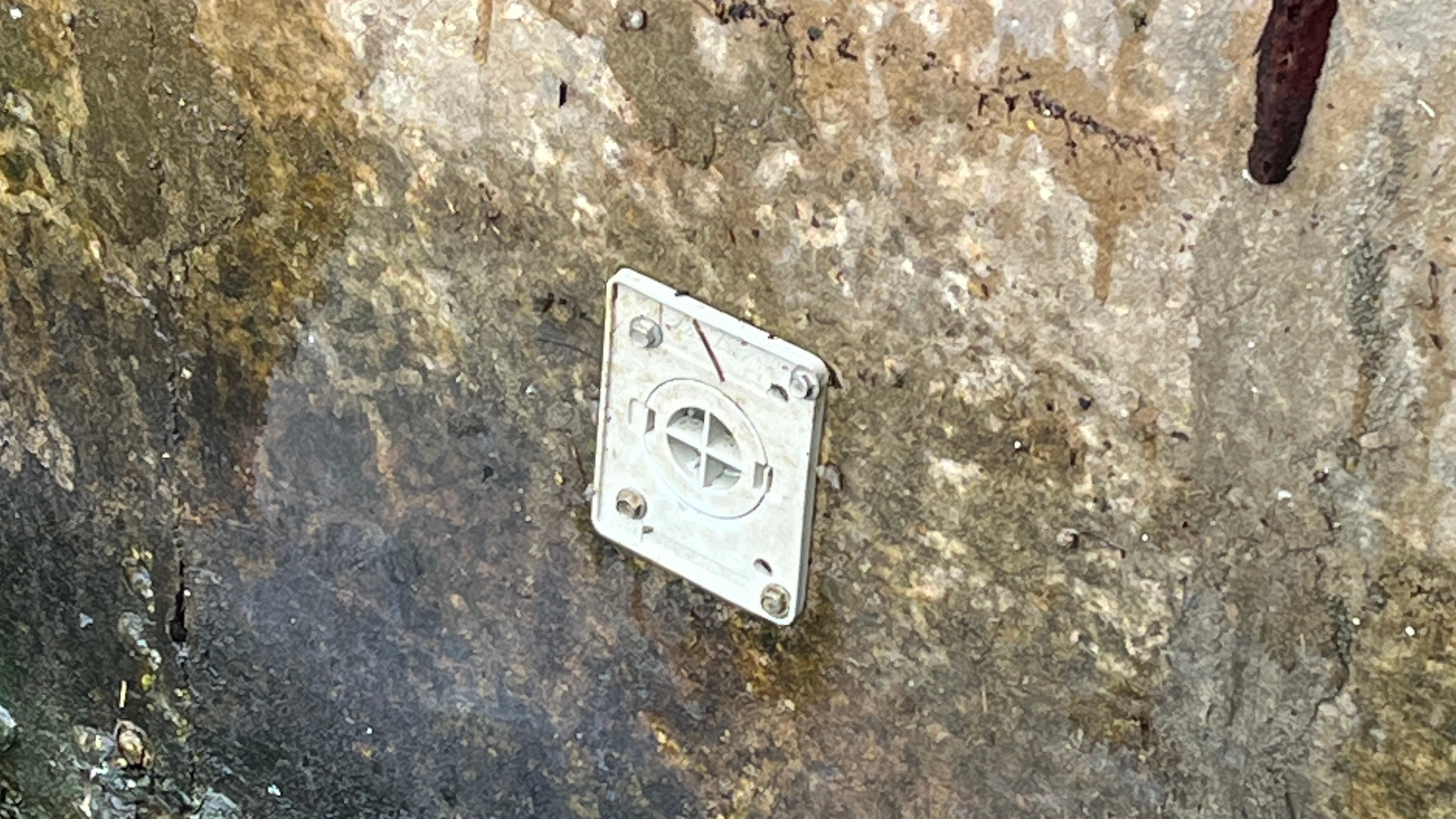
Helicon addressed this need by installing 5 JET Filters following the polyurethane work.
The filters were intended to provide pressure relief while helping limit the loss of soil through the drainage locations. Their inclusion made the repair more comprehensive than an injection-only project.
The most notable site challenge was the reported presence of concrete behind the seawall at an estimated depth of 12 to 18 inches.
The one-part polyurethane needed to reach the weak or eroded soil zones behind the wall. If an existing mass or layer of concrete blocked the intended injection path, the production team could not simply stop at that shallow obstruction.
The crew needed to be prepared to drill beyond the concrete to reach the required treatment depth.
This condition required careful installation because the effectiveness of the soil stabilization depended on delivering the material into the actual treatment zone—not merely filling a shallow access point.
The project also involved two related but different problems:
Those conditions required different materials and installation objectives.
The one-part polyurethane was selected for the soil and seawall portion of the repair. The two-part structural polyurethane was selected for the slab-support and lift portion. Using one product for the entire project would not have addressed both conditions as effectively.
The homeowner wanted the slab lifted, but stabilization remained the primary structural objective.
The amount of lift possible in any concrete repair depends on several factors, including:
Helicon could attempt a controlled lift while installing the structural polyurethane, but the slab’s actual response would determine how much correction could be achieved safely.
A stabilized slab with improved support is more valuable than forcing excessive movement that could create new cracking or stress.
Helicon began by treating the soil and seawall repair area with one-part polyurethane injection material.
The seawall portion required 50 gallons of one-part material.
This polyurethane system was selected to permeate and reinforce the weak or eroded areas behind the wall. The treatment was designed to improve the retained-side soil condition and reduce the potential for continued migration in the repaired zones.
The seawall soil-stabilization work was intended to:
This part of the project addressed the underlying source of the visible settlement. Without stabilizing the area behind the seawall, slab lifting alone would have left the concrete dependent on compromised support.
After addressing the seawall and supporting soils, Helicon used two-part structural polyurethane injections beneath the concrete slab. The slab portion required 144 pounds of two-part material.
The two-part polyurethane was installed to restore support beneath the settled concrete and assist with controlled lift where the slab responded appropriately.
The slab injections were designed to:
This repair did not depend only on visible lift. Even if the slab could not be returned perfectly to its original elevation, improving the support beneath it still provided meaningful structural value.
Following the polyurethane injections, Helicon installed 5 JET Filters in the seawall.
This step addressed a condition that had not been managed by the original cinder-block wall: hydrostatic pressure.
The JET Filters were included to:
The filters were not a cosmetic addition. They were part of the repair strategy.
Stabilizing the soil without addressing pressure could leave the wall exposed to one of the conditions contributing to future movement. By including both treatments, Helicon addressed the soil-support problem and the water-management problem together.
This project required three coordinated components:
The one-part polyurethane treated the weak and eroded areas behind the cinder-block wall.
The two-part structural polyurethane improved support beneath the concrete and allowed the team to attempt controlled lift.
The 5 JET Filters provided a way for water pressure behind the seawall to be relieved after the stabilization work. Each part supported the others.
Lifting the slab without stabilizing the seawall area could have left the concrete vulnerable to renewed support loss. Stabilizing the soil without improving slab contact could have left the cracked concrete uneven. Completing both injection programs without pressure relief could have left hydrostatic pressure unaddressed.
The combined plan provided a more complete waterfront repair.
The Tavares property received a targeted stabilization system designed around the actual conditions observed at the site.
No contractor can responsibly guarantee that waterfront structures or surrounding soils will never move again. Water levels, weather events, drainage, and environmental conditions can continue changing over time.
However, the completed work substantially improved the treated areas and gave the homeowner a stronger structural and drainage system than the property had before the repair.
Helicon helps Florida property owners address foundation settlement, weak soils, sinking concrete, seawall erosion, and sinkhole-related concerns. Our team works with homeowners, contractors, property managers, and commercial clients to develop structural repair solutions based on the property, observed conditions, and project objectives.
Cracked concrete, soil erosion, seawall movement, and settlement near the water can indicate hidden support problems beneath the surface.
Helicon provides soil stabilization, seawall repair, slab stabilization, concrete lifting, foundation repair, and related structural services throughout Tavares and communities across Florida.
Call 844-HELICON to schedule a free inspection and learn whether polyurethane injections, JET Filters, or another repair method may be appropriate for your property.
FREE INSPECTION REQUEST