
Bradenton, FL
The Project
The Challenge
The Solution
FREE INSPECTION REQUEST

Market: Residential
Solution: Soil Stabilization & Foundation Repair
Services: Two-Part Structural Polyurethane Injections
The homeowner’s original request was focused and practical. He had observed troubling soil loss near the back right corner of the house, especially in the area close to the pool equipment, and wanted a proposal to fill and solidify the soil to make sure the foundation would not be compromised. In many homes, that kind of localized concern can indeed be treated as a spot repair. But this property told a different story once the Helicon team examined the rest of the foundation perimeter.
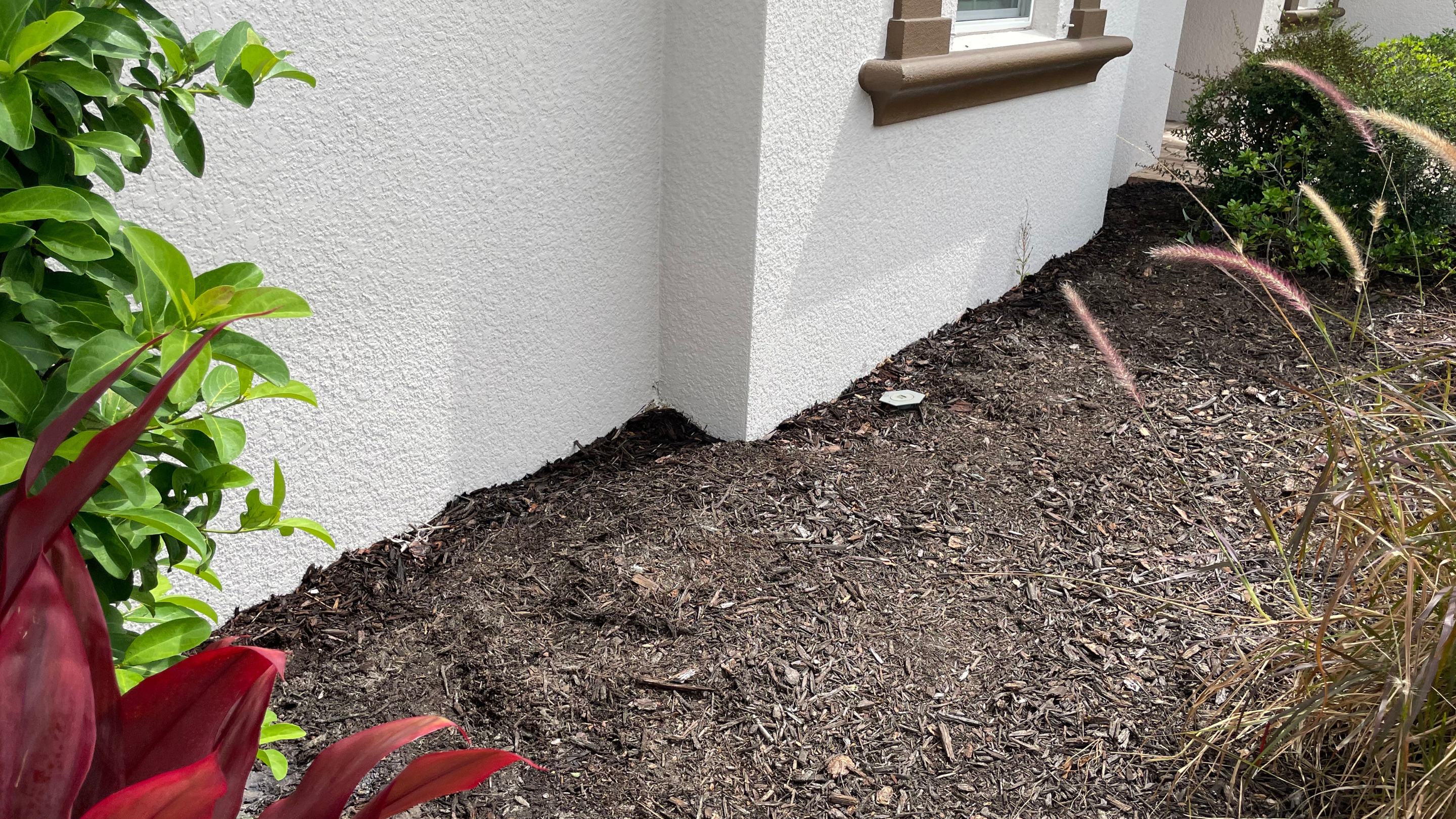
The inspection found that the problem extended well beyond the original corner. Instead of one isolated washout or weak patch, the house had soft and loose soils all around the foundation. That is the kind of condition that can quietly create long-term risk if not addressed comprehensively. A home may look structurally fine in one season, then develop settlement symptoms later as support conditions worsen in multiple areas.
This is where good evaluation matters. Rather than simply filling the original corner and leaving the broader problem in place, Helicon recommended a stabilization plan that reflected the actual on-site conditions.
The soils surrounding a home’s foundation do more than fill space. They play an essential role in supporting the structure, preserving grade relationships, and maintaining the consistency of load transfer along the perimeter. When soils become soft, loose, or voided, a home becomes more vulnerable to several problems over time, including:
In coastal and near-coastal regions of Southwest Florida, including Bradenton and Manatee County, sandy and variable soils can be especially prone to movement. Moisture changes, past compaction issues, and subsurface erosion patterns can all contribute to weakened support zones around a home.
In this case, the original visible warning sign happened to be the back right corner. But the larger threat was the full-perimeter softness discovered during the inspection.
Although the final repair concept was clear, the project still posed logistical and structural challenges that required careful planning.
The first challenge was simply the scope. The homeowner originally believed the issue was centered at the back right corner, but the evaluation showed that the real condition extended around the entire house. That meant the project had to shift from a localized proposal to a more complete perimeter soil stabilization strategy.
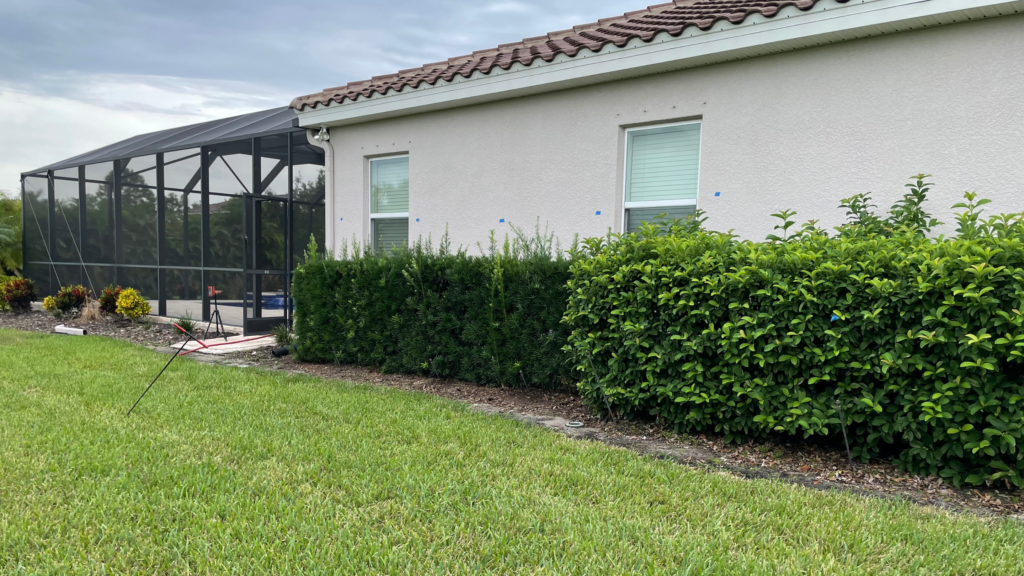
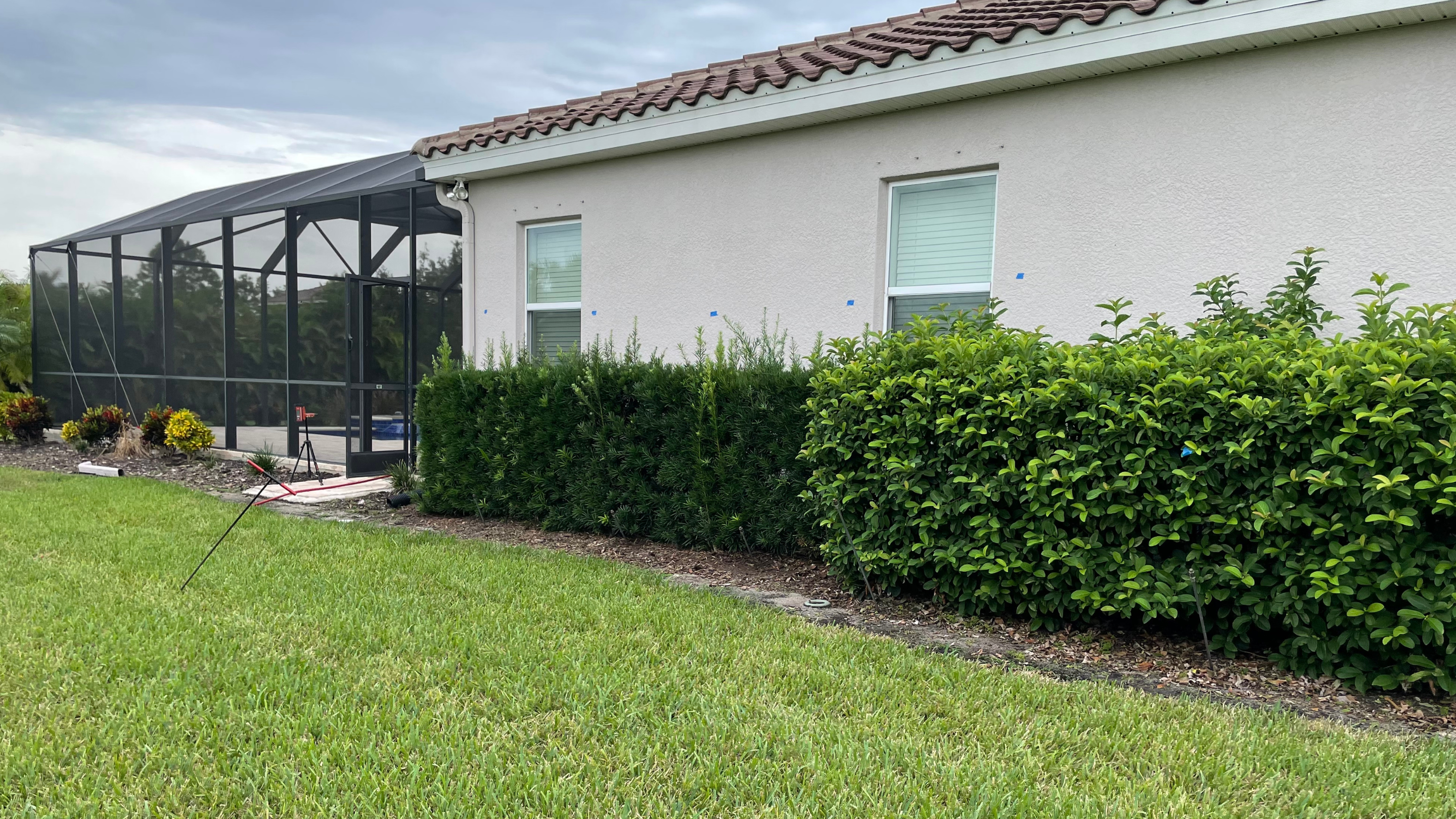
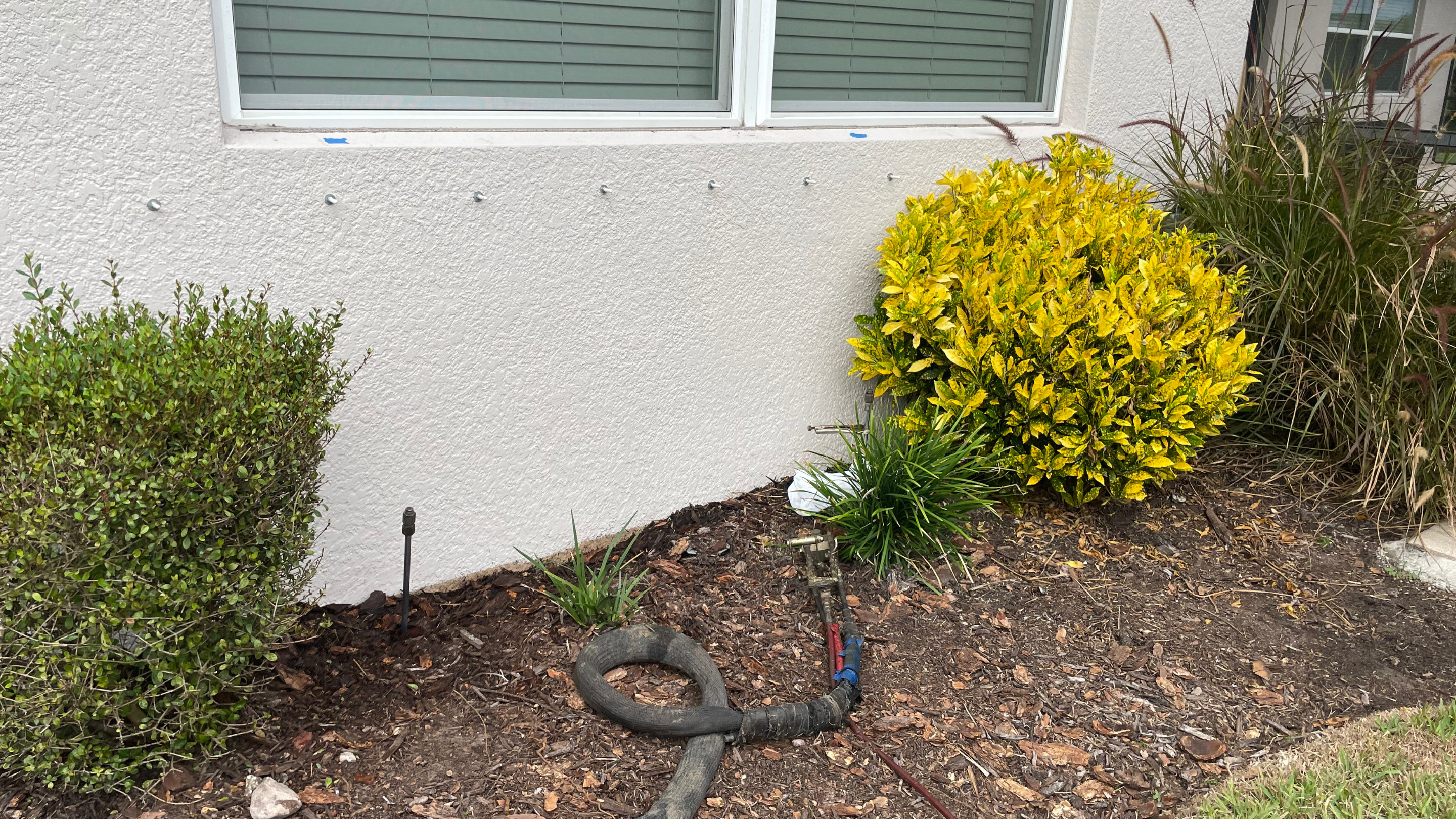
A lot of shrubs were along both sides of the house, even though there was still enough room to work between the landscaping and the structure. That is an important field condition in residential work. Landscaping often limits access, affects probe angles, and requires crews to work carefully to avoid unnecessary disturbance while still reaching the correct treatment zones.
The original problem area near the pool equipment presented its own challenge. At the back right corner, there was an 8-foot slab with pool equipment, meaning the crew may need to angle the rods toward the house while working that section. This type of condition requires field adaptability and experience, because the treatment still needs to reach the right support zone even when access is not perfectly vertical or open.
Once it became clear that the problem existed around the entire house, the challenge was no longer just to “fill a soft spot.” It was to develop a repair program capable of stabilizing the perimeter support condition of the whole structure. That required enough material, enough treatment points, and enough coverage to create a meaningful improvement rather than a temporary or incomplete fix.
Helicon recommended two-part structural polyurethane injections because they provided the right combination of precision, speed, and deep treatment capability for a perimeter-wide stabilization program.
Two-part structural polyurethane is especially effective in soil stabilization and foundation-related support projects because it can:
In this Bradenton project, that flexibility mattered. The property had varied access conditions, landscaping constraints, and a complicated corner near the pool equipment. A repair requiring broad excavation would have created much more disruption. Instead, Helicon was able to complete a targeted but comprehensive stabilization program by injecting the support zones directly.
The final project used:
That scope reflects the fact that this was no longer a spot fix. It had become a perimeter-level stabilization program designed to support the entire house while still giving special attention to the original high-risk area at the back right corner.
The polyurethane injections were used to:
Because there was still workable space between the shrubs and the house, Helicon could maintain access along the sides without major landscape removal. That helped protect the homeowner’s property while still allowing the repair to reach the needed treatment zones.
At the back right corner, where the pool equipment sat on an 8-foot slab, the notes anticipated that the rods may need to be angled toward the house. This is exactly the kind of field adaptation experienced crews rely on when working around residential site constraints. The goal is not just to inject material, but to inject it where it will do the most good despite obstacles.
Most importantly, the crew approached the home as a full support system rather than a collection of isolated soft spots. That systems-level thinking is what turned this project into a meaningful soil stabilization and foundation repair solution instead of a short-term patch.
After the work was complete, the home had a significantly improved support condition around the perimeter.
This matters because many homeowners only discover the visible part of a soil problem. By agreeing to treat the full perimeter once the larger issue was identified, this owner avoided a common mistake: fixing the loudest symptom while ignoring the quieter problems waiting to become the next repair.
A lesser contractor might have simply filled the back right corner and left the rest of the home untouched. But that would have ignored the most important finding of the project: the problem existed around the entire perimeter of the house.
That is why this case study is a good example of responsible foundation-related stabilization work. Helicon did not just respond to the initial complaint. The team investigated further, found the broader pattern, and proposed a solution that actually matched the site conditions.
That approach provides better long-term value because it:
Helicon is Florida’s trusted expert in soil stabilization, foundation repair, concrete lifting, seawall repair, and sinkhole remediation. We serve homeowners across Bradenton, Manatee County, and throughout Florida, delivering engineered repair solutions that address structural risk where it starts—below the surface.
If you are seeing soil loss, soft ground, or signs of support problems around your home’s foundation in Bradenton, Manatee County, or Southwest Florida, Helicon can help. Our team provides targeted stabilization solutions designed to protect homes from the ground up before localized problems spread further.
Call 844-HELICON today to schedule your free inspection and learn whether deep polyurethane soil stabilization is the right fit for your property.
FREE INSPECTION REQUEST