
Apollo Beach, FL
The Project
The Challenge
The Solution
FREE INSPECTION REQUEST

Market: Residential
Solution: Soil Stabilization and Foundation Repair
Services: Two-Part Structural Polyurethane Injections (Soil and Slab) and Helical Piers
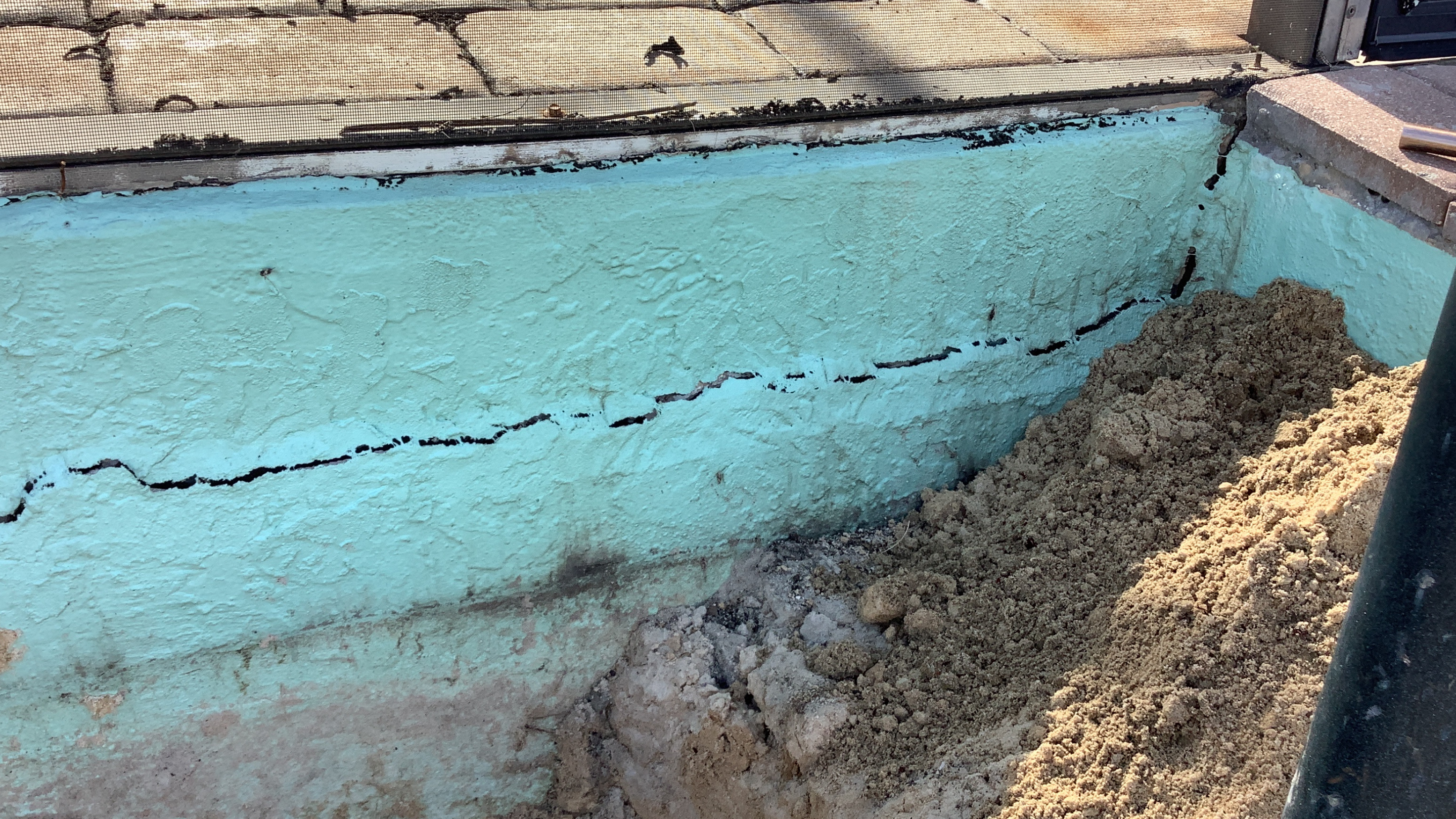
The homeowner contacted Helicon after a 2024 hurricane water surge caused the back portion of the pool deck slab to crack and settle. The damage was serious enough that the owner wanted to address it before moving on to later finish work. His plan was not simply to hide the problem. He wanted to attempt to lift the settled section back up and fill the void with chemical grout so the slab could be stabilized and eventually resurfaced. At the time of the project, the area still had pavers installed on top of the slab, which made the structural condition beneath even more important.
This kind of pool deck problem can be deceptive. From the surface, it may look like the slab just “dropped a little” after the storm. But when a section of deck cracks and settles after a surge event, the real issue is usually below grade. Water has often moved or weakened the supporting soils, leaving the slab bridging a compromised area rather than bearing evenly on competent support. If that condition is ignored and the deck is simply resurfaced, the visible repair may look good for a while, but the underlying instability remains.
The homeowner wanted to avoid that mistake. He was ready to move forward, but he wanted a repair that dealt with the source of the problem. That is what made this a strong candidate for a combined soil stabilization and foundation repair approach rather than a simple surface reset.
Pool decks in coastal communities like Apollo Beach are exposed to a very different set of risks than inland flatwork. Even when the concrete or pavers look structurally sound before a storm, surge water can alter the support conditions underneath in a matter of hours. When that happens, several types of distress can develop:
This homeowner’s pool deck did not just crack. It cracked and settled after a surge event, and the owner wanted both lift and stabilization as part of the repair discussion. That matters because it shows the issue was already structural enough to affect elevation and support, not just appearance.
It also matters because the owner planned to resurface later, which means the timing of the repair was exactly right. Before any new finish goes down, the slab below it has to be stabilized. Otherwise, the next visible layer is simply being installed over an active problem.
The main challenge in this project was not access or permitting. It was balancing the homeowner’s understandable desire for a concrete lift with the need for a durable, technically sound stabilization strategy.
The owner wanted to attempt a lift on the cracked and settled portion of the pool deck slab, while also making sure the slab was stabilized and the voids below it were treated with chemical grout. He also wanted to attempt lift on the back portion of the pool deck with stem wall piers. That meant the repair had to do two things at once: create the best possible opportunity for movement correction while also making sure the area was structurally improved even if the visual lift result was limited.
This is a very common challenge in residential slab work. Homeowners often focus on how much the slab can come back up, but the more important question is whether the slab and the support conditions under it will remain stable afterward. Lift without proper support correction can create a short-lived visual improvement. Stabilization without lift may not be as dramatic, but it often produces the better long-term structural result. In this case, Helicon had to design a repair that respected both goals.
A second challenge was choosing the right system for the back section of the deck. The owner was given both options: chemical grout stabilization and underpinning. Ultimately, he leaned toward and then chose the underpinning option with stem wall piers, along with soil injections under the slab. That decision reflects a smart project mindset. The owner was not just looking for the cheapest patch. He was willing to move forward with the stronger structural approach once the options were explained clearly.
Helicon’s final repair approach combined deep support and shallow stabilization.
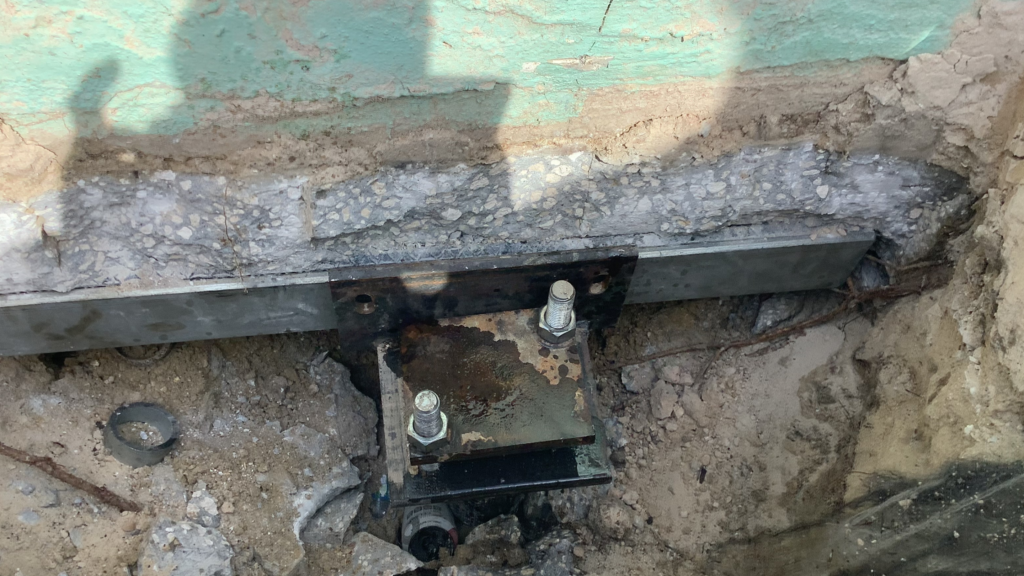
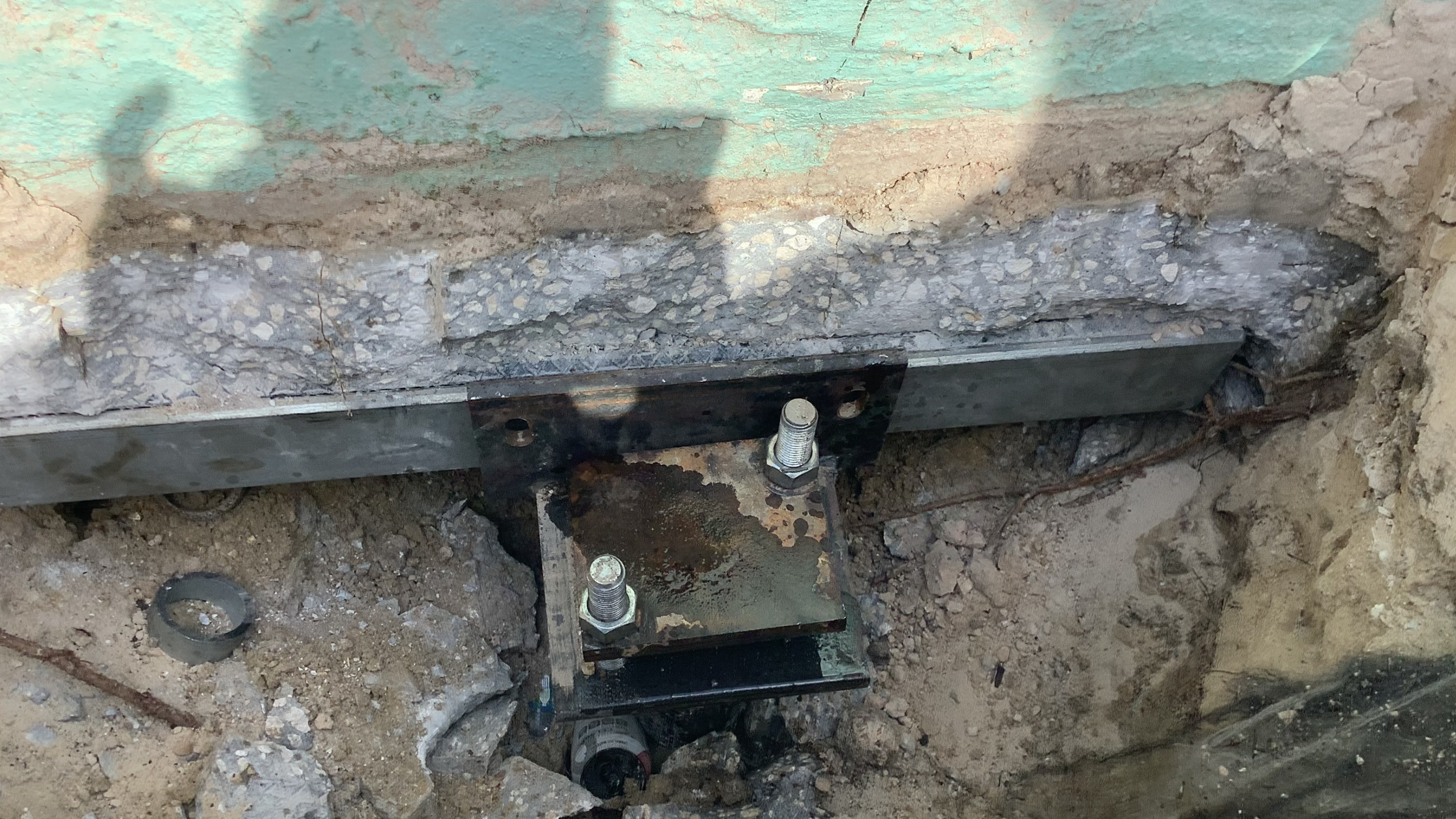
To address the structural needs of the back portion of the pool deck and stem wall, Helicon installed 8 galvanized steel helical piers. These piers were used as the deep foundational component of the repair and provided the support system needed for the area where lift was being attempted. The use of galvanized steel helicals was important because the deck section needed more than a surface correction. It needed a dependable support path that would reduce the chance of future movement after the storm-related settlement.
Helical piers are especially effective in situations like this because they can provide deeper support in areas where near-surface soils have been weakened, washed out, or rendered unreliable. In practical terms, the piers gave the project a structural backbone. Instead of relying solely on compromised shallow soils below the damaged section, the repaired area gained a more dependable foundational support system.
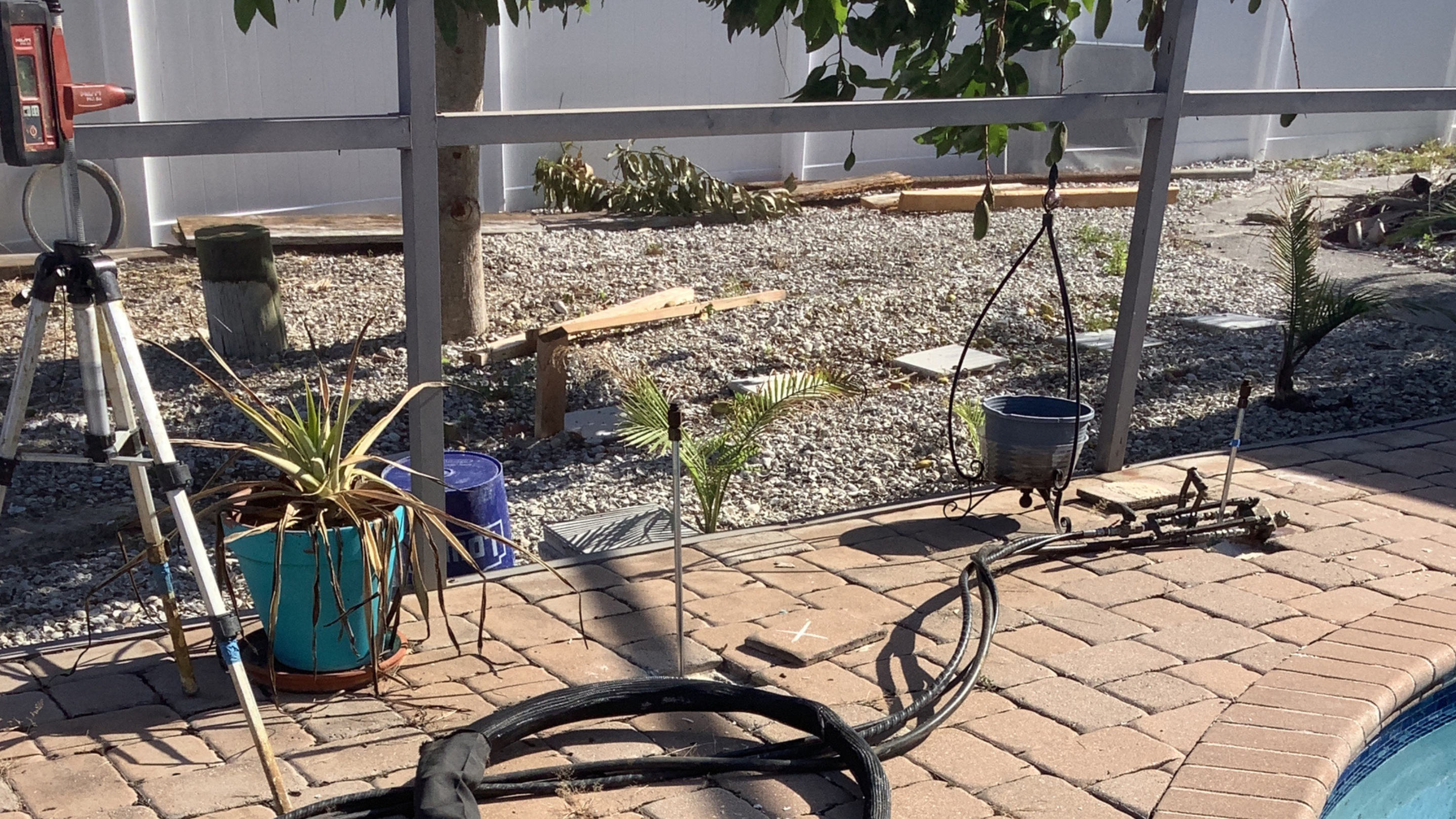
In addition to the piers, Helicon completed 13 soil injection points beneath the slab and stem wall area using 130 pounds of structural two-part polyurethane foam. These injections helped improve the weak support conditions below the slab, fill voided areas where necessary, and reinforce the soil mass around the damaged zone.
This part of the repair was critical because even when deep support is added, the slab and surrounding deck area still benefit from stabilization closer to the surface. The injections were intended to strengthen the immediate support condition beneath the slab and complement the deeper work being performed by the piers.
This project worked because it did not rely on one repair method alone. It used:
That combination gave the owner a better structural result than either system alone would likely have delivered. The deep support addressed the more serious settlement concern, while the soil injections improved the immediate slab-bearing condition in the damaged area.
One of the smartest aspects of this project is that the homeowner planned the repair in the right order. He wanted the slab stabilized now so he could resurface later. That sequence matters tremendously.
If a homeowner resurfaces a pool deck before the support problem is corrected, the new finish layer often becomes the next casualty of the old structural issue. Pavers can separate again. New surfaces can crack again. The owner ends up paying twice for the visible repair because the invisible problem was never solved.
By choosing stabilization first, this homeowner gave the future resurfacing work a much better chance of lasting. That is one of the strongest strategic decisions in the whole project.
Once the repair was completed, the pool deck system had a much stronger support condition than before.
Just as importantly, the repair focused on the actual source of the distress rather than just the visible symptom. That is what makes this project a meaningful foundation repair and soil stabilization case study rather than a cosmetic deck correction.
This Apollo Beach project is a strong example of how homeowners should think after storm-related hardscape damage. The owner did not rush into resurfacing. He did not assume the slab would stop moving on its own. And he did not settle for a temporary patch once he understood the difference between chemical grout-only stabilization and underpinning with helical piers.
Instead, he chose a repair path that addressed both the support condition under the slab and the deeper foundational needs of the settled back section. That kind of decision protects not just the pool deck, but the money that will later be invested in restoring it visually.
Helicon is Florida’s trusted expert in foundation repair, soil stabilization, helical piers, slab stabilization, concrete lifting, seawall repair, and sinkhole remediation. We serve homeowners across Apollo Beach and throughout Florida, delivering engineered repair solutions that protect structures from the ground up.
If your pool deck, patio, or waterfront hardscape was damaged by storm surge and you are seeing cracking, settlement, or void-related movement, Helicon can help. Our team provides targeted foundation repair and soil stabilization solutions designed to restore support below the surface before cosmetic work begins.
Call 844-HELICON today to schedule your free inspection and learn whether helical piers and structural polyurethane stabilization are the right solution for your property.
FREE INSPECTION REQUEST