
Orlando, FL
The Project
The Challenge
The Solution
FREE INSPECTION REQUEST

Market: Residential
Solution: Two-Part Structural Polyurethane Injections (Soil and Slab)
Services: Soil Stabilization & Concrete Repair
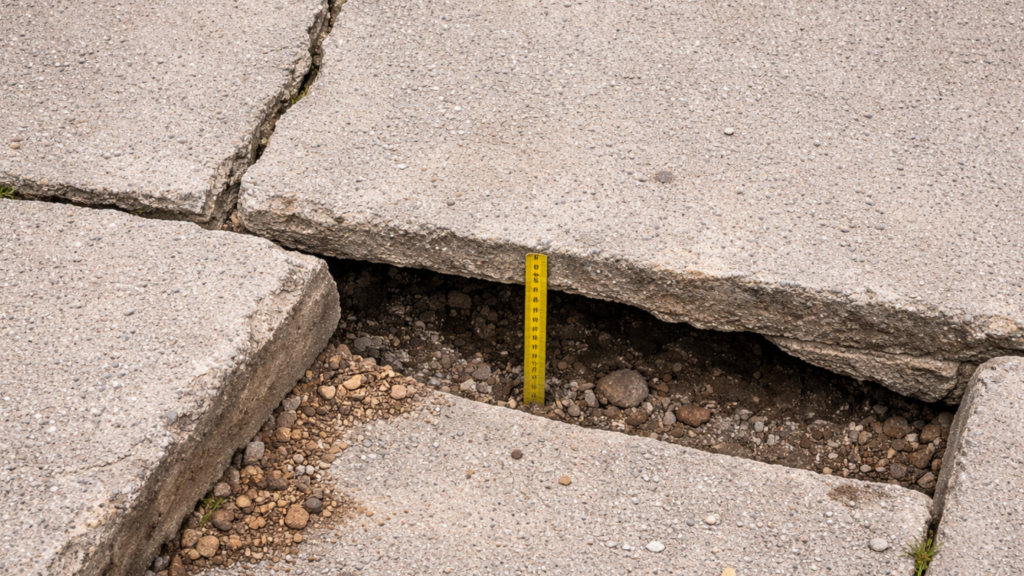
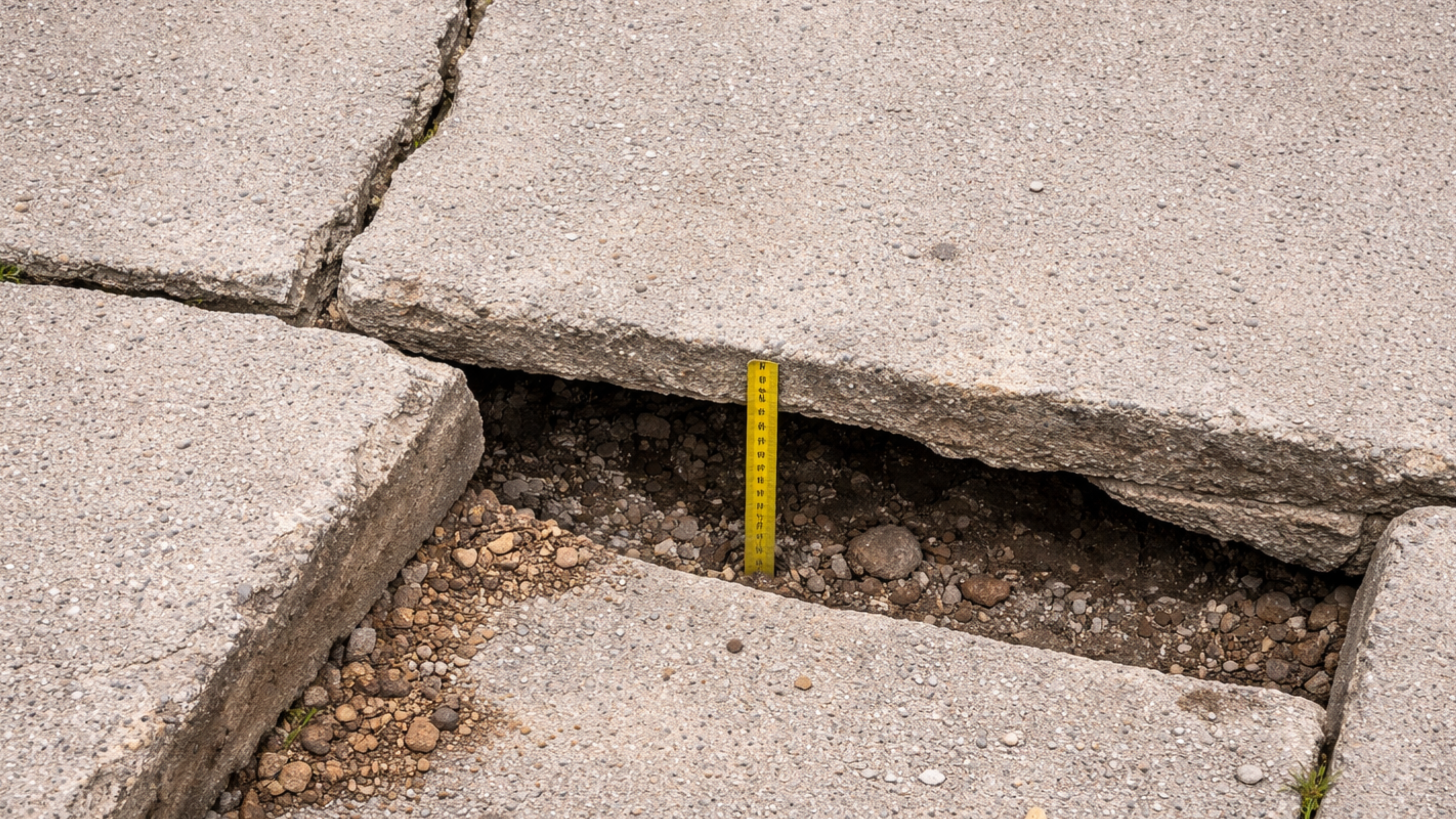
The homeowner initially noticed visible cracks in the driveway, followed by signs that one or more sections were settling unevenly. That concern grew once basic field checks revealed that some slab areas sounded hollow and probing confirmed voids below the concrete. In other words, the visible cracking was only the surface symptom of a deeper support problem.
One portion of the driveway had deteriorated beyond what would make sense to lift. That piece had already crumbled and settled, and the best strategy was an RR (remove and replace) rather than trying to preserve compromised concrete. Other slabs, however, still had enough integrity to benefit from structural polyurethane injections—provided the underlying voids were thoroughly filled and the support soils were properly densified.
This is exactly where a combined soil stabilization and concrete repair strategy becomes valuable. Rather than treating the entire driveway the same way, Helicon tailored the repair plan to match the condition of each section.
Across Orlando and the surrounding parts of Orange County, many residential driveways are built over sandy soils that can look stable at the surface while losing support underneath. Over time, several factors may contribute to slab settlement:
Once voids form, the slab starts to act like a bridge. Instead of being fully supported, it spans unsupported pockets of air and weakened soil. The concrete then cracks under stress, edges begin to settle, and certain sections may eventually crumble.
This is why the most effective concrete repair is almost always tied directly to soil stabilization. Repairing or replacing the concrete without addressing the ground beneath it simply resets the clock on future movement.
The challenge on this Orlando driveway project was not merely lifting concrete. It was making sure that every significant void was identified and addressed so the problem would not return. As the homeowner understood, missing even one critical void could allow the slab to settle again, undermining the entire repair.
Several factors made this especially important:
Probe and sound testing showed that the driveway had definite void zones. This meant the slab was not uniformly supported, and any stabilization effort had to be accurate and comprehensive.
Not all driveway sections were in the same condition. One small cracked and settled section—roughly 2 feet in length—had degraded enough that it was best handled through remove and replace concrete repair, not lift. Other sections, however, were still structurally sound enough to be stabilized.
Because one area was already slated for replacement, there was no reason to attempt lifting it. This required careful planning to focus stabilization efforts on the sections worth preserving while preparing the replacement area properly.
The project included a 20-pound soil injection point that was intentionally split in two across a 7–8 foot distance. That detail matters. It reflects an approach designed not just to inject material, but to spread stabilization across a longer influence zone so the densification was more effective and uniform.
In short, this project required more than material volume. It required judgment—knowing where to stabilize, where to repair, and where replacement was the better answer.
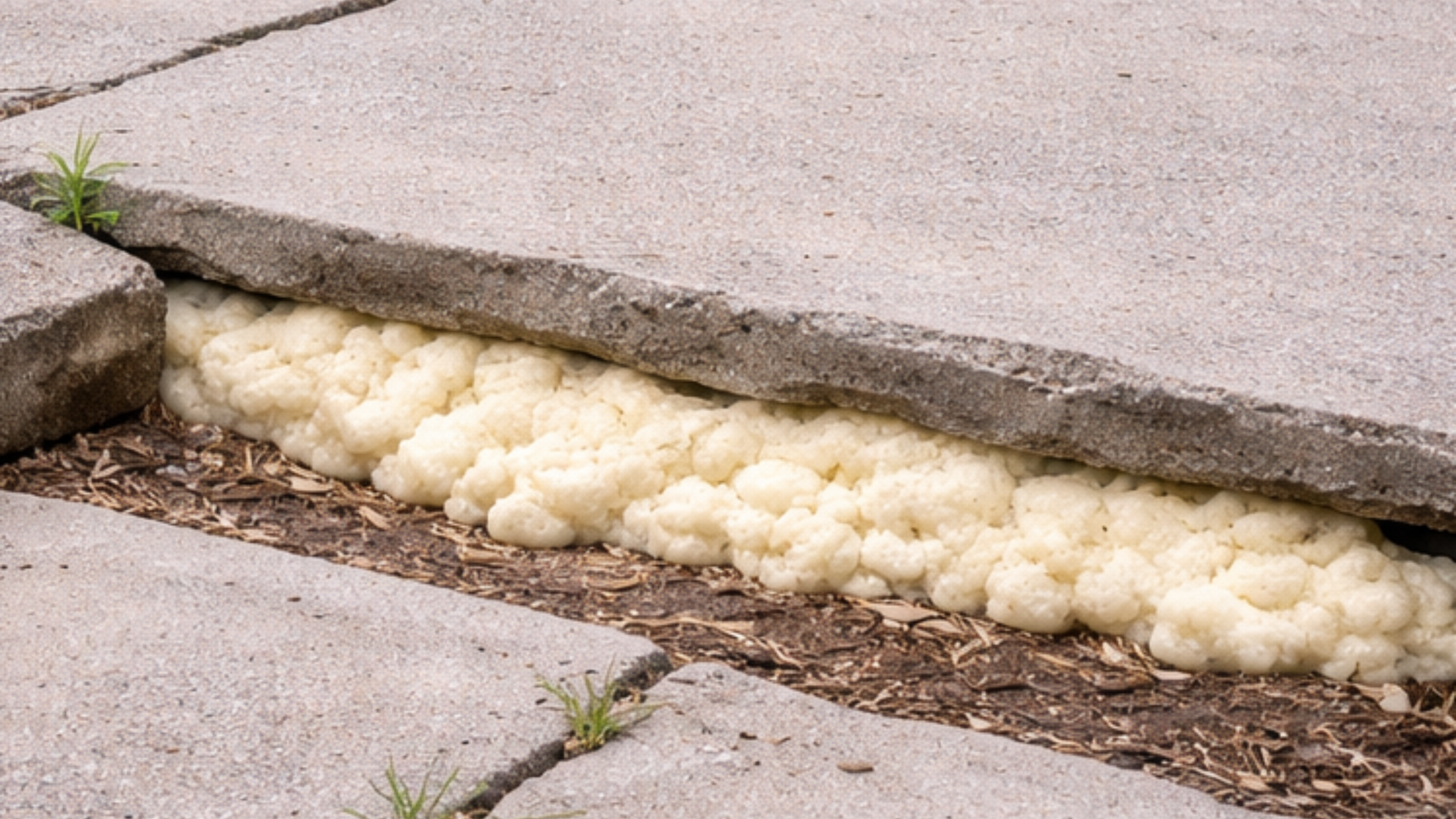
Helicon used two-part structural polyurethane foam injections to complete this project. This material is highly effective for both soil stabilization and concrete repair support because it can penetrate weak zones, expand to fill voids, and restore slab-to-soil contact without adding significant dead load.
For the soil treatment portion of the job, Helicon used 20 pounds of two-part structural polyurethane. Rather than concentrating that full amount in a single isolated spot, the treatment point was split across a 7–8 foot distance to better densify the affected zone and extend the stabilization effect through the weak area. This type of measured distribution is especially helpful when the void path is elongated rather than concentrated in one tight pocket.
The goal of the soil stabilization work was to:
– Fill weak or open void zones beneath the driveway
– Densify the near-surface soils
– Improve soil bearing capacity
– Support the slabs that would remain in place
For the slab-support phase, Helicon used 191 pounds of structural polyurethane foam. These slab injections were designed to:
– Restore slab-to-soil contact
– Stabilize sections of concrete worth preserving
– Reduce further shifting or settlement
– Support the remaining driveway before and after the localized RR section is completed
This portion of the work is where concrete repair and soil stabilization directly overlap. Slab injections do more than just support the concrete—they help reconnect the slab to a stabilized base, so the driveway can once again perform as a load-bearing surface instead of a suspended plate spanning voids.
The cracked, settled, and crumbling 2-foot driveway section was included as an RR (remove and replace). This was a smart choice. Once a section has failed beyond a certain point, aggressive lifting is not the best answer. In those situations, the strongest long-term outcome comes from:
– Stabilizing the surrounding soils
– Preserving salvageable slabs
– Replacing only the section that has already lost too much integrity
That combination produces better long-term value than trying to force a structural correction out of damaged concrete.
For residential driveways in Orlando, two-part structural polyurethane provides several advantages over traditional mudjacking or broad replacement:
In this case, those benefits aligned perfectly with the homeowner’s goals. They did not want a total driveway replacement. They wanted targeted structural stabilization and smart repair.
Once the injections were complete, the driveway had a far more stable support system beneath it. The key outcomes included:
This project also created the right conditions for future surface work. Because the homeowner no longer has to rely on unstable soil beneath the driveway, any final concrete repair or replacement work can now be completed on a much more reliable foundation.
Many property owners focus first on what they can see: the crack, the gap, the broken corner, or the crumbled slab. But visible concrete damage is usually the result—not the cause.
The real issue is often below the surface. Without stabilizing the subgrade:
– Cracks often return
– New concrete may settle again
– Self-leveling compounds or patches fail prematurely
– Surface repairs lose value over time
By addressing the hidden support problem first, Helicon gave this homeowner a better long-term repair path and greater peace of mind.
Helicon is Florida’s trusted expert in soil stabilization, concrete repair, foundation repair, concrete lifting, and sinkhole remediation. We serve homeowners across Orlando, Orange County, and throughout Florida, delivering engineered ground-improvement solutions that protect property from the ground up.
If you are seeing driveway settlement, hollow-sounding slabs, crumbling concrete, or recurring cracks around your home in Orlando or Orange County, Helicon can help. Our soil stabilization and concrete repair solutions are designed specifically for Florida’s challenging sandy soils.
Call 844-HELICON today to schedule your free inspection and learn how targeted structural polyurethane injections can restore support before the problem gets worse.
FREE INSPECTION REQUEST