
New Port Richey, FL
The Project
The Challenge
The Solution
FREE INSPECTION REQUEST

Market: Residential
Solution: One-Part Permeation Polyurethane Injections
Services: Seawall Repair & Soil Stabilization
This New Port Richey project did not begin with a visible structural collapse or a dramatic emergency. Instead, it started where many good structural projects begin: with a homeowner who noticed early warning signs and chose to act before making a larger investment in the property.
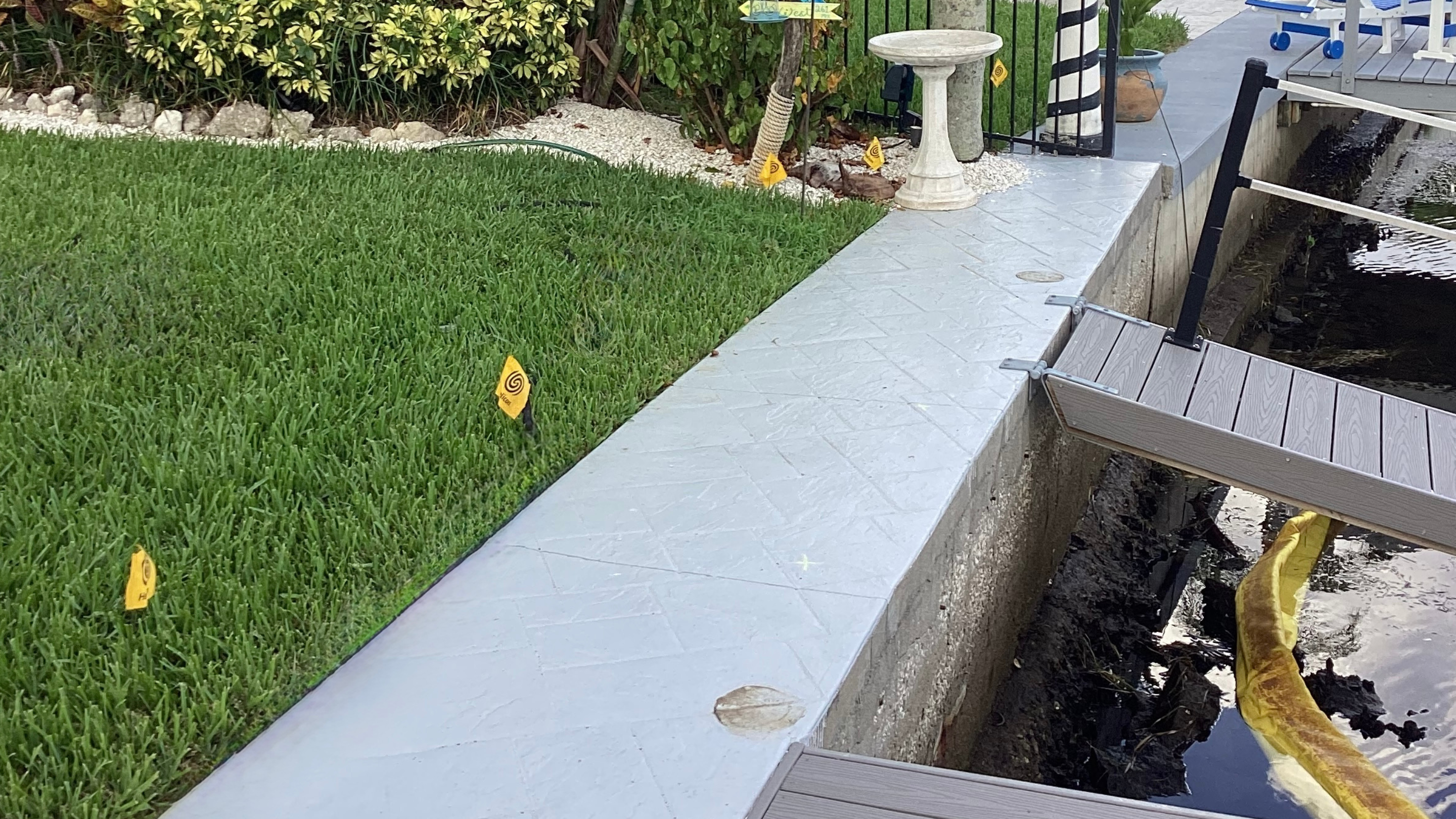
The owner was planning to install a pool in the yard, which immediately raised the stakes of the existing shoreline issue. Before construction could move forward responsibly, the owner needed confidence that the yard behind the seawall was stable enough to support not just the current condition of the property, but also the future demands of new improvements. According to the source notes, the property was already showing seawall erosion behind the wall and cracking in the concrete walkway.
That combination matters. Cracks in a waterfront walkway often indicate more than simple surface aging. When those cracks appear near a seawall that is actively losing soil behind it, they often point to a shared support issue below the surface. In other words, the visible concrete distress was helping reveal the more important hidden problem: retained-side soil loss.
The owner’s objective was straightforward: stabilize behind the seawall so no more erosion happens. That decision reflects exactly the right project sequence. Instead of installing a new pool and treating the seawall issue later, the homeowner chose to address the support condition first.
That kind of timing creates several major advantages:
This was not simply a maintenance call. It was an important enabling project for the property’s next phase of development.
One of the most misunderstood conditions on waterfront properties is soil loss behind the seawall. Homeowners often notice the visible effects first: cracked walkways, depressions, sloping yard sections, or voids forming near the wall. But the real problem is rarely the concrete itself. The real problem is that soil behind the wall is no longer staying in place.
When erosion occurs behind a seawall, several things can begin happening at once:
In a yard that is about to receive a pool, these conditions are even more significant. A pool is a major structural and financial investment. Building one next to an actively eroding seawall zone without first stabilizing the retained-side soils would expose that investment to unnecessary risk.
That is why the source notes are so valuable here. They show a homeowner who correctly recognized that the seawall stabilization had to come first.
One very useful detail in this project is that the concrete walkway near the seawall cap had already been removed by the time Helicon installed the treatment. The source notes describe this as a situation where “nothing arose” from a challenge standpoint, but in reality that condition gave the crew a strategic advantage.
When a cracked walkway near a seawall remains in place during shoreline stabilization, access can be more limited, and the crew has to work around more obstacles. In this case, because the walkway had already been removed, the team had cleaner access to the treatment area behind the wall. That likely allowed the repair to be more efficient and reduced the need to preserve a deteriorating slab that the owner already intended to replace.
This is a good example of how project sequencing can improve results. The owner did not just remove the walkway randomly. Its removal aligned with the larger property plan and made the seawall-adjacent stabilization more straightforward.
The original notes say that nothing arose as a challenge during the project. That may be true from a field-obstacle standpoint, but every seawall stabilization project still carries a real structural challenge: making sure the retained-side soils are stabilized deeply and effectively enough to stop the cycle of erosion before future improvements are added nearby.
The most relevant challenge in this project was not access or utilities. It was making sure the owner solved the shoreline issue before introducing a major new backyard structure. Because the property was preparing for pool construction, the stabilization work had to provide meaningful improvement—not just a temporary patch.
If the weak soils behind the seawall had not been treated first, the owner could have faced a much more complicated problem later:
That is what made the challenge real. The repair had to be durable enough to improve the support condition before the next phase of property investment began.
Another challenge inherent to seawall work is not just the erosion itself, but the hydrostatic pressure that can build inside the wall over time. Even if weak soils are stabilized, pressure can still create future performance problems if the wall does not have a way to relieve it. That is why the project included JET Filters after the grout work was completed.
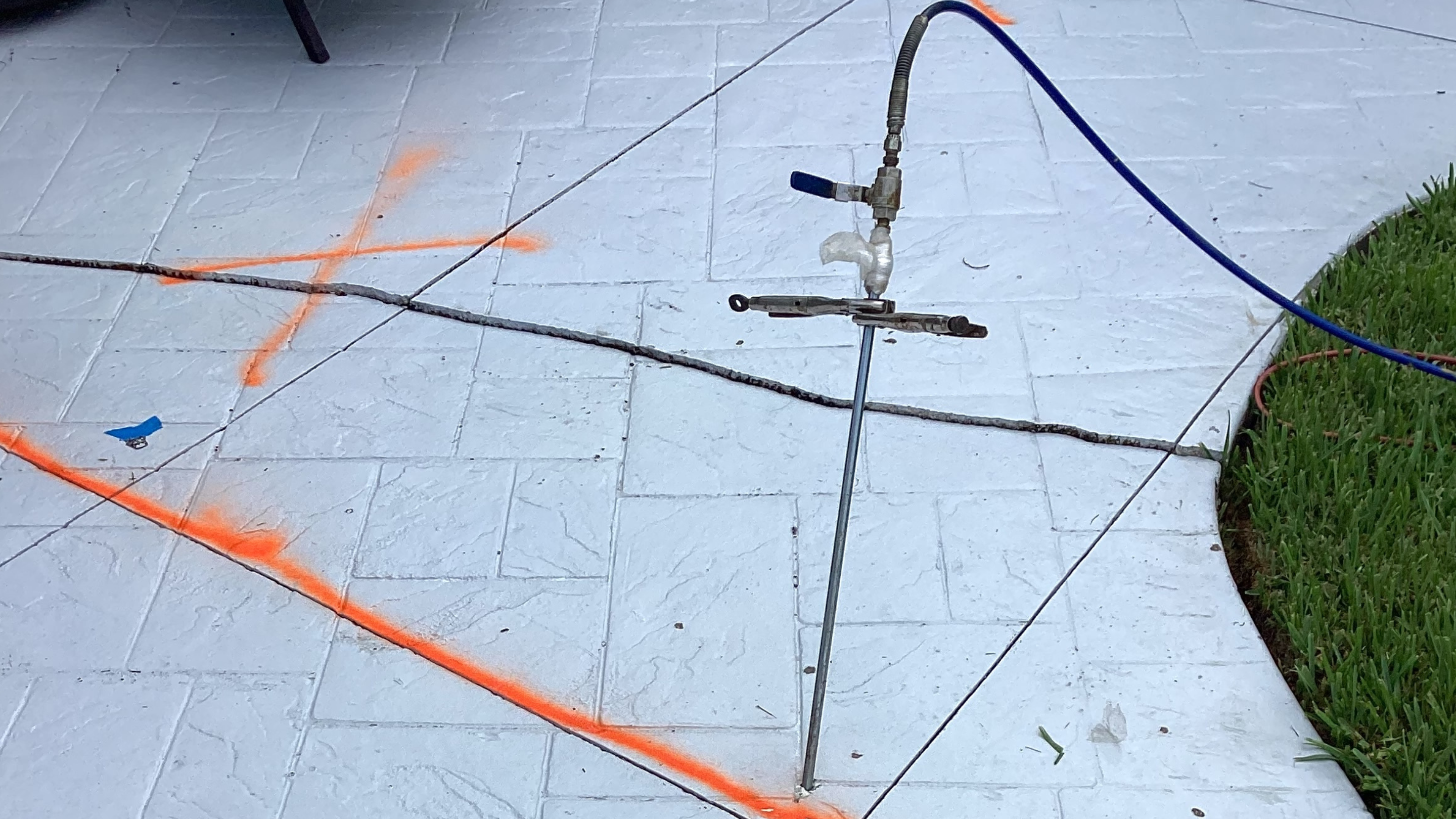
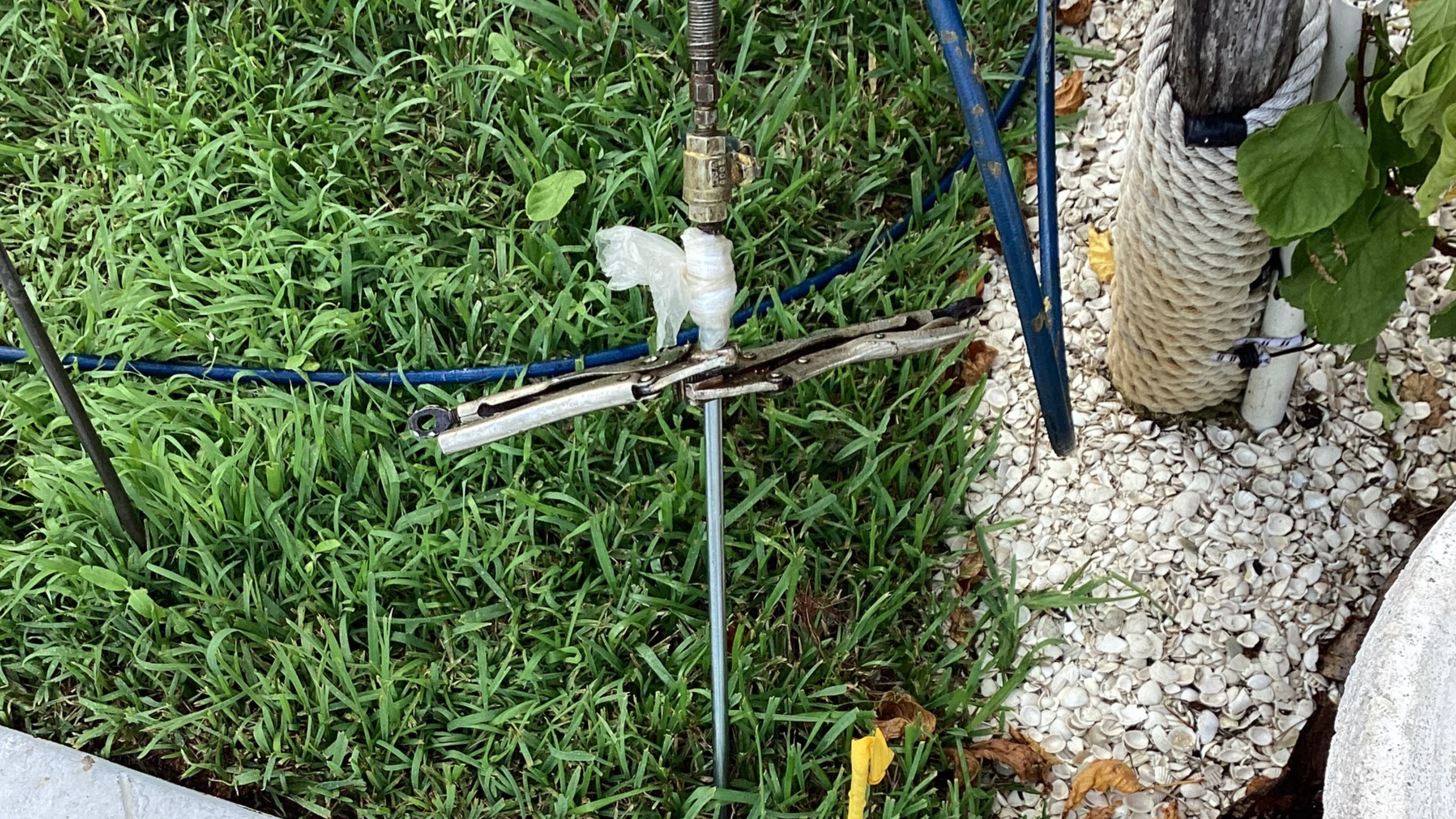
Helicon selected one-part permeation polyurethane injections as the most appropriate method for this project because the goal was to improve the retained-side soil condition behind the seawall without broad excavation or wall replacement.
This type of treatment is especially well suited for seawall-adjacent soil stabilization because it can:
For this New Port Richey property, that made it the right tool for the job. The owner did not need full seawall replacement at this stage. The owner needed to stop the ongoing soil loss and create a more stable support condition before the future pool project moved forward.
Helicon used 50 gallons of SW-RP1 one-part permeation polyurethane material to complete the stabilization. The purpose of this material was to strengthen the weak soils behind the wall and reduce the potential for additional erosion-related movement.
This was not simply a fill operation. It was a structural soil treatment intended to change the behavior of the retained-side zone in a meaningful way.
After the permeation polyurethane work was complete, JET Filters were installed to help reduce hydrostatic pressure inside the wall. This step was an important part of the overall strategy.
In waterfront stabilization, improving the soil behind the wall is only part of the long-term picture. Water pressure still needs a way to be managed. If hydrostatic pressure continues building behind the wall, it can contribute to future movement or distress even after the soils have been strengthened.
JET Filters help by:
This made the project more complete than a simple injection-only repair. It was a two-part support strategy: stabilize the soils, then help the wall manage water pressure more effectively going forward.
Once the work was complete, the property had a much stronger retained-side support condition than before.
Most importantly, the project improved the structural conditions beneath the surface before a major new backyard investment was built nearby.
This project stands out because the homeowner made the kind of decision that protects long-term value. Rather than installing the pool first and treating the seawall issue later, the owner addressed the shoreline support condition while the site was still more accessible and before the next major improvement complicated the repair.
That approach protects:
This is exactly what good pre-improvement structural planning looks like on a waterfront residential property.
Helicon is Florida’s trusted expert in soil stabilization, seawall repair, foundation repair, concrete lifting, and sinkhole remediation. We serve homeowners across New Port Richey and throughout Florida, delivering engineered repair solutions that protect properties from the shoreline to the slab.
If you are seeing seawall erosion, cracking hardscape, or weak soils behind your waterfront wall in New Port Richey or along Florida’s Gulf Coast, Helicon can help. Our team provides targeted shoreline stabilization solutions designed to protect your property before the next improvement goes in.
Call 844-HELICON today to schedule your free inspection and learn whether permeation polyurethane and JET Filters are the right fit for your seawall.
FREE INSPECTION REQUEST