
North Port, FL
The Project
The Challenge
The Solution
FREE INSPECTION REQUEST

Market: Residential
Solution: Two-Part Structural Polyurethane Injections for Soil and Slab Stabilization
Services: Concrete and Soil Stabilization
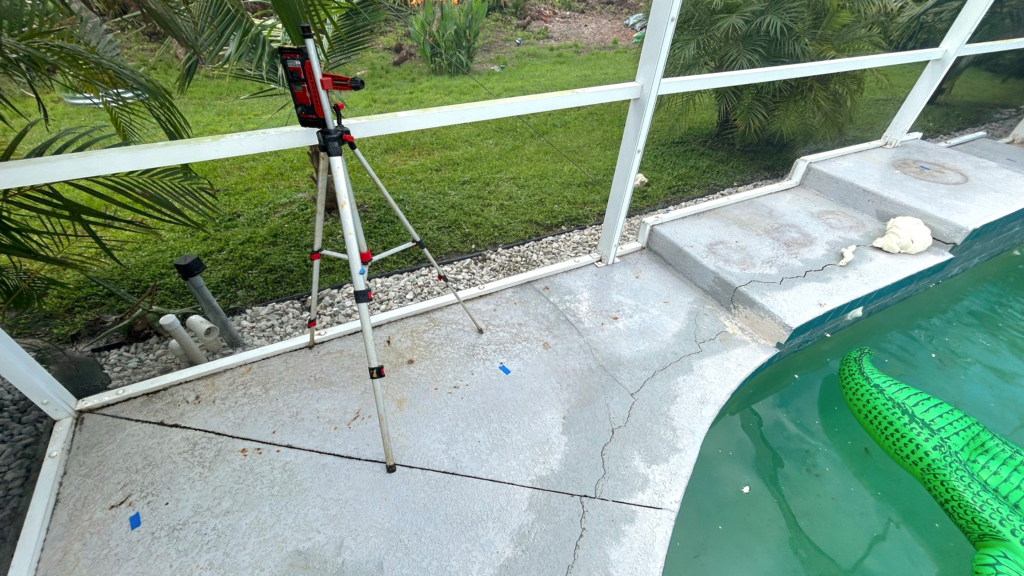
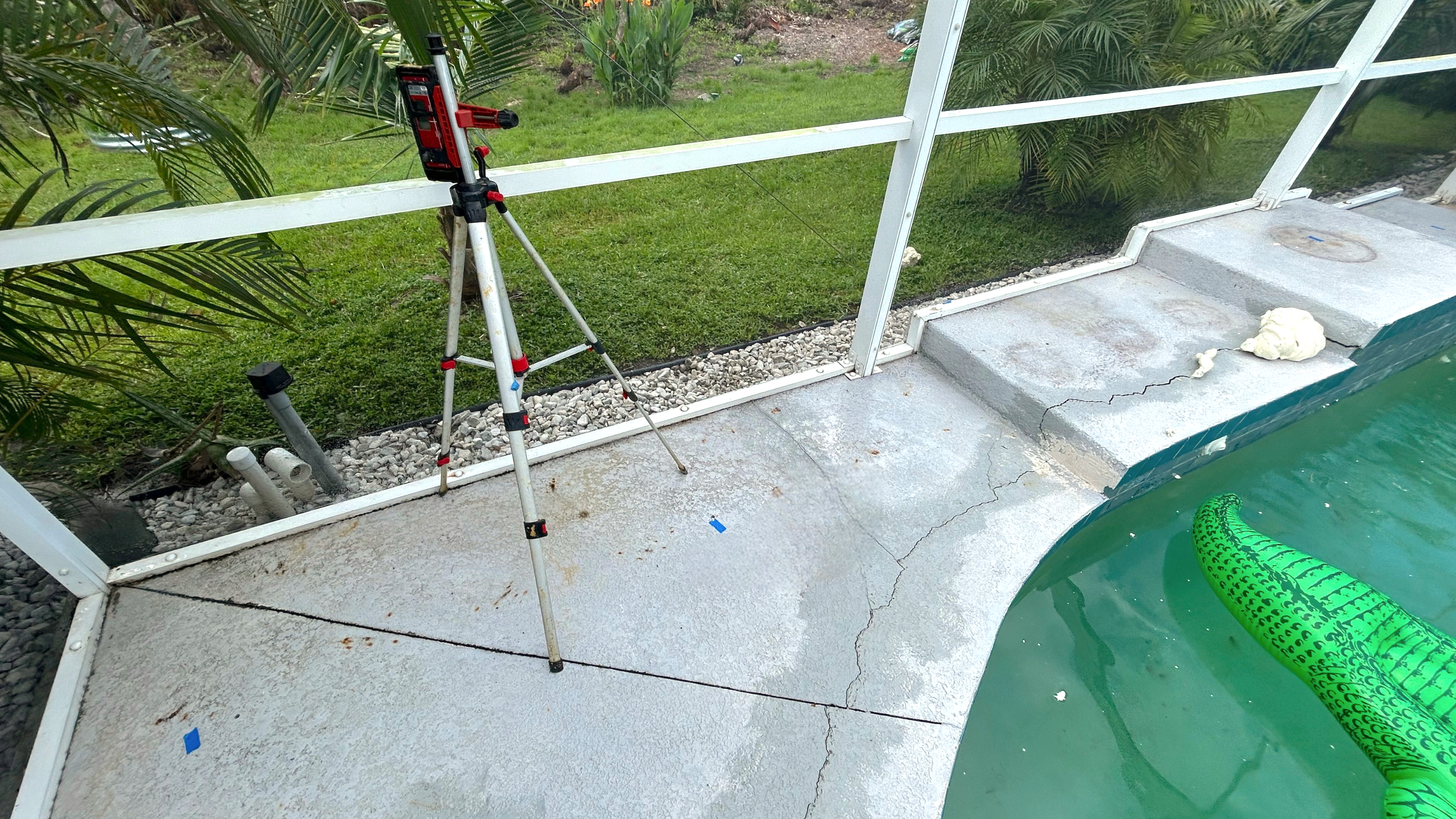
The homeowner’s pool deck had developed settlement, cracking, and uneven areas that were beginning to affect both appearance and usability. His goal was to address those conditions before refinishing the deck.
Rather than simply painting over the existing surface, he wanted Helicon to stabilize the affected areas and attempt to bring the settled concrete closer to level where conditions allowed.
That was an important decision.
When a pool deck settles, the visible problem may appear to be the concrete surface, but the real concern is often the support beneath it. If the material under the slab has become weak, eroded, or inconsistent, resurfacing alone does not correct the underlying condition.
The homeowner also wanted to reduce trip hazards around the pool.
That adds a practical safety component to the repair. Even relatively small elevation differences between adjacent slab areas can create an uncomfortable or hazardous walking surface, especially around a pool where people are frequently barefoot, and the surface may be wet.
The project therefore had several connected goals: improve support, reduce continued settlement risk, attempt controlled lift, improve transitions where possible, and prepare the deck for future cosmetic work.
A homeowner may be tempted to begin with the most visible improvement. In this case, that would have meant repainting the pool deck.
But repainting a moving slab can lead to repeat work. If the underlying support remains unstable, cracks may continue opening, deck sections may continue moving, and the freshly finished surface may show distress again.
A better sequence is to deal with structural support first.
That means evaluating the settled areas, addressing possible drainage or leak concerns, stabilizing the supporting soils, improving slab support, and only then completing cosmetic work.
The North Port homeowner was already planning to re-grout and repaint the pool deck after Helicon’s work, which made the stabilization project an important first step.
One of the most important considerations on this project was the homeowner’s concern that the pool skimmer might be leaking.
He was not certain that a leak existed and noted that he did not need to add water to the pool frequently. Because the source information does not confirm an active leak, this case study does not state that a skimmer leak caused the settlement.
However, the possibility mattered.
When water repeatedly enters soil beneath or beside a concrete slab, it can contribute to erosion, soil migration, or changing support conditions. If an active leak remains unresolved, those conditions can continue even after stabilization work is completed.
That is why leak concerns should be investigated as part of a broader pool-deck repair strategy.
Structural polyurethane can improve the support condition in the treated areas, but it should not be viewed as a substitute for repairing an active plumbing or drainage problem.
The main challenge involved balancing the homeowner’s desire for visible improvement with the realities of concrete stabilization.
The homeowner wanted Helicon to attempt lift and leveling, reduce trip hazards, and close the existing cracks as much as possible. However, a settled slab does not always return completely to its previous position.
The amount of lift that can be achieved depends on the slab’s condition, surrounding restraints, cracking, voids, support conditions, and the way the concrete responds during injection. Helicon therefore needed to approach the work with stabilization as the primary objective.
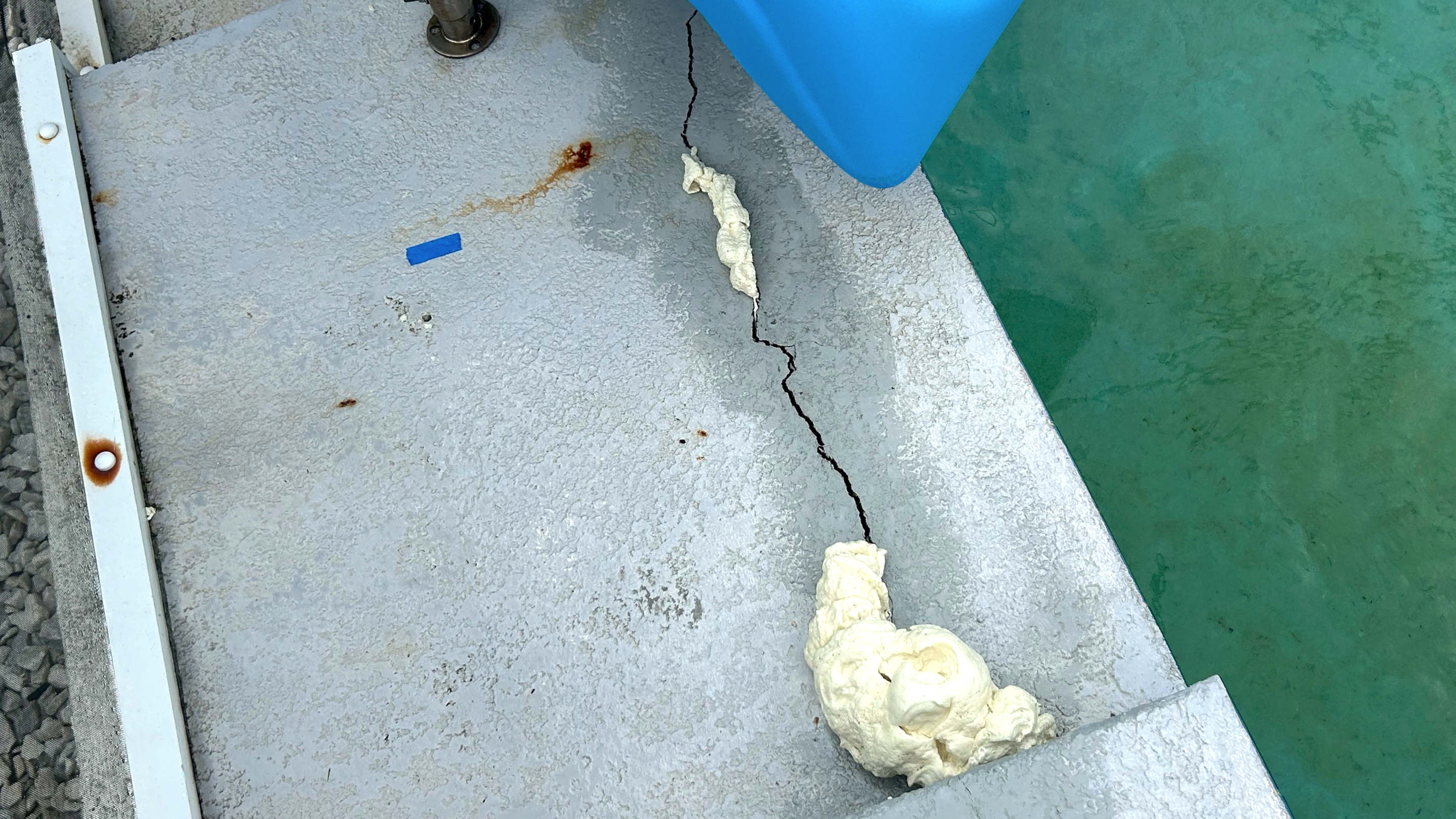
The homeowner also understood that structural polyurethane might move through some of the cracks and potentially disturb tiles near the more prominent openings. He was comfortable with that possibility because he already planned to regrout the pool deck after the stabilization work was completed.
A second consideration involved the concrete previously placed into one of the cracks.
The homeowner asked whether it could be removed to help the area close during the lift attempt. Helicon explained that removing the material could be difficult if the crack was irregular rather than straight.
More importantly, chasing perfect crack closure was not the structural goal.
The better priority was to stabilize the slab and improve support. If a crack remained afterward, the homeowner could address the remaining opening during the cosmetic repair phase.
Helicon used two-part structural polyurethane foam for both the slab and soil portions of the repair.
This allowed the project to address two related support conditions. The soil injections treated designated subsurface zones where additional stabilization was needed.
The slab injections focused more directly on the support immediately beneath the concrete.
Using both methods created a more complete treatment than relying on a surface repair alone.
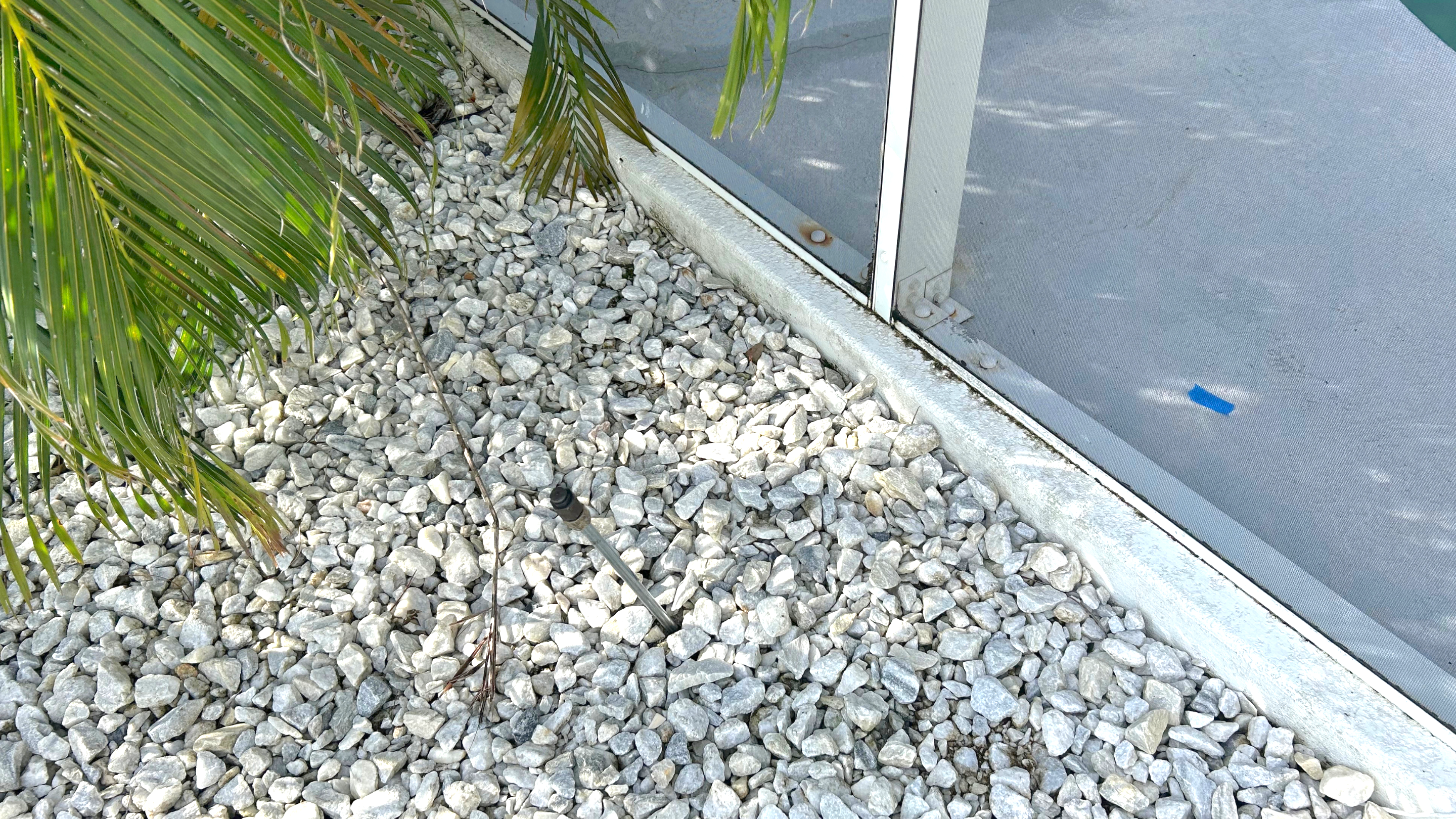
The soil stabilization portion of the project included 8 injection points using 160 pounds of structural polyurethane material.
The purpose of these injections was to improve support within the designated subsurface treatment areas.
Structural polyurethane is installed below grade through targeted injection locations. As the material reacts, it expands into accessible voids and weaker support zones.
For this North Port project, the soil injections were intended to reinforce the affected areas and reduce the risk of continued settlement within the treated zones.
This is why soil stabilization was such an important part of the repair. The pool deck could not perform reliably if the material supporting it continued to move.
Helicon also installed 137 pounds of structural polyurethane beneath the slab. These injections improved the support condition directly beneath the pool-deck concrete.
They also provided an opportunity to attempt controlled lift where the slab responded appropriately. The goal was not aggressive movement. Helicon’s objective was to improve support and reduce the unevenness contributing to trip hazards without applying unnecessary stress to the existing concrete, tiles, pool components, or surrounding deck.
This distinction matters because successful concrete stabilization is not measured only by how high a slab moves.
A slab that is properly supported and stabilized can represent a successful structural outcome even if every crack does not completely close.
The strength of this North Port project was the combination of soil stabilization and direct slab support. The soil injections treated the subsurface support zones.
The slab injections addressed the concrete-support interface and provided controlled lift capability. Together, the two methods created a layered repair strategy.
That approach was particularly appropriate because the homeowner wanted to repaint and regrout the pool deck after the structural work.
Instead of placing new cosmetic finishes over an unstable base, the homeowner first addressed what was happening beneath the surface.
The homeowner understood that the structural work might not make every crack disappear. That expectation was important. Existing cracks may remain visible even after a slab has been successfully stabilized.
If the structural repair improves support but a crack remains open, the crack can be addressed during the finish stage with an appropriate repair material.
The homeowner was already planning to regrout the pool deck and could use a compatible self-leveling crack sealer where needed before repainting.
That creates a logical repair sequence: structural support first, cosmetic restoration second.
The completed North Port project included 137 pounds of structural polyurethane for slab injections and 160 pounds across 8 soil-injection points.
The repair improved support in the designated treatment areas and gave the homeowner a stronger base for future pool-deck improvements.
The project also addressed the homeowner’s goals in a practical order. The deck received subsurface stabilization before cosmetic work, lift was attempted where appropriate, trip-hazard areas were addressed as conditions allowed, and the homeowner retained the ability to complete crack repair, regrouting, and repainting afterward.
No concrete stabilization project should be described as a guarantee that a slab will never move again. Moisture, drainage, plumbing conditions, soil behavior, and other environmental factors can change over time.
However, the structural polyurethane program materially improved support within the treated areas.
Helicon helps Florida homeowners, contractors, property managers, and commercial clients address foundation settlement, weak support conditions, sinking concrete, seawall erosion, and related structural concerns.
Our team develops repair solutions based on the property, observed conditions, project requirements, and structural objectives—with a focus on addressing problems where they often begin: beneath the surface.
If your pool deck, patio, walkway, or other concrete surface is settling, cracking, or becoming uneven, the problem may involve more than the concrete you can see.
Helicon provides soil stabilization, structural polyurethane injection, slab stabilization, concrete lifting, foundation repair, seawall repair, and related structural services throughout North Port and communities across Florida.
Call 844-HELICON to schedule a free inspection and learn which repair approach may be appropriate for your property.
FREE INSPECTION REQUEST