
Miami, FL
The Project
The Challenge
The Solution
FREE INSPECTION REQUEST

Market: Commercial
Solution: Concrete / Soil Stabilization
Services: Two-Part Structural Polyurethane Injections (Slab and Soil)
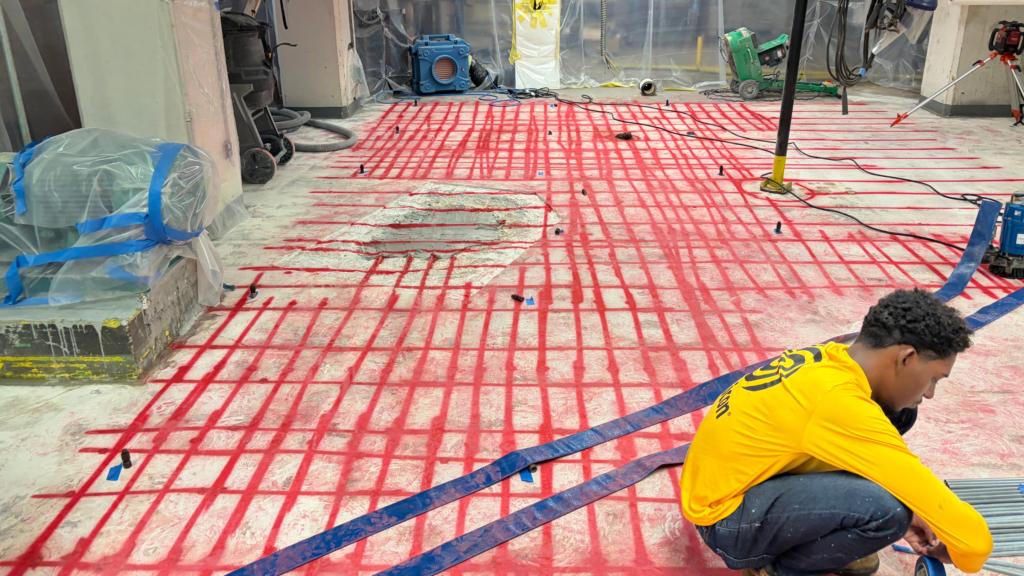
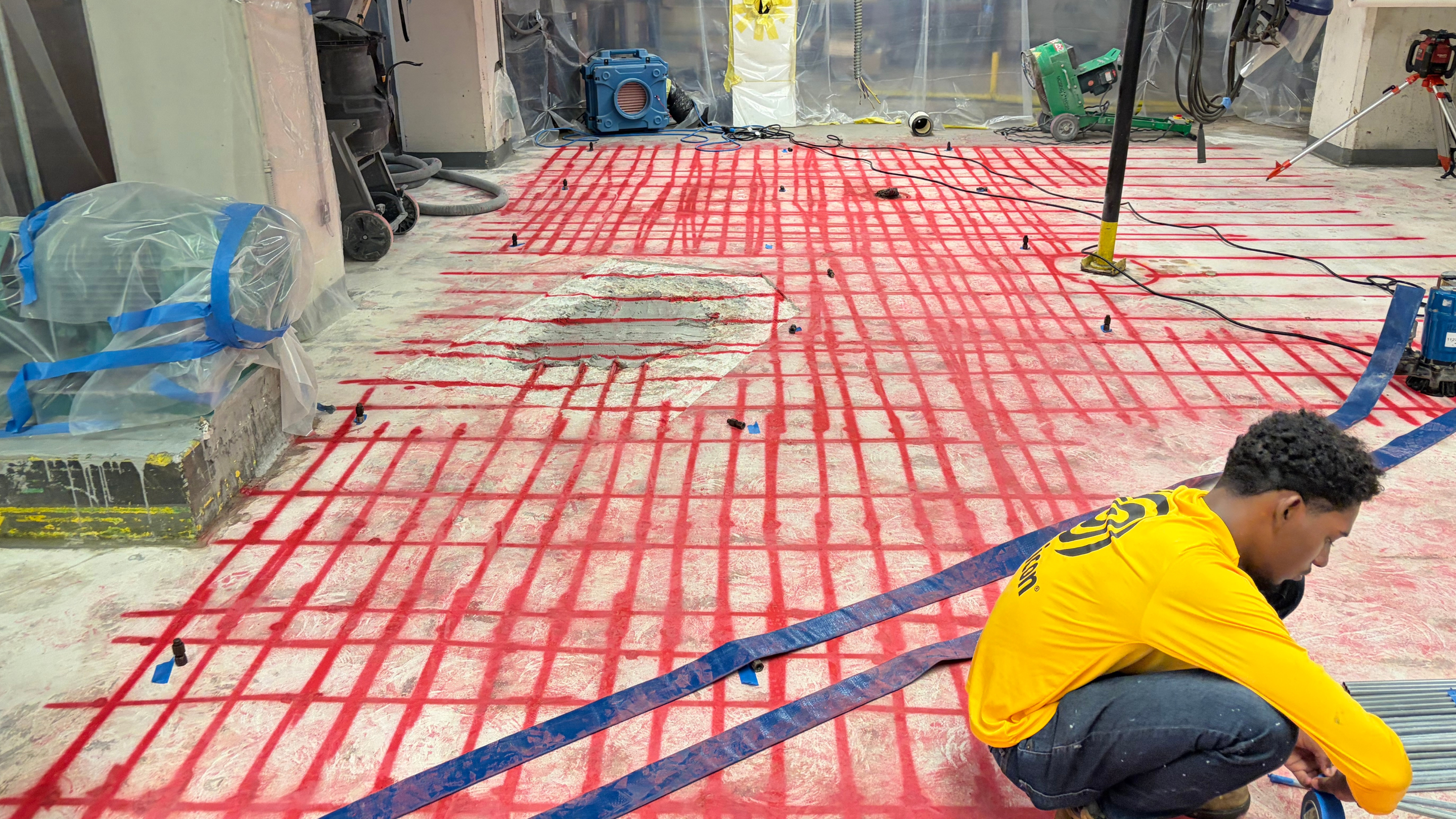
This project took place in a courthouse basement, which immediately raises the importance of execution. Court facilities are not just ordinary commercial spaces. They are public-use buildings with operational, structural, and institutional demands that call for dependable performance. A settling floor slab in a basement level may not sound dramatic at first, but in a building like this, even early movement deserves serious attention.
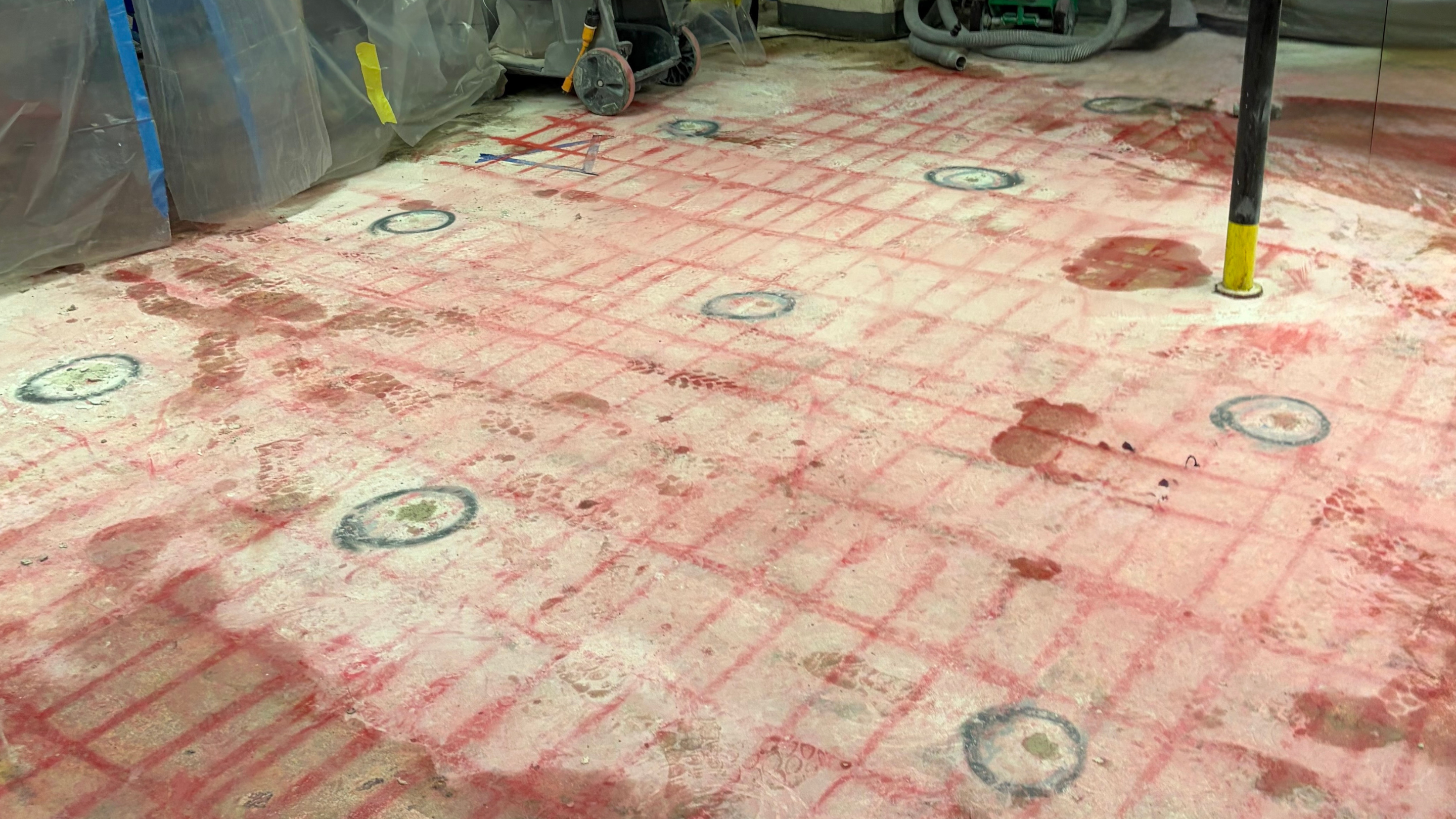
The client’s team took a thoughtful first step by completing a Ground Penetrating Radar (GPR) survey before the stabilization work began. That survey helped clarify the subsurface context and allowed Helicon to proceed with a repair strategy based on actual site information rather than guesswork. The conclusion was clear: no lifting was needed, but the soil did need to be stabilized under the slab before the support condition deteriorated any further.
That is an important point in any commercial foundation or slab-support project. Not every slab needs to be raised. Sometimes the correct answer is simply to stop the movement, restore support, and protect the structure from worsening settlement in the future. In a below-grade courthouse setting, that measured approach was the right one.
Floor slab settlement is often easiest to correct before it becomes severe. Once cracking widens, finishes are damaged, or floor performance begins interfering with building use, repair options tend to become more expensive and more disruptive. By addressing the courthouse basement slab at the stabilization stage, the project team gave themselves the best chance of solving the problem efficiently and with minimal disturbance.
This was especially important because the work was being done in a basement environment, where water, access, and below-grade soil conditions create a different risk profile than a typical slab-on-grade repair.
A basement slab is more than a concrete floor. It is part of the functional and structural environment of the building. When it begins to settle, several concerns can follow over time:
In a courthouse or other public-use commercial building, floor stability also matters from a maintenance and operational perspective. Even when the movement is still in the early stages, smart owners and contractors recognize that stabilization is often the best way to preserve serviceability and reduce long-term risk.
That is exactly what happened here. The goal was not to wait for the slab to become a bigger problem. It was to reinforce it before that happened.
The central challenge was clear: because the work was so low to the ground, water kept rising as the crew worked close to the water table.
Basement stabilization projects in South Florida often come with one unavoidable reality: groundwater influence. In this case, the slab was low enough in elevation that water continued to rise into the treatment zone, creating an ongoing complication throughout the job. That meant Helicon’s crew had to do more than perform injections. They also had to actively manage water conditions while maintaining the repair’s quality and consistency.
The water had to be sucked out throughout the project. That may sound like a minor field inconvenience, but on a technical level it adds meaningful difficulty. Below-grade stabilization work depends on being able to access the treatment zone, control injection conditions, and maintain visibility and timing during installation. Constant water intrusion requires additional equipment, repeated effort, and disciplined execution to keep the site workable.
Because the work took place in a courthouse basement, it also had to be completed carefully and professionally in a confined commercial environment. Unlike open-site grouting work, below-grade interior repairs demand clean execution, controlled staging, and a steady workflow. A crew cannot simply treat the project like an outdoor construction pit. It has to be handled as a stabilization operation inside a functioning institutional structure.
Another subtle challenge was expectation management. Since the slab did not require lift, the repair had to be judged by its structural value rather than visible elevation change. That can be a harder message to communicate in some projects, but in this case, it was the correct one. The goal was to secure the ground and prevent further settlement, not to create cosmetic movement for its own sake.
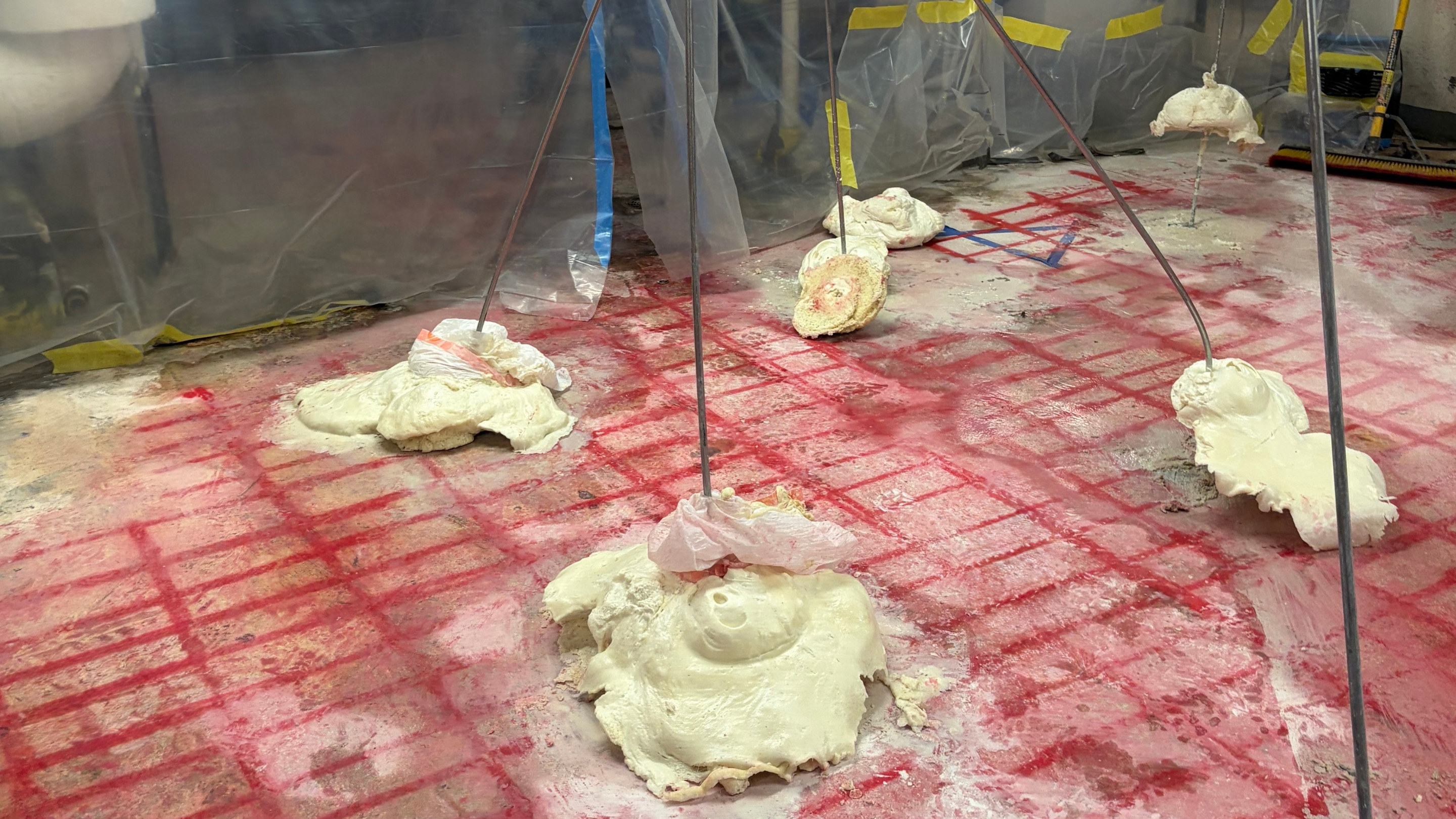
Helicon selected two-part polyurethane injections, specifically AP440 polyurethane chemical grout, as the best-fit stabilization method for this project. This material was well-suited to the courthouse basement environment because it provided a targeted, below-slab treatment method capable of improving the support condition without broad demolition or more invasive excavation-based repair.
AP440 polyurethane chemical grout was used because it could:
That made it especially appropriate for a below-grade slab in close proximity to groundwater.
While the field summary is concise, the logic of the repair is clear.
The first important conclusion was that the slab did not need to be lifted. This kept the repair focused on the true priority: stabilization.
Because groundwater kept entering the work area, the crew had to remove water continuously throughout the process to keep the treatment zone workable.
Helicon then used AP440 to treat the subsurface conditions beneath the basement slab. The purpose was to strengthen and improve the ground so the slab would be less prone to future settlement.
Once complete, the slab had better support beneath it, and the risk of additional movement was reduced.
In a project like this, those steps are what matter most. The repair does not need to look dramatic to be valuable. Its success lies in the improved structural condition below the slab.
This project worked because the repair method matched the real need.
Since no lift was required, the project avoided the common mistake of treating visible movement as the only measure of success. Instead, it focused on securing the slab and the ground beneath it.
The courthouse floor was beginning to settle, but the project team acted before the issue became much more disruptive. That timing likely reduced overall risk and helped keep the repair more controlled than a larger reactive correction would have been.
By managing the groundwater challenge throughout the job, Helicon was able to complete the stabilization despite conditions that could easily complicate or delay a less disciplined crew.
This is exactly the kind of project where professionalism matters as much as product choice.
The use of AP440 polyurethane chemical grout successfully treated the ground and secured it from further settlement in the future. While all structures still benefit from ongoing observation, the treated slab area was left in a much better position than before the repair began.
For the contractor and client, that meant the job achieved its central purpose: to preserve the slab’s performance before the settlement became a larger structural and operational concern.
Helicon is Florida’s trusted expert in foundation repair, soil stabilization, slab stabilization, polyurethane chemical grout, concrete lifting, and sinkhole remediation. We work with homeowners, contractors, and commercial clients throughout Miami and across Florida to deliver engineered stabilization solutions that protect structures from the ground up.
If your commercial building, basement slab, or below-grade concrete floor is settling in Miami or South Florida, Helicon can help. Our team provides targeted stabilization solutions for commercial and institutional structures where water, access, and long-term performance all matter.
Call 844-HELICON today to schedule your free inspection and find out whether structural polyurethane chemical grout is the right solution for your project.
FREE INSPECTION REQUEST