- Helicon
- 9
- Land O’ Lakes Wooden Seawall Soil Stabilization: Permeation Grouting Stops Soil Washout Along Lake Padgett
Land O’ Lakes Wooden Seawall Soil Stabilization: Permeation Grouting Stops Soil Washout Along Lake Padgett
Land O’ Lakes, Florida
Market: Residential
Solution: Soil Stabilization
Services: One-Part Polyurethane Injections (Chemical Grout / Permeation Grouting)
The Project
Property and Site Overview
- Location: Land O’ Lakes, Florida (Lake Padgett area)
- Property Type: Residential waterfront community
- Primary Issue: Ongoing soil erosion and depressions forming behind a wooden seawall
- Affected Wall Length: Approximately 650 feet
- Homeowner Need: A non-invasive, long-term stabilization measure that would help preserve the shoreline until full seawall replacement could be completed
The seawall in this community had reached the stage where age-related deterioration was beginning to affect the soil behind it. Residents had observed repeated washout behind the wall, especially in the form of visible depressions and voids. The practical effect was constant maintenance. Dirt had to be added over and over, only to wash away again as soil continued migrating through openings in the timber seawall and out toward the lake.
From a homeowner perspective, this can feel like a never-ending nuisance. But from a structural perspective, it is a strong signal that the retained-side support condition is weakening. Soil is what gives the land behind the seawall its continuity and support. Once that soil begins to disappear, the shoreline edge no longer behaves the way it was designed to.
The homeowner who contacted Helicon understood that repeated surface backfilling was not solving the actual problem. The community needed a repair that addressed the movement of soil through and behind the wall—not just the visible depressions left behind afterward.
Why Soil Loss Behind a Wooden Seawall Is a Serious Problem
A wooden seawall can continue standing even while support behind it is steadily being lost. That is what makes these failures deceptive. At first, the wall may still look mostly intact from the water side or the yard side. But behind the wall, several harmful processes may already be underway:
- Voids begin forming in the retained soil mass
- Depressions appear at the surface
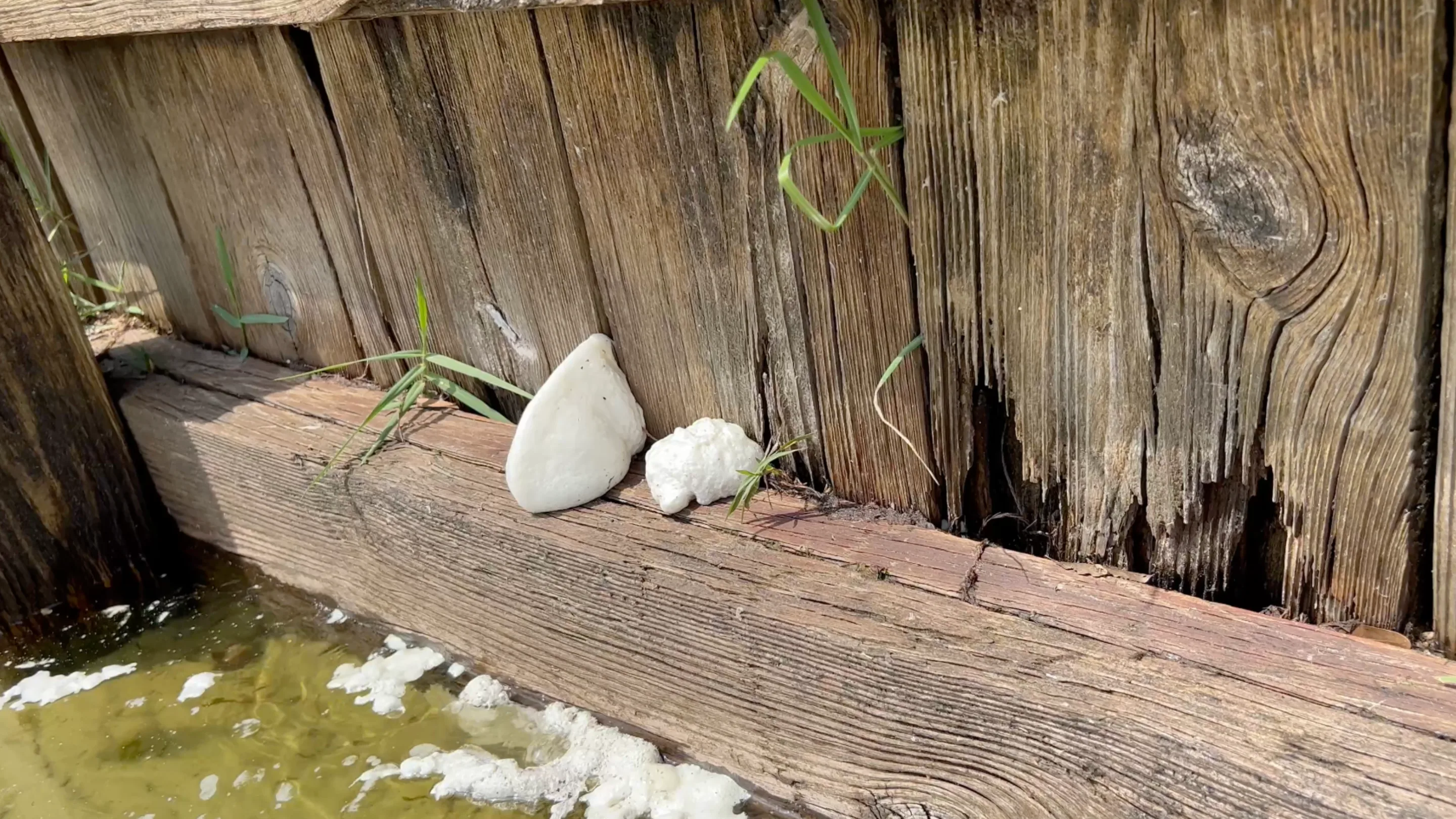
- Soil continues migrating into the lake through cracks and crevices
- Support beneath nearby landscaping or hardscape can weaken
- The seawall becomes more vulnerable to future movement or collapse
This kind of soil washout is especially common in aging wooden seawalls, where joints widen over time, timber components deteriorate, and pathways develop for water and fines to move. Once those pathways are open, simply adding more dirt to the top is usually only a short-term fix. The added material often follows the same escape routes and disappears again.
That is exactly what this community was experiencing.
The Challenge
This project required more than a simple patch. Helicon had to address a long stretch of active seawall-related soil loss without removing or replacing the wall—and do so in a way that minimized environmental impact on Lake Padgett.
- The Entire Wall Was Showing Signs of Deterioration
The problem was not limited to one isolated failure point. The parsed project notes show that the whole seawall was experiencing ongoing soil erosion and depressions behind the wall, with visible cracks and voids allowing material to pass through to the lakeside. This made the project a systems-level issue rather than a spot treatment.
- Surface Backfilling Had Already Failed as a Long-Term Solution
Homeowners had been constantly backfilling with dirt, but it was not lasting. This is a common sign that the actual migration pathways remain open. If those pathways are not addressed, every surface fill effort simply becomes another temporary measure.
- The Repair Needed to Stabilize the Wall Without Full Replacement
At the time of the project, the community was not yet ready to replace the full seawall. That meant the repair had to buy time while still meaningfully improving the soil condition behind the wall. In other words, the solution needed to be a real structural stabilization measure—not just a cosmetic bandage.
- Environmental Protection Was Essential
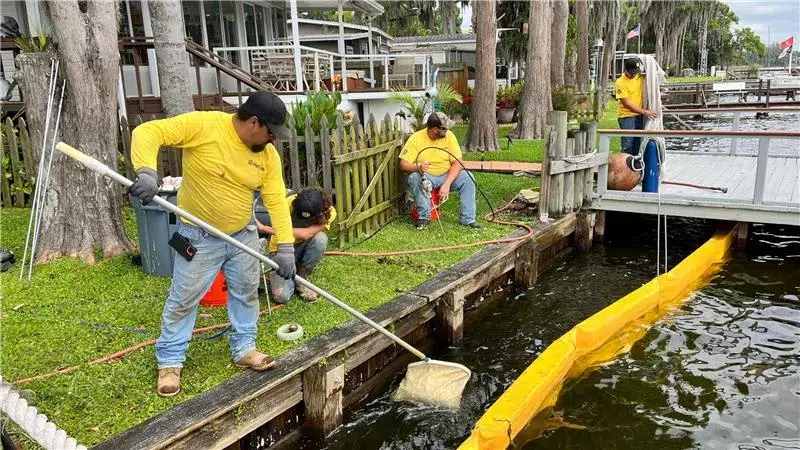
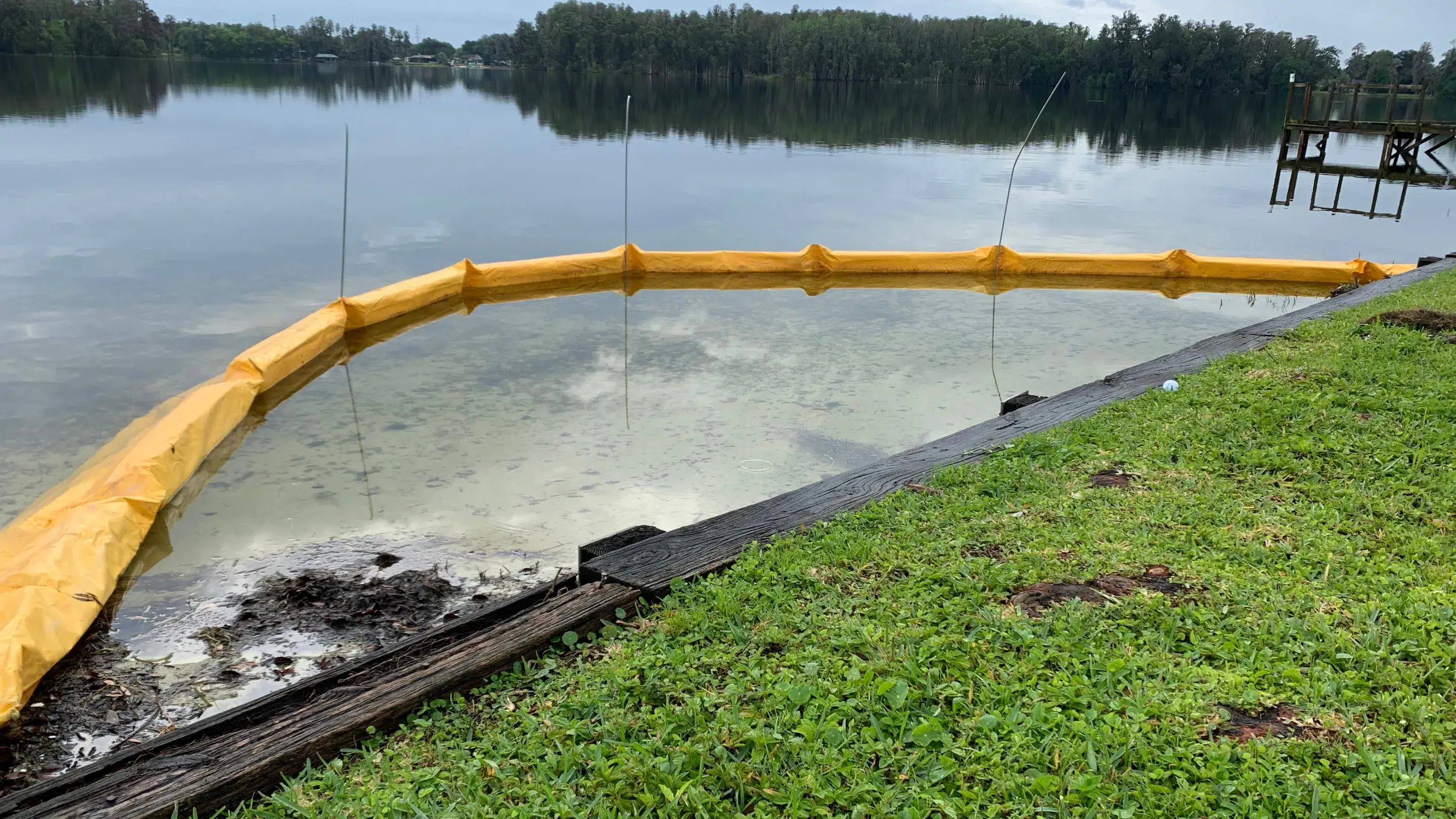
Because the work was taking place directly adjacent to a lake, any repair method had to be performed responsibly. Even though the selected stabilization materials are environmentally safe for this kind of use, Helicon still implemented protective containment barriers to make sure visible exiting grout on the lakeside was captured and controlled. That level of care is important for shoreline work and reinforces the need for experienced crews on waterfront repairs.
The Solution
Permeation Grouting with One-Part Polyurethane Chemical Grout
Helicon designed a soil stabilization program using one-part polyurethane injections, also commonly referred to as permeation grouting in this type of seawall application. This solution was selected because it could move into the voided and loosened soil zones behind the wall, reduce migration paths, and strengthen support without requiring excavation or full seawall replacement.
Why Permeation Grouting Was the Right Choice
For a deteriorating wooden seawall like this one, permeation grouting offered several important advantages:
- It allowed the team to stabilize soils behind the wall without removing the wall first
- It could fill and reinforce hidden voids where repeated washout had occurred
- It helped reduce the movement of soil through cracks and crevices
- It provided a non-invasive interim repair that preserved the shoreline until replacement could be scheduled
- It improved future replacement readiness by leaving the retained-side soils in a stronger condition
This is a key point. Helicon was not pretending this old wooden seawall would never need replacement. Instead, the goal was to provide meaningful stabilization now while making the eventual replacement easier, faster, and potentially less expensive later.
Total Material Installed
Over the course of the project, the crew installed:
- 408 gallons of one-part polyurethane grout
- Along the entire 650-foot seawall
- With 1 bag of fill dirt used as part of the stabilization effort
These quantities reflect the scale of the project. This was not a minor shoreline patch. It was a full-length stabilization effort aimed at improving the support condition behind an entire waterfront wall.
Containment and Environmental Control
As the material expanded and traveled into the affected zones, some grout became visible exiting through the wall on the lakeside. That is not unusual in a permeation grouting seawall repair when open pathways exist. The key detail is that Helicon had already installed protective barriers to safely contain this material and prevent environmental impact to the lake.
That kind of preparation matters in any waterfront stabilization project.
What the Repair Accomplished
The repair had both immediate and long-term value for the community.
Immediate Benefits
- It stopped or greatly reduced ongoing soil migration through the wall
- It filled voids behind the seawall
- It reduced the growth of visible depressions behind the wall
- It improved the support condition along the shoreline
- It reduced the need for constant temporary backfilling
Long-Term Value
The parsed project notes make an especially important point: by stabilizing the soils now, the community gained a major advantage for the future. When the time comes to replace the seawall, the ground behind it will already be treated and stable, which can save both time and money.
This is one of the smartest outcomes of early shoreline stabilization work. Even when a full replacement is inevitable, stabilizing the retained-side soil beforehand can improve the replacement environment and reduce future surprises during reconstruction.
Why This Was More Than a Temporary Repair
One of the most important strengths of this project is that the solution went beyond surface maintenance. Simply dumping more dirt into depressions would not have fixed the problem. The soil would have continued moving through the same openings in the wall. In contrast, this repair directly targeted:
- the void network behind the wall,
- the migration paths through the wall, and
- the loose soil condition extending along the shoreline.
That is what makes it a true soil stabilization project rather than a cosmetic patch. The repair dealt with the mechanism driving the depressions, not just the visible result of it.
The Project, the Challenge, and the Solution — At a GlanceCall to Action
About Helicon
Helicon is Florida’s trusted expert in soil stabilization, seawall repair, foundation repair, concrete lifting, and sinkhole remediation. We serve homeowners throughout Land O’ Lakes, Pasco County, and waterfront communities across Florida, delivering engineered repair solutions that protect property from the shoreline to the slab.
If you are seeing depressions, washout, or loose soils behind a wooden seawall in Land O’ Lakes or around Lake Padgett, Helicon can help. Our team provides targeted shoreline and soil stabilization solutions designed to preserve waterfront property and reduce the risk of larger structural failure.
Call 844-HELICON today to schedule your free inspection and learn whether permeation grouting is the right way to stabilize your seawall before the problem gets worse.
FREE INSPECTION REQUEST