
Tampa, FL
The Project
The Challenge
The Solution
FREE INSPECTION REQUEST

Market: Residential
Solution: Soil Stabilization & Seawall Repair
Services: One-Part SW-RP1 Polyurethane Injection and JET Filter Installation
Waterfront properties on Davis Islands face constant interaction between soil, water, tides, rainfall, drainage, and storm activity.
At this home, those conditions became especially problematic after Hurricane Helene.
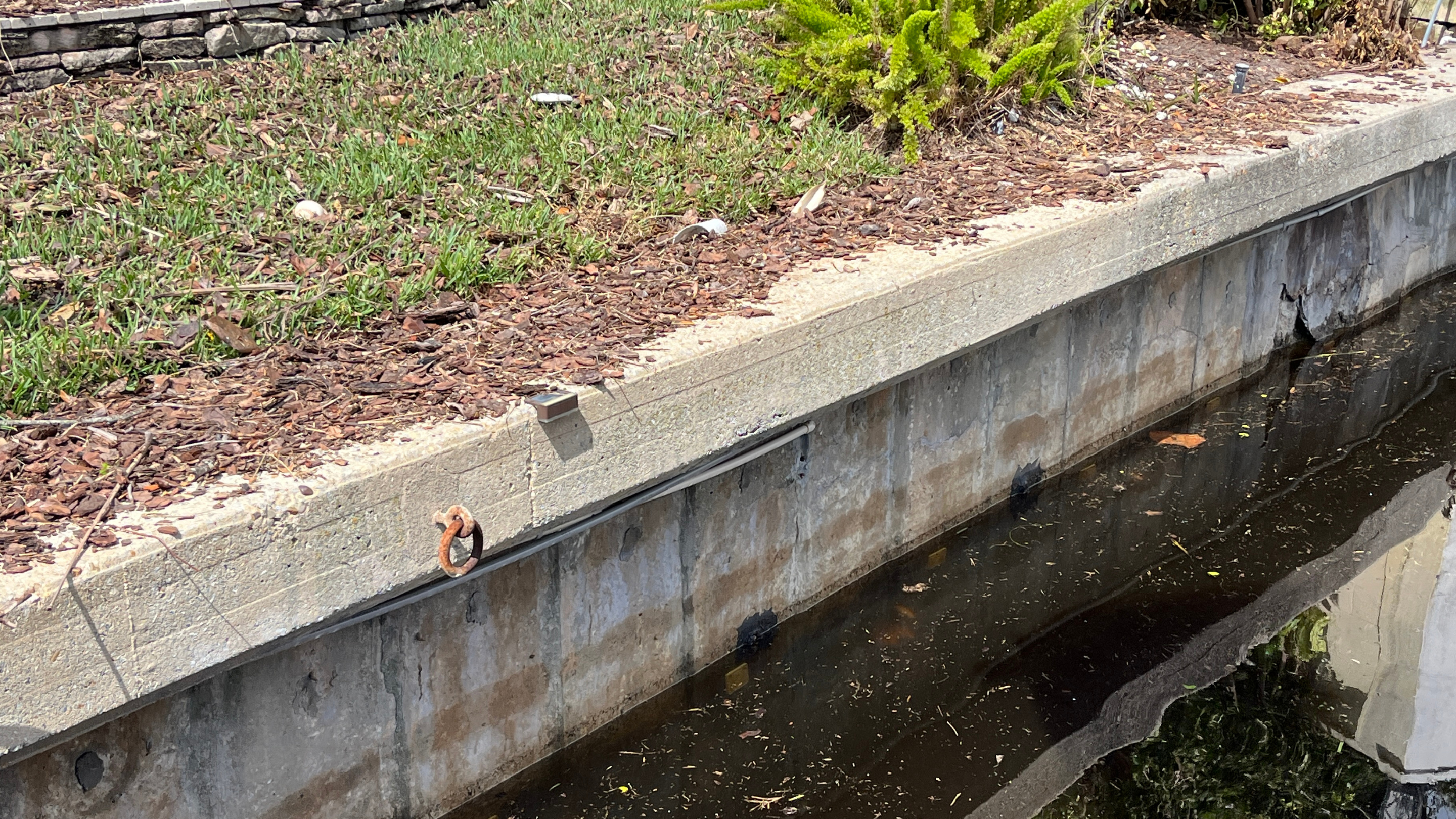
The storm intensified erosion behind the seawall, creating visible surface voids and weakening the retained-side soil condition. The homeowner was concerned that continued erosion could affect the seawall, surrounding yard, and nearby improvements if the support loss was allowed to continue.
The property did not simply need another surface patch.
It needed a repair strategy that addressed what was happening behind the wall.
That distinction is important because seawall problems often become visible only after soil loss has already begun below grade.
Homeowners may notice:
Those symptoms usually cannot be solved effectively by replacing loose soil at the surface alone.
The support zone behind the wall must also be evaluated and, when appropriate, stabilized.
Before Helicon became involved, the homeowner had hired two other contractors to address the seawall.
Those repair attempts included JET Filter installation. However, the erosion continued. This highlighted an important distinction in waterfront repair: drainage and soil stabilization solve related but different problems.
JET Filters can help provide a controlled path for water to escape through the seawall, reducing hydrostatic pressure.
Polyurethane grouting can help strengthen and reinforce areas where soils have become loose, eroded, or voided.
Installing drainage alone does not automatically replace missing soil or stabilize an already weakened retained zone.
For this Davis Islands property, the new repair needed to address both.
Helicon first evaluated the prior work and prepared the site so the stabilization and drainage components could function as a coordinated system.
Hydrostatic pressure develops when water accumulates behind a seawall faster than it can escape.
After heavy rainfall, high tides, or storm events, water levels behind the wall may rise.
If that water has no effective drainage path, pressure can increase against the seawall.
Over time, unmanaged pressure may contribute to:
This is one reason drainage is such an important part of professional seawall repair.
But drainage alone is only part of the solution when soil has already been lost.
At this property, Helicon combined drainage with polyurethane soil stabilization so both conditions could be addressed together.
The most important challenge was that this was not the first repair attempt. Previous work had already been completed, yet the erosion remained active.
That meant Helicon was not approaching an untouched seawall. The crew had to account for prior installations and make sure the new stabilization program was not simply repeating the same limited strategy.
The project required the team to:
That last point was critical. The homeowner had already seen that pressure-relief devices alone were not enough to address the existing erosion.
The new solution needed to treat the retained-side soils as part of the overall seawall system.
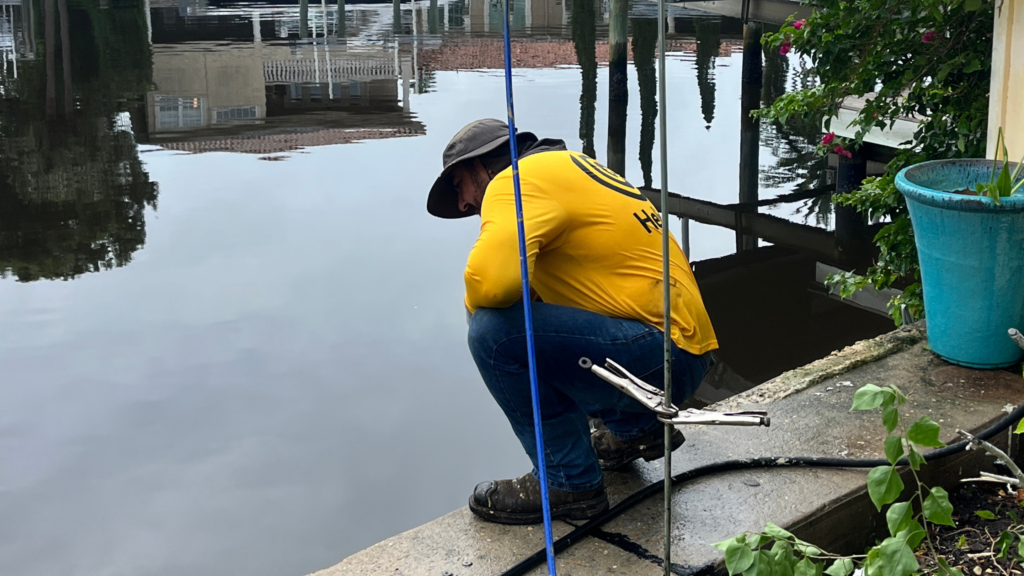
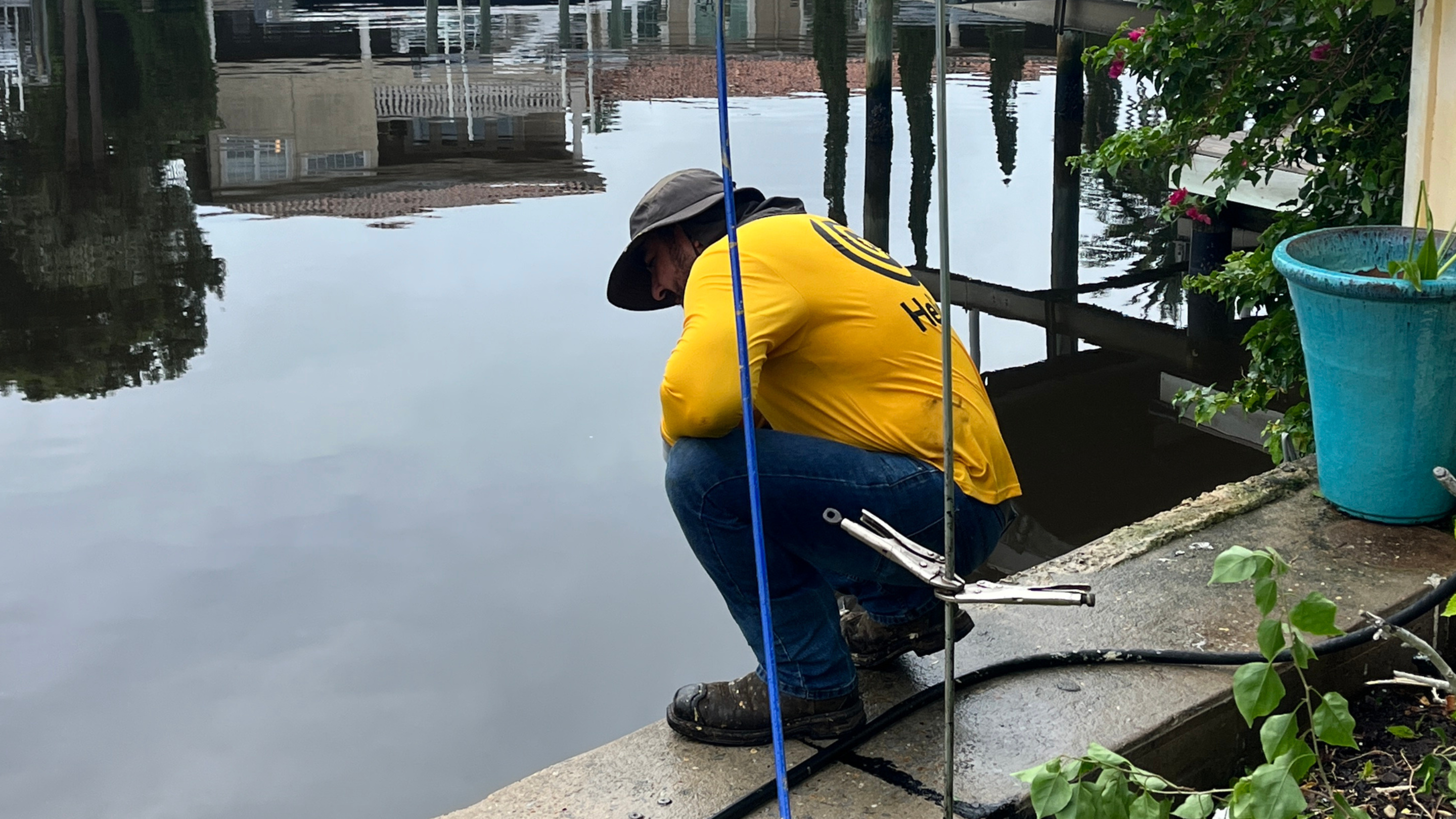
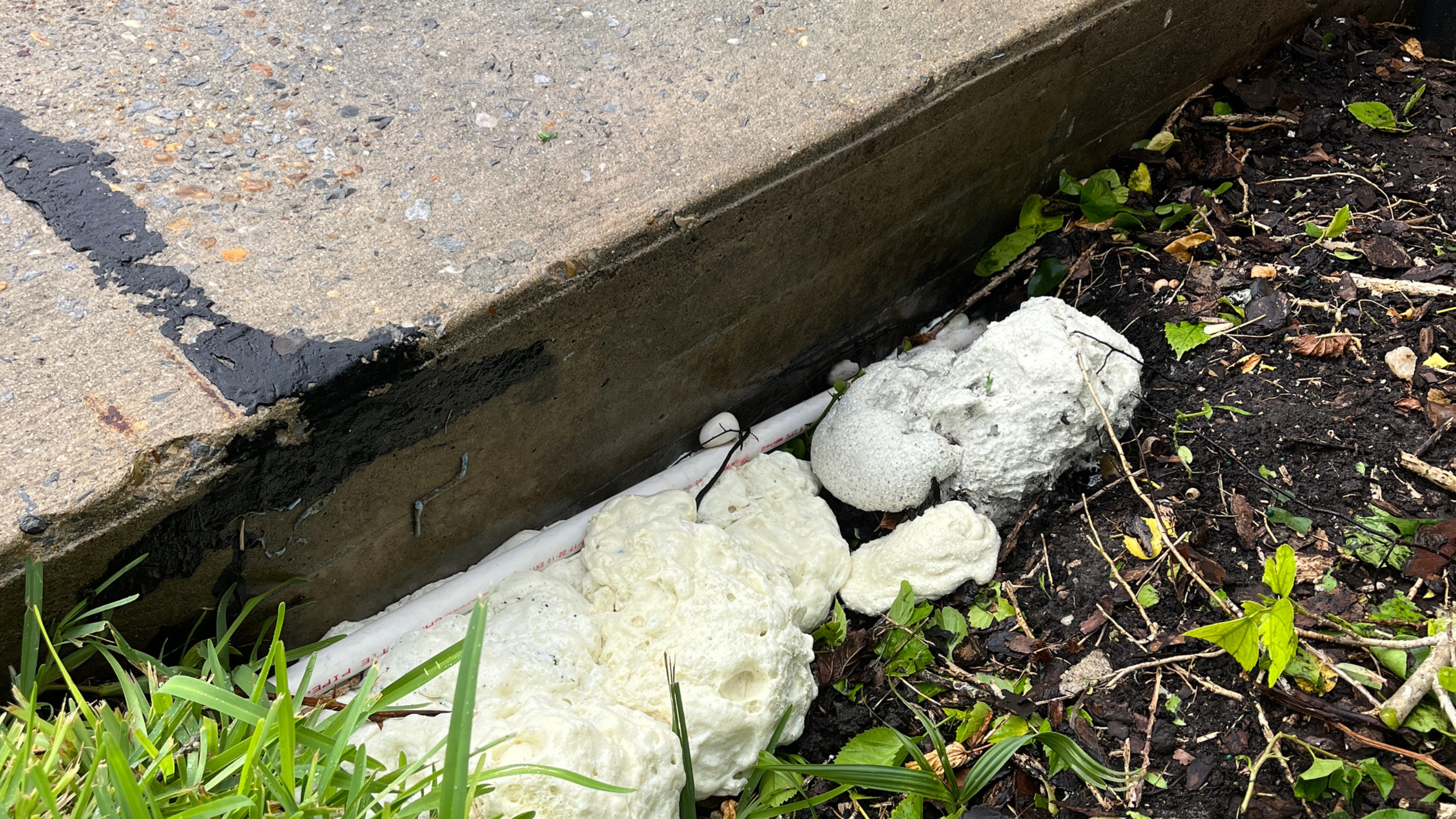
Helicon used SW-RP1 one-part polyurethane grout to stabilize the affected soils behind the seawall.
The project included:
The spacing was designed to provide coverage throughout the designated repair area rather than concentrate material at only one location.
The SW-RP1 grout was installed to:
As the one-part polyurethane reacts, it expands into available spaces and creates a more unified treated zone.
The goal was not simply to “fill a hole.” The goal was to improve the behavior of the soil mass behind the wall.
The project specifications called for injection to approximately 1 foot below the mudline. That detail matters because shoreline erosion does not stop at the visible ground surface.
Soil migration can occur lower along the wall, including around submerged or partially submerged areas.
Treating below the mudline helped extend the stabilization program into the lower support zone where erosion pathways could influence the retained soils above.
That made the repair more comprehensive than a shallow surface-only treatment.
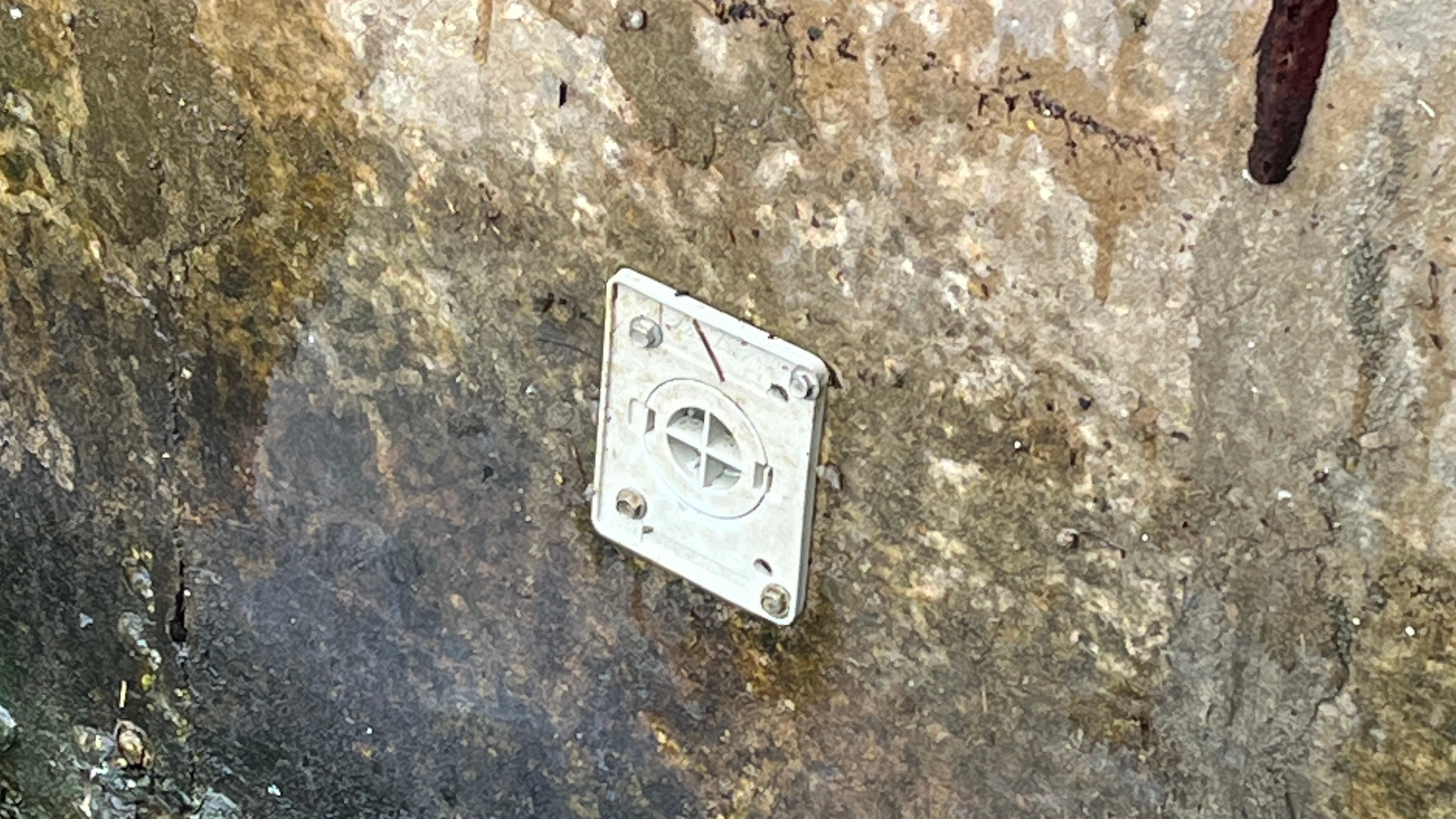
After the polyurethane stabilization was completed, Helicon installed 6 JET Filters along the seawall.
The purpose of the filters was to provide controlled pressure relief while helping limit soil migration through the drainage locations.
The JET Filters were intended to:
The filters are removable and cleanable, which allows them to be maintained over time.
That maintenance capability is important because any drainage system can lose effectiveness if debris or sediment prevents water from moving properly.
The strength of this Davis Islands project was the combination of two repair strategies.
The SW-RP1 grout reinforced the weakened retained-side areas and filled accessible voids.
The filters provided a controlled pathway for hydrostatic pressure to escape.
Used together, the systems addressed both the material behind the seawall and one of the forces acting against it.
That is a more complete seawall repair strategy than simply patching cracks or installing drainage without addressing existing soil loss.
Waterfront structures in Tampa Bay and other coastal Florida communities experience a demanding environment.
Potential contributors to seawall distress can include:
Heavy rainfall and elevated water levels can increase pressure behind the wall.
Water moving through joints, cracks, or weak locations can carry fine soil particles away from the retained area.
Older seawall panels, joints, and drainage components may become less effective over time.
Major storms can accelerate erosion and expose weaknesses that developed gradually over many years.
If water cannot escape efficiently, pressure behind the wall can increase. None of these conditions automatically means a seawall must be replaced.
In many cases, a professional evaluation can determine whether targeted soil stabilization, pressure relief, crack treatment, or another repair strategy may extend the useful performance of the existing wall.
The key benefit was that the property received a combined stabilization-and-drainage approach rather than another drainage-only repair.
The treatment improved the support condition behind the seawall and added a controlled system for relieving water pressure.
No waterfront contractor can responsibly guarantee that a seawall will never experience future erosion, storm damage, or movement. Coastal conditions continue to change, and all seawalls require observation and maintenance.
However, this repair substantially improved the treated areas and addressed two of the property’s most important concerns: soil loss and water pressure.
This project demonstrates an important lesson for homeowners considering seawall repair. If soil is already washing out behind a wall, adding drainage alone may not be enough.
Likewise, stabilizing the soil without providing adequate pressure relief may leave another important waterfront condition unaddressed.
A more strategic evaluation looks at the seawall as a complete system:
That systems-based approach is what guided the Davis Islands repair.
Helicon helps Florida homeowners, contractors, property managers, and commercial clients address seawall erosion, weak soils, foundation settlement, sinking concrete, and related structural concerns.
Our team develops repair solutions based on site conditions, observed distress, project requirements, and long-term performance goals—with a focus on addressing problems where they begin: beneath the surface.
If you are seeing soil washout, voids behind a seawall, cracking, sinking hardscape, or erosion after storms, a surface patch may not address the underlying issue.
Helicon provides soil stabilization, seawall repair, polyurethane grouting, JET Filter installation, foundation repair, concrete lifting, and related structural solutions throughout Davis Islands, Tampa Bay, St. Petersburg, Clearwater, and surrounding Florida communities.
Call 844-HELICON to schedule a free inspection and learn which repair approach may be appropriate for your waterfront property.
FREE INSPECTION REQUEST